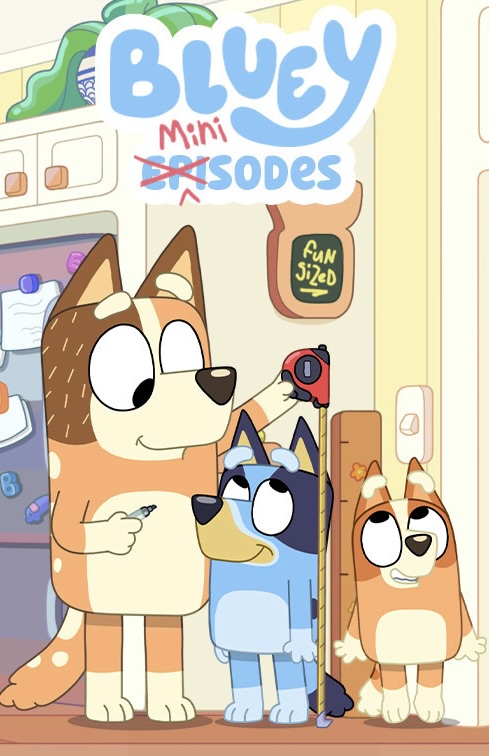

BLUEY: Episodes 348 and 349: “Ghostbasket” and “The Sign”
Two near-perfect episodes about trusting a plan you can't see.
Should You See It?
Here's the happy answer up front: yes. As BLUEY's third season winds down, "Ghostbasket" and "The Sign" show the little Australian sensation at its very best — beautifully animated, scored with some of the best background music on television, and written with the kind of emotional depth that lands just as hard on parents as on kids.
Both episodes exist to teach something worth keeping. "Ghostbasket" is about how we treat the elderly and one another's homes. "The Sign" — at 28 minutes, the longest BLUEY yet — is about trusting that things will work out the way they're supposed to, even when life doesn't go your way. It's a lesson that maps almost directly onto a Christian's trust in God's plan.
The only flags are gentle: some drinking at a wedding and a light real-world touch or two. Nothing that should keep your family away.
So gather everyone — this one's a delight for all ages.
The Story
NO SPOILERS — WE KEEP THE SURPRISESBLUEY unfolds in a world of cartoon dogs, following the Heeler family: dad Bandit, mom Chilli, and daughters Bluey and Bingo.
In "Ghostbasket," the girls revive their favorite game — the Grannies, Rita and Janet — to stop a beloved house from being sold, while Bandit plays a realtor and Chilli a buyer. But a very real FOR SALE sign hints that the game is closer to home than anyone wanted.
"The Sign" picks up the thread: a job offer could move the Heelers out of Queensland, just as their godmother Frisky prepares to marry Uncle Rad in the backyard. Two big questions, one long, tender episode.
Is It Any Good?
Four stars, and they're well earned. This is BLUEY operating at full strength: the animation is lovely, the soundtrack is among the best in any TV series, and the storytelling is top-notch. What sets the show apart, though — what makes it iconic — is its willingness to reach real emotional depth while staying entirely appropriate for children.
"The Sign" especially rewards longtime viewers. It's stuffed with satisfying callbacks and easter eggs — the return of Grandpa Bob, Chilli's sister Brandy, the quiet resolution of storylines from earlier episodes — that pay off years of watching. The characters remain relatable to children and adults alike, and each episode carries a clear lesson without ever feeling like a lecture. It's simply excellent family television.
The Worldview
These episodes wear a strong moral worldview plainly, and it's a warm one. "Ghostbasket" is built around compassion for the elderly and respect for people's homes — a direct echo of the Golden Rule. "The Sign" goes deeper still, following Bluey through a day where "luck" seems to flip between good and bad depending on your vantage point, until she comes to trust that every action carries unseen consequences and that things work out as they should.
The heart of it is Bandit and Chilli's honest struggle: uproot the family for a better-paying job and a bigger future, or stay where their children are happy? Bandit finally chooses his family's wellbeing over the money, putting being a good husband and father ahead of his career. That's a picture Scripture would recognize and bless.
There are light Christian touches, too. A wedding is treated like the sacrament it is, and Frisky is called a godmother. The show even lets some ordinary, complicated life in around the edges — a single mom and a divorced dad moving in together, unexplained — which parents can note and talk through.
Underneath "The Sign" runs a longing every Christian knows: to trust a plan you cannot see. The show names it beautifully. Scripture answers it — "Trust in the LORD with all your heart, and do not lean on your own understanding" (Proverbs 3:5).
The Content Guide
The specifics — spoilers included by nature — so you can judge for your own family.
Strong moral worldview in both episodes, “Ghostbasket” shows compassion to the elderly which directly connects with the Golden Rule, “The Sign” has many moral lessons in it, the first and main one is trusting in a divine plan even when things don’t go your way, Bluey spends the whole episode running into situations where “luck” seems to flipflop between good and bad luck based on one’s perspective, but every action has unexpected and good consequences in the end, Bandit and Chili also spend the episode in the moral conundrum of being parents providing the best life for their children, they parents struggle between uprooting their family for a better paying job so they can provide more for the future or staying in a place where their children and adults are happy, Bandit ultimately chooses his family’s wellbeing over a better paying job, prioritizing being a good father and husband over his job, plus there are some light Christian elements such as a wedding takes place and is treated like a sacrament, and Frisky is referred to as a Godmother
No foul language
Frisky kicks a gnome in anger in the episode “The Sign”
No sex
No nudity
In “The Sign,” there are a few moments of alcohol being used in the wedding, and where there seems to be characters getting drunk or having alcohol in the wedding including Uncle Rad, Aunt Frisky, Uncle Stripe, and Grandpa Bob, plus Uncle Stripe even appears out of a bush the next day after drinking too much
No smoking or drugs;
There is a moment where a single mom, Terriers’ mom, and a divorced dad, Winton’s dad, are shown moving in together although the nature of the relationship is not explained.
Talk About It
Questions for the drive home, the dinner table, or the youth group.
"Ghostbasket" is really about how we treat the elderly and one another's homes. Where in your week could you show that kind of kindness to an older neighbor or relative?
Leviticus 19:32 · Matthew 7:12Bluey spends "The Sign" seeing the same day as good luck and bad luck depending on how she looks at it. When has something that felt bad turned out for good in your family's life?
Romans 8:28 · Genesis 50:20Bandit chooses his family's happiness over a bigger paycheck. How does your family decide when "more" is worth it — and when it isn't?
1 Timothy 6:6–10 · Matthew 6:33Calypso's story teaches that things turn out the way they're supposed to. How is trusting God's plan different from just hoping for good luck?
Proverbs 3:5–6 · Jeremiah 29:11The Final Word
Every so often a children's show earns the whole family's attention, and these two episodes do. Funny, gorgeous, and quietly wise about trust, marriage, and putting people over paychecks, they're BLUEY at its finest. Our answer is simple: worth watching — together, with the grandparents too.