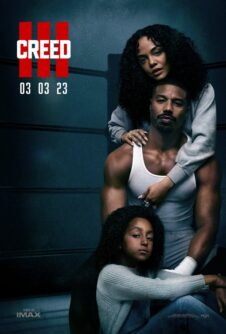
CREED III
A knockout about family, guilt, and the fight to forgive.
Should You Watch It?
Here is the decision. CREED III is a well-made, genuinely entertaining sports drama, and it carries a strong moral heart: commitment to family, and the hard work of choosing to love and forgive. If those are the stories you want your older kids and teens fed, this is a satisfying one.
It does earn its PG-13. There is rough street fighting, thrilling but hard boxing violence, and some foul language — enough that Movieguide advises caution for older children and mature audiences. The opening drags a little before the second half turns up the stakes.
So: if you and your teens can handle the fights and the cursing, this one rewards the trip — a crowd-pleaser that actually has something to say about guilt and grace. For younger children, wait.
The Story
NO SPOILERS — WE KEEP THE SURPRISESAdonis Creed — Apollo Creed's son — has built an amazing career and retired into a beautiful home with a wife and daughter he loves. He now helps run a boxing gym.
Then an old friend walks in. When Adonis was young, he followed Damian to boxing matches; Damian was the gifted one, winning nearly every fight. One night the two got into trouble, and Damian was taken away by police while Adonis walked free. Eighteen years later, Damian is out of jail, standing in Adonis's gym, wanting to fight the gym's top boxer. And Adonis, weighed down by guilt over the past, says yes.
Is It Any Good?
Four stars, and here's what earns them. CREED III is well-made and, once it hits its stride, genuinely thrilling. The boxing scenes are exciting, and the second half — where the jeopardy finally sharpens — delivers the goods a good fight movie promises.
It isn't flawless. The beginning has some slower moments, and it takes a while for the stakes to become clear. But once they do, the film pays off. This is the rare sports drama that entertains and means something at the same time.
The Worldview
CREED III believes in the things Scripture honors most in a man's life: family, faithfulness, and forgiveness. The film doesn't name Jesus or His forgiveness directly, but it wrestles honestly with the concept — a man carrying old guilt, learning that he must forgive himself and love his family well. It treats commitment to family and the choice to help others rather than yourself as the good life, and it's right to.
The female lead, played by Tessa Thompson, is a quiet high point of that vision. She assists others, loves on those around her, and chooses joy in the midst of hardship — even a sickness affecting her hearing. Rather than chasing the limelight, she wants to encourage other people and help produce their music. That's a portrait of self-giving love worth showing your kids.
Against all this sit the film's rougher edges: street fighting, hard boxing violence, and the foul language that runs through the dialogue. They're real, and they're why the film asks for a mature audience.
At its center is a man learning to lay down guilt and take up grace. Scripture answers that longing plainly: "Bearing with one another and, if one has a complaint against another, forgiving each other; as the Lord has forgiven you, so you also must forgive" (Colossians 3:13).
The Content Guide
The specifics — spoilers included by nature — so you can judge for your own family.
Dominant Worldview and Other Worldview Content/Elements
Strong moral worldview with light redemptive moments about forgiveness, family, protecting family, and choosing to help others instead of yourself
Foul Language
21 obscenities (including in songs) and one profanity
Violence
Scenes of fighting and street fighting, young man pulls gun on someone, young boy beats down an older man, mentions of children being beaten at a young age
Sex
It’s implied that a married couple has marital relations in the bedroom
Nudity
Upper male nudity
Alcohol Use
Drinking
Smoking and/or Drug Use and Abuse
Smoking cigars, but no drugs;
Miscellaneous Immorality
Manipulation occurs but it’s rebuked.
Talk About It
Questions for the drive home, the dinner table, or the youth group.
Adonis carries guilt over a night when his friend paid the price and he walked free. What does it look like to be honest about the wrong we've done — and to receive forgiveness for it?
Psalm 32:1–5 · 1 John 1:9The whole film turns on whether Adonis can forgive — himself and Damian. How does the forgiveness God has shown us shape the forgiveness we owe others?
Colossians 3:13 · Matthew 18:21–35Tessa Thompson's character chooses to encourage and lift up others rather than seek the spotlight for herself. Where could you choose to serve someone quietly this week?
Philippians 2:3–4Adonis has to learn to love his family well while wrestling with the past. What does it mean to protect and cherish the people God has placed in your home?
Ephesians 5:25 · 1 Timothy 5:8The Final Word
CREED III lands its punches and means what it says: family is worth fighting for, and forgiveness is worth the harder fight. It's rougher than a family film, but for teens and adults who can handle the violence and the cursing, it's worth the trip — ages 12 and up. A genuine crowd-pleaser with a moral spine.