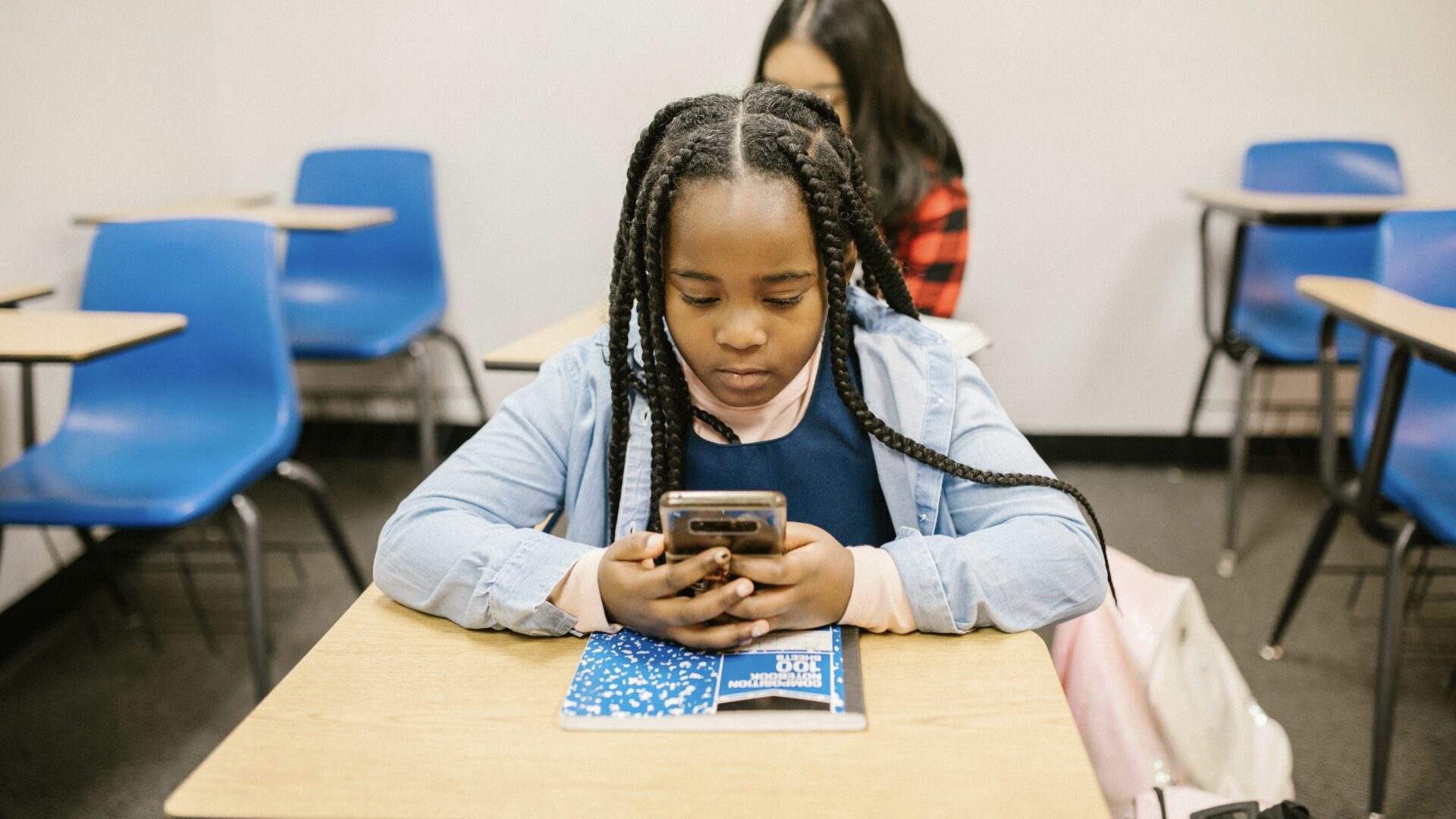

A study by the National Institutes of Health found that children’s long exposure to screen time has a direct impact on their brains.
Children who had seven or more hours of screen time had premature thinning of the brain cortex, which usually doesn’t happen until later in life.
“Your cerebral cortex plays a key role in memory, thinking, learning, reasoning, problem-solving, emotions, consciousness and functions related to your senses,” said the Cleveland Clinic.
Responding to the study, commentator Allie Beth Stuckey said, “Our kids don’t need to be on tablets. They don’t need to be scrolling on phones…What you are doing is damaging their brains.”
The study is the largest and longest brain study ever conducted on children. It has studied the same children — nearly 12,000 — for over a decade. A few years ago, the researchers also discovered that nearly 2,500 of them required additional scans due to concerning MRI results.
Related: Exactly How All That Screentime Impacts Your Child’s Brain
“Neurotypical kids may have an actual problem; that’s the real eye-opener. The numbers that this study revealed were more than we expected. These finding could be the beginning of what is needed to develop protofindingsound universal screening of youth,” said John Foxe, Ph.D., director of the Del Monte Institute for Neuroscience, and principal investigator of the Adolescent Brain Cognitive Development (ABCD) Study at the University of Rochester.
They don’t yet know if these problems occurred naturally, or if they are caused by screens.
Tristan Harris, a former Google manager, was one of the first Silicon Valley insiders to reveal that apps are designed to keep kids’ attention.
“There’s a narrative that, oh, I guess they’re just doing this like we used to gossip on the phone, but what this misses is that your telephone in the 1970s didn’t have a thousand engineers on the other side of the telephone who were redesigning it to work with other telephones and then updating the way your telephone worked every day to be more and more persuasive,” he explained.
Dr. Dimitri Christakis, a scientist who’s conducted screen studies on children 2 and under, said screens are even more harmful to younger children than they are to teens and adults.
He said, “If you’re concerned about your teenager being addicted to their iPhone, your infant is much more vulnerable and using the exact same device because the experience of making something happen is so much more gratifying to them.”
Psychology professor and researcher at San Diego State University Jean Twenge says there is a stark change between people born before 1995 and those born later.
Twenge said, “Smartphones…allow us to find our way around and look up the weather and do all that kind of stuff. And if you do it for a half an hour or an hour a day, fine. No problem. Then you’re using it for what it’s good for. But you have to use it for what it’s good for and then put it down. I mean, it should be a tool that you use. Not a tool that uses you.”
So, do your child a favor and keep that screen turned off.
Read Next: Is Your Child Suffering from ‘Popcorn Brain’? Here’s What You Need to Know.
Questions or comments? Please write to us here.