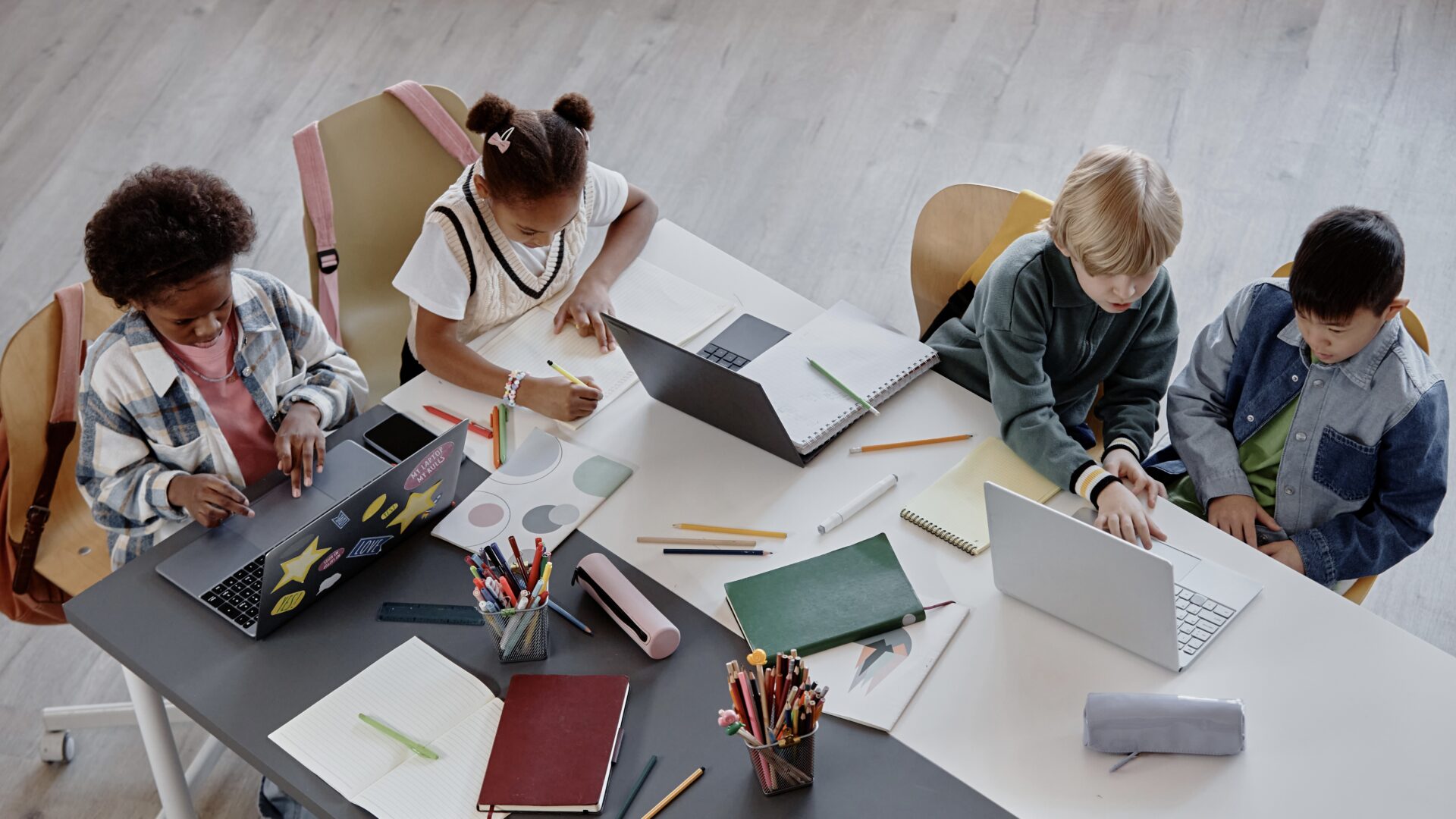
A finished homework page can look like progress, but research on high-school math suggests an AI shortcut can leave students less prepared to solve the next problem alone.
“Students end up asking for help too early and undermining their own ‘productive struggle,’” Hamsa Bastani, associate professor of operations, information and decisions at the University of Pennsylvania’s Wharton School, said, explaining the harm AI causes on learning.
The technology already has a place in many teens’ school routines. A Pew Research Center report published in February found that 54% of US teens ages 13 to 17 had used AI chatbots for schoolwork help.
Pew surveyed 1,458 teens and their parents from Sept. 25 to Oct. 9, 2025. One in 10 teens said they did all or most of their schoolwork with chatbot assistance, but using a tool for help does not, by itself, establish cheating or a loss of skills.
The tougher question is what students can do after the screen closes. A study published in the Proceedings of the National Academy of Sciences in June 2025 tested that distinction with nearly 1,000 students at one high school in Turkey.
During four math sessions in fall 2023, researchers compared students practicing with books and notes against students using two GPT-4 tools. One resembled a standard chatbot; the other included teacher-designed safeguards that steered students toward hints rather than complete answers.
Related: AI Is Becoming a Child’s Homework Helper—and Sometimes a Confidant
The standard chatbot group performed 48% better during assisted practice, relative to the control group. But on the subsequent exams, when everyone worked without outside resources, that group scored 17% lower relative to the control group.
In other words, doing better with the tool did not mean students had learned more. The safeguarded tutor avoided a statistically detectable exam disadvantage, although it did not significantly improve independent exam performance over the control group either.
Those findings come with boundaries. The experiment tested short-term learning in one school, one subject and a particular AI setup — not permanent damage to students’ brains or the effects of every chatbot now available.
National test results tell a separate story. In the 2024 National Assessment of Educational Progress, average fourth-grade reading scores fell two points from 2022, while fourth-grade math scores rose two points.
Neither those national trends nor a survey of chatbot use establishes that AI caused a nationwide achievement decline. That distinction matters when families try to sort a genuine learning concern from a sweeping claim about falling grades.
Bastani is also exploring how AI might support learning rather than shortcut it. Her April interview discussed later research on tailoring practice problems to students’ abilities.
“In other words, AI could offer more than just 24/7 access to a teaching assistant; it could also enable personalized learning,” she said, describing that possibility, not as an endorsement of unrestricted answer-seeking.
For parents, a useful conversation can start with one assignment: Can your child explain how they reached the answer without reopening the chatbot? Check the teacher’s rules together, encourage an independent attempt and ask for guidance when a child remains stuck.
The goal is not to make every assignment harder. It is to protect the practice that helps a student stand on their own when the test begins.
Read Next: AI Is Doing Teens’ Homework, and Parents Are Just Finding Out
Questions or comments? Please write to us here.