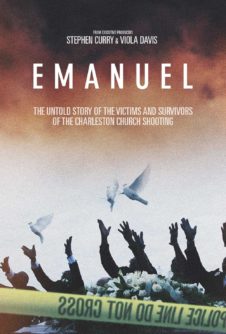
EMANUEL
An affecting witness to forgiveness amid horrific injustice.
Should You Watch It?
EMANUEL is a beautifully made documentary that treats a terrible tragedy with respect. Its interviews with victims and survivors, journalists, historians, government officials, church members, and pastors place the 2015 Charleston church shooting within the longer history of slavery, racism, and injustice.
The film does not force one easy response. Some survivors speak about forgiveness, while others feel forgiveness can leave too little room to confront oppression. That tension gives the documentary its emotional and moral power. It is informative and gut-wrenching, yet it also reminds you that evil is present and unacceptable—and that forgiveness is ultimately more powerful.
The subject matter is mature, so younger children may not be ready. Teenagers and adults should see it if they can thoughtfully engage its painful history and Christian response.
The Story
NO SPOILERS — WE KEEP THE SURPRISESOn June 17, 2015, a gunman opened fire during a prayer meeting at Mother Emanuel AME Church in Charleston, South Carolina, murdering nine Black churchgoers.
EMANUEL follows four victims and survivors as they recount the shooting and its aftermath. Interviews with journalists, historians, officials, pastors, and church members broaden the story, connecting the tragedy to Charleston’s history and to the church’s role in facing racism and injustice.
Is It Any Good?
Four stars means this is a superb documentary. EMANUEL uses interviews, flashback footage, and beautiful scenic shots of Charleston in a typical documentary style. The filmmakers depict the tragedy in a way that respects those involved.
The result is both informative and gut-wrenching. The somber subject matter is handled with care, and viewers are left to develop their own conclusions about the events and the value of forgiveness. The documentary’s restraint and beauty make its painful subject matter especially powerful.
The Worldview
EMANUEL presents a strongly Christian and biblical moral vision. It shows the church as a place where African Americans found solace and worshiped God amid oppression. It honors prayer, Scripture, repentance, confession, sacrifice, forgiveness, family, marriage, and protection for those in harm’s way. Jesus Christ’s sacrifice on the Cross is presented as an act of love and forgiveness, while the film also points toward victory over evil.
The documentary directly confronts slavery, bigotry, hate crimes, and racism as injustices. It does not glorify them. Instead, it asks how people should respond to horrific evil and whether forgiveness leaves adequate room for a full conversation about oppression. That tension is not neatly resolved, allowing viewers to consider both justice and mercy.
The film’s central longing is for forgiveness in the face of evil. Scripture calls believers to the same kind of grace: “forgiving one another, as God in Christ forgave you” (Ephesians 4:32).
The Content Guide
The specifics — spoilers included by nature — so you can judge for your own family.
Dominant Worldview and Other Worldview Content/Elements
Very strong Christian, biblical, moral; worldview includes a rainbow is depicted over a church steeple, as are hearing God’s voice, responding to the call to be a preacher, protecting those in harm’s way, love for family and one’s spouse, sacrifice, forgiveness granted, references to the value of repentance and confession of one’s sins, references to the power of Scripture, prayer depicted, cross shown, b-roll shots and interviews inside a church, Jesus Christ’s sacrifice on the Cross is honored as an act of love and forgiveness, one woman recounts the Gospel of Jesus, references to victory over evil, and President Obama leads the singing of the Christian hymn “Amazing Grace”
Foul Language
No foul language
Violence
Strong violence includes mention of a slave getting executed and burning churches but that isn’t shown, a slave seen in a muzzle, boy points gun in backyard and shoots for practice, photographs of dead African Americans during slavery times, Walter Scott shooting depicted where white police offer shoots an black man five times in the back, in one scene policemen have gun pulled out to be cautious but no one gets shot, The Rev. Martin Luther King, Jr., is seen lying in his casket
Sex
No sexual content
Nudity
Upper male nudity in one scene
Alcohol Use
No alcohol use
Smoking and/or Drug Use and Abuse
No smoking or drugs;
Miscellaneous Immorality
Mentions of a long history of slavery, bigotry, hate crimes and racism discussed but not in a way that glorifies but prompts viewers to view them as injustice, racist murderer is seen standing over his own Nazi-like emblem.
Talk About It
Questions for the drive home, the dinner table, or the youth group.
The documentary presents forgiveness as powerful without ignoring oppression. How can forgiveness and a desire for justice exist together?
Ephesians 4:32 · Micah 6:8The church becomes a place of refuge amid a painful history. How can your church offer comfort and stand against injustice today?
Isaiah 1:17 · Galatians 6:2What does it mean to say that evil is present but not ultimately powerful? Where do you see that hope in the Christian story?
Romans 12:21 · Revelation 21:4The film connects forgiveness with Jesus’ sacrifice. How does the Cross shape the way Christians respond to people who have done serious wrong?
Luke 23:34 · Colossians 3:13The Final Word
EMANUEL is a respectful, beautiful, and deeply moving documentary. Its mature subject matter calls for discernment with younger children, but teenagers and adults can find a serious Christian meditation on racism, injustice, evil, and forgiveness. Our answer is WORTH THE TRIP — TEENAGERS AND ADULTS.