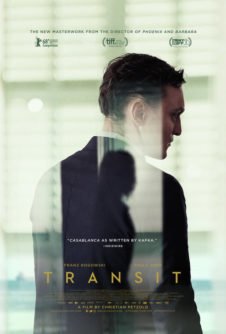
TRANSIT
Confusing, dull drama about a fictional refugee crisis.
Should You Watch It?
The source review finds TRANSIT a difficult recommendation on both artistic and content grounds. Its refugee-crisis setting and anti-fascist concerns could have made for a meaningful drama, but the movie’s plot is described as a structural nightmare. Multiple threads, red herrings, unclear motivations, and a very slow pace cause its point to get lost.
The content also calls for adult discernment. The movie includes graphic aftermath from a suicide, additional deaths, 12 obscenities, implied fornication, extramarital affairs, smoking, and a character using a dead man’s identity. Its ending is depressing, though it leaves a possible but strange note of hope.
The practical answer is simple: skip TRANSIT and choose a clearer, more worthwhile film.
The Story
NO SPOILERS — WE KEEP THE SURPRISESIn a near-future Marseilles, people flee a growing fascist occupation of Europe. Georg, a German immigrant, reaches the port city carrying a dead writer’s papers and letters, then assumes the writer’s identity in an attempt to secure transit papers.
He meets Marie, the writer’s estranged wife, who is still searching for her husband. Georg does not tell her what happened, and their complicated relationship becomes entangled with Marie’s efforts to escape. A doctor and other refugees also become part of the struggle to leave France.
Is It Any Good?
Two stars means the film has limited entertainment value despite its potentially compelling subject. The source review says the story moves too slowly, the plot meanders, and the structure becomes confusing. Multiple plot threads and red herrings make the narrative harder to follow rather than more engaging.
The acting ranges from poorly done to merely serviceable, and the main characters are not especially interesting. Character development is also weak, with motivations changing for little apparent reason. The result is a drama whose personal vision feels confusing or obtuse.
The Worldview
TRANSIT presents a strong Romantic worldview with an anti-fascist emphasis. It focuses on refugees trying to escape an international crisis, but the fascist villains are not well defined, so the larger conflict remains unclear. The movie also leaves the motivations of its central characters confused and unstable.
The film does show sympathy toward certain refugees, including a boy and his mother, a music conductor, and a woman carrying transit papers for a friend. The source review notes that slightly politically correct elements imply Muslim refugees are the most sympathetic refugees in the story. This is a measured observation about the film’s perspective, not a judgment about the worth of refugees.
The movie’s moral world is further complicated by deception, infidelity, selfishness, and occasional altruism. Georg uses a dead man’s identity and withholds the truth of the man’s death from his widow. The film recognizes international oppression but does not provide a clear moral or spiritual answer to the crisis.
Scripture calls believers to pursue truth and justice: “Therefore, having put away falsehood, let each one of you speak the truth with his neighbor” (Ephesians 4:25).
The Content Guide
The specifics — spoilers included by nature — so you can judge for your own family.
Dominant Worldview and Other Worldview Content/Elements
Strong Romantic worldview with an anti-fascist spin, but the fascist villains in the movie are not well defined, so the story’s conflict isn’t well defined either, which leaves the viewer with confusing, ill-defined character motivations that change on dime for little reason, plus slightly politically correct elements lightly implying Muslim refugees are the most sympathetic refugees in the movie
Foul Language
12 obscenities (including one “f” word from boy to a man who seriously disappoints the boy) and no profanities
Violence
One graphic scene shows the bloody aftermath in a bathtub where a man committed suicide, a seriously wounded man dies (despite getting some medical treatment), a distraught woman jumps off a ledge to commit suicide (the movie shows a long shot of her dead body lying below), man collapses and dies from a heart attack, and a few other scenes show light violence such as soldiers and police arresting people
Sex
Implied fornication in one scene with some passionate kissing on a bed, and the female lead in the movie left her husband for another man but then decided to return to husband and searches for him throughout the rest of the movie but [SPOILER] doesn’t believe it when she’s finally told her husband committed suicide shortly after she left him, but she begins a new affair with the male lead even though she wrongly believes her husband’s still alive
Nudity
Brief upper male nudity, and a shot from afar of a woman in a slip and bra in a bedroom
Alcohol Use
Periodic alcohol use
Smoking and/or Drug Use and Abuse
Smoking and no illegal drugs but a mortally wounded man is given a shot of morphine to ease his pain;
Miscellaneous Immorality
Man uses a dead man’s identity to get visas to escape a fascist occupation of France and neglects to tell his widow about her husband’s death [SPOILER] but finally tries to tell woman about the man’s death, but she refuses to believe it so he doesn’t tell her the details about it.
Talk About It
Questions for the drive home, the dinner table, or the youth group.
The film presents people fleeing oppression and searching for safety. What responsibilities do we have toward vulnerable people in crisis?
Leviticus 19:33–34 · Matthew 25:35Georg uses another man’s identity and hides the truth about his death. Why does Scripture treat truthfulness as essential, even when honesty is costly?
Ephesians 4:25 · Proverbs 12:22The story includes changing relationships and marital infidelity. What does faithfulness mean when emotions and circumstances change?
Matthew 19:4–6 · Hebrews 13:4The movie’s moral conflict becomes confused. Why do justice and truth need more than political opposition to evil?
Micah 6:8 · John 14:6The Final Word
TRANSIT takes on refugees, oppression, and international crisis, but its slow structure, weak character development, and confused vision overwhelm its potential. Its mature content adds further reasons for discernment. Our answer is SKIP IT. For better options, see.