
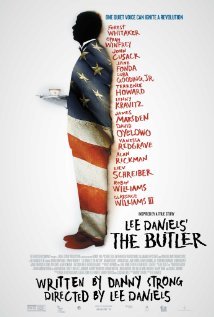
LEE DANIELS’ THE BUTLER
A thoughtful historical drama best saved for discerning adults.
Should You Watch It?
This is an absorbing, well-acted historical drama with real moral substance. Forest Whitaker and Oprah Winfrey give strong performances as a married couple caught up in sweeping changes from the 1950s through the 1980s. The film also presents Christian references, rejects Black Panther violence, and finds touching power in a father and son’s eventual reconciliation.
But the movie keeps undercutting its best ideas. The political conflict between father and son takes up too much of the story, the historical treatment can be politically revisionist, and the film underplays the Christian roots of the Civil Rights Movement. Strong profanity is also scattered throughout, especially in scenes involving Lyndon Johnson and Richard Nixon.
Because of the mature content and political concerns, watch this at home, if at all, where discerning adults can discuss what the film gets right and wrong.
The Story
NO SPOILERS — WE KEEP THE SURPRISESCecil Gaines grows up working on a cotton farm before learning the skills of a house servant. Those skills eventually carry him to the White House, where he serves several presidents and witnesses decades of American history.
At home, however, his long hours create strain in his marriage and distance between him and his politically active eldest son. Their different views of service, justice, and change place their family relationship under pressure.
Is It Any Good?
Three stars means this is a good but imperfect film. It is elegant, compelling, fascinating, and touching in places. Whitaker and Winfrey give strong performances, with only a couple of scenes and a slight lack of chemistry keeping them from perfection.
The film’s structure is less successful. The presidential scenes often feel like separate vignettes rather than part of a cohesive plot, and the political conflict between father and son occupies too much of the movie. The drama can also feel superficial and slightly bloated, undercutting the dignity of its central story.
The Worldview
The film has a strong moral worldview with some overt Christian references. It presents hard work, honesty, family reconciliation, and service as meaningful virtues. It also shows the title character’s son rejecting the violence of the Black Panther Party.
The movie’s politics complicate those strengths. It underplays the Christian roots of the Civil Rights Movement and presents some revisionist history about the United States. One character falsely claims that President Reagan was trying to dismantle all civil rights protections. The film also makes the election of Barack Obama the culmination of civil rights efforts, despite the review’s judgment that Obama’s policies and public statements divided Americans rather than bringing them together.
The film’s casting includes liberal icons such as John Cusack as Richard Nixon and Jane Fonda as Nancy Reagan, though the movie portrays both Republican and Democratic presidents sympathetically in many scenes. Its treatment of service is also conflicted: it first suggests that dedicated, trustworthy service can influence others positively, then later treats that service as excessive complacency.
The movie points toward justice and human dignity, but it does not fully explain the Christian foundation behind those longings. “Let justice roll down like waters, and righteousness like an ever-flowing stream” (Amos 5:24).
The Content Guide
The specifics — spoilers included by nature — so you can judge for your own family.
Content Summary
Strong moral worldview with some overt Christian references but marred by some liberal politically correct revisionist history that downplays the Christian roots of the Civil Rights Movement of the 1950s and 1960s and has one character falsely saying that President Reagan was trying to “dismantle” all the past civil rights laws, plus the movie sometimes undercuts some moral messages (for example, at one point it overtly suggests that being a hardworking and trustworthy, albeit complacent, servant like the protagonist is a good thing but then the protagonist decides to retire when he sees how servants are practically forced to be too complacent while serving others), but the movie also shows the title character’s son rejecting the violence of the Black Panthers though there’s a shot of a blackboard after a Black Panther session that implies there were still some good, peace-oriented principles in that movement so the movie may need another viewing to more fully evaluate it; about 29 obscenities, 10 strong profanities (which seem to be said only by the white American presidents the title character encounters in various scenes, especially Lyndon Johnson and Richard Nixon), and three light profanities; brief but strong violence such as white man shoots father in the head in front of father’s son after white man took the mother to a woodshed to rape her (the rape isn’t shown), some scenes of street rioting, protestors being grabbed and taken away, water hoses and dogs used on protestors, KKK members surround bus full of civil rights protestors in a tense scene, food products are dumped on protestors at a lunch counter that was off limits for black patrons; no depicted sex but talk about wife’s adultery and one scene shows her sitting on couch with lover but nothing salacious happens and that’s when she decides to break off the illicit affair, plus brief kissing and an implied marital sex scene but not salacious; no nudity; much casual alcohol use and protagonist’s wife has a drinking problem but she overcomes it; smoking; and, racism but rebuked, black servants at White House are denied equal pay until President Reagan helps end it, and hungry man steals a piece of cake by breaking a window late at night.
Talk About It
Questions for the drive home, the dinner table, or the youth group.
The film presents a conflict between serving faithfully and resisting injustice. How can Christians honor legitimate authority without accepting wrongdoing?
Acts 5:29 · Romans 13:1–4The movie underplays the Christian roots of the Civil Rights Movement. Why does the source of a movement’s convictions matter?
Micah 6:8 · Amos 5:24Cecil’s long hours damage his family relationships. What responsibilities do we have to pursue both meaningful work and faithfulness at home?
1 Timothy 5:8 · Ephesians 5:25The film shows the son rejecting violent rhetoric. How should Christians respond to injustice without answering evil with evil?
Romans 12:17–21 · 1 Peter 3:9The Final Word
This is an elegant and compelling drama with strong performances, moral substance, and a moving family reconciliation. Its bloated structure, revisionist politics, underplayed Christian history, strong profanity, and mature content make it better suited to discerning adults at home. WAIT FOR HOME — ADULTS ONLY.















