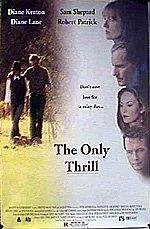
THE ONLY THRILL
A beautifully acted, deeply sad portrait of love without commitment.
Should You Watch It?
Here's the honest trade this film offers. Director Peter Masterson, working from Larry Ketron's script, tells a quiet, decades-spanning story with real craft — the kind of stillness and small-town profundity that marked his earlier film, THE TRIP TO BOUNTIFUL. Diane Keaton and Sam Shepard, who've worked together before, give radiant, aging-before-your-eyes performances that carry the film's emotional weight.
But the story it tells is about a man and woman who conduct a thirty-year affair rather than build an honest, committed life. The movie is honest about the cost — it shows, movingly, how pride and the refusal to be vulnerable isolate and eventually hollow a person out. That's a true and valuable observation. It just arrives wrapped around adultery treated as romance, alongside profanity and drinking.
If you're an adult who can watch that story and weigh its wisdom against its blind spots, this is a well-made, moving film. If you're choosing for a teenager or a family night, skip it.
The Story
NO SPOILERS — WE KEEP THE SURPRISESIn 1966, a widow named Carol walks into a small-town vintage clothing shop to solicit sewing work — and meets its owner, Reece, a man who gave up a successful career after a car accident left his wife in a permanent coma. Reece has vowed never to divorce her. He and Carol begin a relationship anyway, one that will stretch, in fits and starts, across thirty years and touch their grown children's lives as well. What becomes of a love neither of them will ever fully name — that's where the film asks you to sit.
Is It Any Good?
Three stars means this is genuinely good filmmaking with a story that costs something to watch. Masterson directs in thoughtful, patient beats that span nearly thirty years without losing the audience, echoing the same stillness that made THE TRIP TO BOUNTIFUL work. Keaton and Sam Shepard anchor it — these are veteran actors who've shared the screen before, and it shows in performances the source calls "radiant" and "superb," aided by convincing age makeup as their characters move from midlife into old age. The film's late scenes, where Reece finally reckons with the waste of his own withheld love, land as a genuine tearjerker. The craft is real; the story it serves is a harder sell.
The Worldview
This is a humanist film, and it wears that worldview plainly: romantic love is treated as the highest good worth cherishing and fighting for, full stop. There's a partial truth in that — love is worth fighting for — but the film never reaches further than the human relationship itself. Nothing beyond Reece and Carol's feelings for each other is offered as the answer to their emptiness, which is exactly why the emptiness never lifts.
Where the film is genuinely insightful is in showing how pride and the refusal to be vulnerable isolate a person over time, hollowing out a life from the inside. Reece's withdrawal from the world, his neglected shop, his stalled decades — the film reads these as the wages of a heart too guarded to ever say "I love you" out loud. That's true, and worth sitting with.
What the film doesn't reckon with is that the relationship at its center is adultery, sustained for thirty years, treated throughout as tender and tragic rather than as sin with consequences. Both lead couples in the story — the parents and, later, their own children — fall into bed quickly and without covenant, and the film never questions whether that pattern is part of the very isolation it's mourning.
Scripture holds a different view of what love without commitment costs: "Let marriage be held in honor among all, and let the marriage bed be undefiled, for God will judge the sexually immoral and adulterous" (Hebrews 13:4). The longing this film gets right — for a love that isn't wasted — only finds its true answer in a love that keeps its promises.
The Content Guide
The specifics — spoilers included by nature — so you can judge for your own family.
Content Summary
Humanist worldview; 9 obscenities & 19 profanities; two implied adulteries & one implied fornication; alcohol use; and, cigarette use.
Talk About It
Questions for the drive home, the dinner table, or the youth group.
Reece never tells Carol he loves her, and the film shows how that silence hollows out his whole life. What does Scripture say about naming and speaking love plainly, rather than leaving it unsaid?
1 John 3:18 · James 4:17The movie treats romantic love as "the only thrill" worth having. Where does that fall short of what the Bible teaches about love's true source?
1 John 4:19 · 1 Corinthians 13:4-8Reece won't divorce his wife but sustains a thirty-year affair instead. How does the film's soft treatment of adultery compare with how Hebrews describes marriage and its violation?
Hebrews 13:4The film argues that pride and the fear of vulnerability isolate us over time. Where have you seen that true in your own relationships, and what does humility look like in response?
Proverbs 16:18 · Philippians 2:3-4The Final Word
This is a well-crafted, well-acted film about a real and sad truth — that pride and withheld love can waste a life — told through a story that never quite calls its central relationship what it is. So here's our answer, unchanged from where we started: worth the trip — adults only. If you'd rather choose something for the whole family, start with our latest family-friendly picks.