
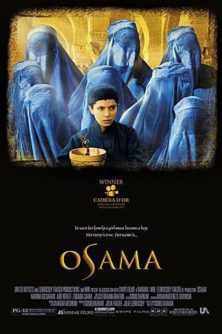
OSAMA
A tragic Afghan drama better reserved for mature home viewing.
Should You Watch It?
OSAMA offers a grim look at life under the Taliban through the experience of a young Afghan girl forced to disguise herself as a boy so her family can survive. Its strongest feature is the realism of its amateur actors, especially Marina Golbahari. The film also makes clear that the Taliban are evil religious extremists and includes some positive references to God without Islamic indoctrination.
The cost is considerable. The story moves slowly, and its violence, ritual-bath references, implied underage marriage, and tragic subject matter make it unsuitable for children and young teens. The film has value as a sober account of suffering, but it is not an easy family viewing experience.
For mature viewers who want this historical and human perspective, wait for home, where you can discuss the material together.
The Story
NO SPOILERS — WE KEEP THE SURPRISESWhen the Taliban take power in Afghanistan, a 12-year-old girl disguises herself as a boy named Osama so she can escort her widowed mother while she looks for work. A local grocer gives her a job so the family can make ends meet.
Then the Taliban order all boys to attend a religious school that also serves as military training. To remain with her family, the girl must constantly defend her disguise.
Is It Any Good?
Two stars means OSAMA has meaningful strengths but limited artistic polish. The amateur actors are phenomenally realistic, especially Marina Golbahari, who plays the girl. Their natural performances give the tragic story considerable force.
The movie was shot on a very low budget, and the script moves slowly. Those limitations make the film less compelling as entertainment, even while its human realism remains powerful.
The Worldview
OSAMA condemns the Taliban as terrible Islamic extremists and portrays their rule as oppressive and brutal. The film presents women denied work, families crushed by harsh laws, and religious authority misused to justify cruelty. It includes positive references to God, but no positive references to Mohammed or the Koran and no Islamic indoctrination.
The film's moral center is the suffering of ordinary Afghan people under tyranny. Its sympathy is directed toward the powerless, especially women and children, while its depiction of religious extremism shows law separated from mercy becoming an instrument of oppression.
The source review also makes a broader theological and cultural judgment, arguing that the implementation of Islamic laws is evil, warning Western countries against allowing Muslims “free reign” within their borders, and calling Islamic law a “legalistic, anti-biblical, Satanic nightmare.” That argument goes beyond the film's specific focus on the Taliban, but it reflects the review's stated conviction that Jesus Christ's moral truth transcends all cultures.
The film's longing is for freedom from oppressive legalism and for protection of the vulnerable. Scripture says, “For freedom Christ has set us free; stand firm therefore, and do not submit again to a yoke of slavery” (Galatians 5:1).
The Content Guide
The specifics — spoilers included by nature — so you can judge for your own family.
Content Summary
Moral worldview attacks Islamic extremism, with some positive references to God such as people say, “God bless you,” plus woman says she’s felt the wrath of God because her husband and brother are dead and can no longer protect her and the rest of her family, all females; one light obscenity, four exclamatory appeals to God, somewhat vulgar references to boys and men washing their private parts in ritual purification baths (including references to night-time emissions), and blasphemous misuse of God’s name and authority by Islamic extremists, the Taliban; women demonstrate in streets for work and water hoses are turned on them, students physically bully girl posing as boy, girl’s menstrual blood gives her away, character tied up to dangle over well, and foreign journalist executed by firing squad; references to male private parts and implied pedophilia when elderly man takes underage girl as one of his wives and takes her to his marriage bed (nothing shown, however); upper male nudity when characters undergo ritual washing and elderly man tells boys what to do; no alcohol; no smoking; and, harsh government punishments don’t fit the crime. GENRE: Drama
Talk About It
Questions for the drive home, the dinner table, or the youth group.
The girl disguises herself to help her widowed mother survive. What responsibilities do we carry toward vulnerable family members, and how can we help without losing courage?
Galatians 6:2 · Proverbs 31:8–9The film shows religious authority being used to justify cruelty. How does Jesus distinguish faithful obedience from burdensome legalism?
Matthew 23:4 · Matthew 11:28–30The Taliban deny women work and water. What does Scripture teach about defending the vulnerable and seeking justice?
Isaiah 1:17 · Micah 6:8The film presents suffering under tyranny. How should Christians respond when people endure oppression far from us?
Hebrews 13:3 · Romans 12:15The Final Word
OSAMA is a realistic but slow-moving tragedy with value for mature viewers seeking insight into Afghan suffering under the Taliban. Its disturbing content makes it a poor choice for children and young teens. For your family, our answer is WAIT FOR HOME — MATURE AUDIENCES. For gentler viewing, see.