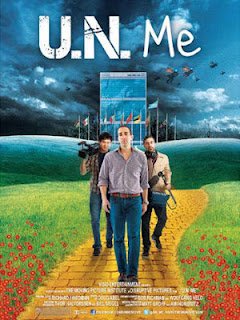
U.N. ME
A sharp, funny exposé of corruption inside the United Nations.
Should You Watch It?
U.N. ME makes a strong case that the United Nations is plagued by corruption, incompetence, bureaucracy, and failed decision-making. It examines the organization’s failures to stop massacres, nuclear proliferation, and terrorism, while also pointing out that the United States spends billions on the U.N. despite often receiving criticism from it.
The film’s unusual strength is its humor. Its clever approach gives this political documentary broad appeal, while its clearly defined points keep the argument focused. The cost is disturbing material, including references to rape and violent newsreel footage.
If your family includes older children or adults who can process difficult material, this is a worthwhile documentary. Use discernment for younger children.
The Story
NO SPOILERS — WE KEEP THE SURPRISESAmi Horowitz sets out to expose what he sees as the United Nations’ many failings. Along with Matthew Groff, he examines alleged misconduct by U.N. peacekeepers, failures in international crises, nuclear proliferation, terrorism, and the bureaucracy surrounding the organization.
The filmmakers present their case through interviews, investigations, archival footage, and a deliberately humorous style.
Is It Any Good?
Four stars means this documentary is both effective and entertaining. U.N. ME is described as a truth-revealing, accurate, and spot-on portrait of corruption and incompetence in the United Nations.
Its greatest asset is the ingenious humor. The filmmakers use clever tactics comparable to those associated with Michael Moore while keeping their points clearly defined. That combination helps the documentary overcome the usual challenge of attracting moviegoers to political nonfiction.
The Worldview
U.N. ME presents a strongly moral view of public corruption and institutional failure. It condemns alleged rape and sexual abuse by U.N. peacekeepers, the failure to stop massacres, the inability to prevent nuclear proliferation, and the hopelessness of fighting terrorism through a heavily bureaucratic system.
The documentary exalts truth-telling, accountability, and the exposure of wrongdoing. It treats corruption, graft, bribery, and repeated lying by officials as serious moral failures. Its focus is political and investigative rather than explicitly Christian, but its concern for victims and its demand that powerful institutions answer for their actions align with biblical calls for justice and truthful conduct.
The film’s central purpose is to bring hidden or ignored problems into the open. Scripture similarly says, “Take no part in the unfruitful works of darkness, but instead expose them” (Ephesians 5:11).
The Content Guide
The specifics — spoilers included by nature — so you can judge for your own family.
Content Summary
Very strong truth-revealing moral worldview in a spot-on portrait of the rampant corruption and incompetence epidemic in the United Nations and a detailed look at the many sins committed by alleged UN peacekeepers in trouble zones around the world; no foul language; strong violence includes news footage of dead bodies from massacres around the globe, home video footage of UN snipers opening fire on a crowd of peaceful protesters before the camera cuts to show the aftermath of dead bodies and crying, wounded survivors, and several shots from archival footage of nuclear bomb tests obliterating cars and other objects; some sexual references include hidden cameras showing U.N. peacekeepers dancing wildly (albeit clothed) with prostitutes, some of whom are described as underage, in an Ivory Coast bar, and movie mentions more than 1000 claims of rape and sexual abuse by U.N. troops; no nudity; U.N. peacekeepers are shown partying with alcohol; and, references to corruption, graft, bribery associated with the United Nations and U.N. officials are caught repeatedly lying to the interviewer.
Talk About It
Questions for the drive home, the dinner table, or the youth group.
Why is exposing corruption important, even when the truth is uncomfortable?
Ephesians 5:11 · John 8:32The film discusses failures to protect people from violence. What responsibilities do powerful institutions have toward the vulnerable?
Micah 6:8 · Proverbs 31:8–9How can humor help people consider serious problems, and when might humor distract from suffering?
Proverbs 14:13 · Romans 12:15What should accountability look like when leaders or officials misuse their power?
Luke 12:48 · James 3:1The Final Word
U.N. ME combines a serious exposé with clever humor and clearly stated arguments. Its disturbing footage and references call for discernment, especially with younger children, but older viewers may find it an unusually engaging look at international politics. WORTH THE TRIP — OLDER CHILDREN AND UP.