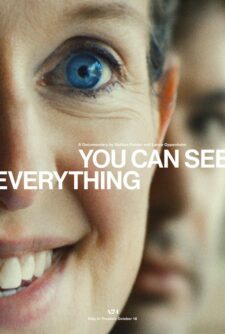
YOU CAN SEE EVERYTHING
A probe into truth and self-deception that shows far more than it needs to.
Should You Watch It?
Skip it. The unlikely pairing of comedian Nathan Fielder and disgraced Theranos founder Elizabeth Holmes has made this documentary one of the most talked-about movies of the year.
Fielder, best known for his offbeat comedy and awkward interviews, gets extraordinary access to Holmes and her family as she prepares for prison. However, graphic nudity, explicit sexual conversations, and frequent foul langauge make this a difficult recommendation.
The movie explores Holmes's life in the weeks before her prison sentence for fraud. With Fielder and co-director Lance Oppenheim behind the camera, viewers get an unusual look at Holmes, her boyfriend Billy Evans, and their family life. Holmes insists she never deliberately deceived anyone, but her claims and the couple's behavior raise plenty of questions.
There's more to this story than the rise and fall of Theranos as it explores honesty, ambition, manipulation, and how easily people can fool themselves and others. Fielder turns the camera on himself, which adds another interesting layer to the story. There's plenty here to spark conversation, but the unnecessary nudity and excessive profanity take away from an otherwise fascinating subject. Parents should leave this one off the family watchlist.
The Story
NO SPOILERS — WE KEEP THE SURPRISESAs Elizabeth Holmes gets ready to go to prison for defrauding investors through her failed health technology company, Theranos, filmmaker Nathan Fielder arrives with cameras to document her final days at home. She and her boyfriend, Billy Evans, agree to let Nathan into their lives, hoping to show viewers a side of her they haven't seen. But as he asks questions and films their everyday interactions, things get increasingly complicated. Their answers, relationship, and attempts to manage what gets filmed leave Nathan wondering how much of their story is actually true.
Is It Any Good?
Three stars feel right here. Its unusual access to Elizabeth Holmes gives the documentary a fascinating, up-close feel. Nathan Fielder and co-director Lance Oppenheim capture plenty of awkward, revealing moments, and the camera often feels like a fly on the wall inside Holmes's home. Fielder's own interactions with Holmes add an unexpected layer to the presentation.
The movie runs long, but the steady stream of personal encounters and unpredictable moments draws viewers into Holmes and Fielder's world. The production benefits from its natural, sometimes uncomfortable feel. Rather than rely on constant narration or flashy presentation, the filmmakers let conversations and everyday interactions carry much of the story.
Still, the documentary could use a tighter edit. Some scenes linger longer than necessary, while graphic questionable elements distract from the overall presentation.
The Worldview
YOU CAN SEE EVERYTHING has a mixed worldview. On one hand, it shows the damage that comes from dishonesty, pride and a refusal to take responsibility. Those are important moral points. On the other hand, the movie never quite settles on what to make of Holmes or her version of events. It gives viewers plenty of room to draw their own conclusions, but there's a difference between hearing someone's perspective and accepting it as truth. The documentary sometimes seems just as interested in the spectacle of Holmes's behavior as it is in exposing it.
Holmes maintains that she never intended to deceive anyone. Yet investors lost millions, and people were left with a failed company and a lot of unanswered questions. Her refusal to accept that she may have been wrong brings Jeremiah 17:9 to mind. Sometimes we can be so caught up in our own thinking that we fail to see the truth, even when it's right in front of us.
Fielder is an interesting part of this story, too. He may be holding the camera, but he becomes just as much a part of the documentary as Holmes. The more time he spends with her, the harder it gets to tell where his role as a filmmaker ends and his involvement in her world begins.
There's plenty here to think about, particularly when it comes to honesty, pride and taking responsibility for our choices. Unfortunately, the negative elements far outweigh the good and make it harder to focus on those bigger questions.
The Content Guide
The specifics — spoilers included by nature — so you can judge for your own family.
Dominant Worldview and Other Worldview Content/Elements
Mixed moral, Humanist worldview. Moral elements stress truth, accountability and personal responsibility and expose the damage of dishonesty, ambition and self-deception. Humanist, relativistic elements suggest personal perspective shapes truth, and the movie leaves viewers to sort through competing versions of events. The movie also raises questions about the ethics of a filmmaker who exposes another person’s private life for entertainment
Foul Language
Strong foul language with 43 “f” words, nine “sh” words, several uses of “BS,” “A-hole” and “p*ssy,” other vulgarities and six “G” profanities
Violence
No physical violence, but characters discuss rape, guns and revenge, and a staged promotional skit depicts a kidnapping
Sex
Frequent sexual talk and references to sex, celibacy and masturbation, and a staged promotional video at a strip club shows women in revealing outfits
Nudity
Extended full-frontal male nudity in a shower scene, and a woman briefly exposes part of her breast while she nurses her baby
Alcohol Use
Characters drink wine with meals
Smoking and/or Drug Use and Abuse
None;
Miscellaneous Immorality
Dishonesty, manipulation, greed, selfish ambition, questionable business practices and attempts to control public perception. Holmes denies she knowingly deceived investors despite her fraud conviction, and the couple makes threats against people who wronged them and tries to control others.
Talk About It
Questions for the drive home, the dinner table, or the youth group.
Elizabeth Holmes insists she never meant to deceive anyone, even after a jury convicted her of fraud. Can a person repeat a story so often that she believes it herself? How can we guard against the lies we tell ourselves? 1 John 1:8
Investors poured millions of dollars into Theranos because they trusted Holmes’s promises, and patients relied on test results that later proved unreliable. What does God say about people who mislead others for gain? Proverbs 12:22
Holmes dropped out of Stanford with dreams of a revolution in health care and became a billionaire on paper before her company collapsed. How did ambition and pride shape her choices? At what point did a worthy goal turn into a dangerous obsession, and where did it lead her? Proverbs 16:18
Nathan Fielder steps into Holmes’s private life with a camera, and his own choices soon shape the story he set out to record. When should Christians expose dark deeds, and when does exposure turn into entertainment at another person’s expense? Ephesians 5:11-12
The Final Word
YOU CAN SEE EVERYTHING, but that doesn't mean you should. This documentary gets up close and personal with Elizabeth Holmes, sometimes more than viewers need. It raises interesting questions about ambition, honesty and self-deception, but graphic nudity, sexual content and frequent foul language overshadow the more compelling parts of the story. Holmes promised the world a better way to see what happens inside the human body. This look inside her world isn't one we’d recommend. Skip it!