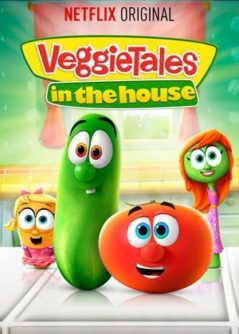
VEGGIETALES IN THE HOUSE: Bob’s Bad Breath/Trading Places
Positive character lessons, but lighter on Scripture than other episodes.
Should You Watch It?
These two segments offer children clear lessons about attitude, respecting differences, and appreciating the people around them. Bob learns that a bad attitude makes his new job harder, while his attempt to find a more suitable roommate teaches him to appreciate Larry.
The tradeoff is that Episode 3 is less biblically explicit than other episodes. While most episodes include multiple Bible verses and references to God, these segments focus completely on attitudes and personalities.
For a family seeking positive character traits, this is a wholesome option. But because the entertainment quality is modest and the biblical content is lighter, wait and see rather than making it a priority.
The Story
NO SPOILERS — WE KEEP THE SURPRISESIn “Bob’s Bad Breath,” Bob the Tomato starts a new job as a store greeter but struggles to smile after being kept awake by Larry’s bad breath.
In “Trading Places,” Bob becomes tired of living with Larry and decides to switch roommates with Jim and Jerry across the kitchen. The change teaches Bob something unexpected about appreciating the roommate he already has.
Is It Any Good?
Two stars means this episode offers worthwhile lessons but is not especially strong as entertainment. The situations are goofy and center on recognizable personality conflicts, giving children simple ways to think about attitude and living with others.
Its main weakness is the lack of the Bible verses and references to God found in most other episodes. The positive messages remain, but the episode does not offer the same biblical depth.
The Worldview
The source describes these two episodes as having a strong Christian, biblical worldview, even though they contain less Scripture content than other episodes. They emphasize respecting people’s differences, maintaining a good attitude, and appreciating others rather than focusing directly on Bible verses or references to God.
That emphasis aligns with Scripture’s call to patience, humility, and love for others. The episodes’ central lesson about attitude fits this wisdom: “A soft answer turns away wrath” (Proverbs 15:1).
The Content Guide
The specifics — spoilers included by nature — so you can judge for your own family.
Content Summary
Strong Christian, biblical worldview, but these two episodes are a little more goofy, with less Scripture content, showing the importance of respecting people’s differences and having a good attitude; and, nothing objectionable.
Talk About It
Questions for the drive home, the dinner table, or the youth group.
Bob struggles to greet people with a smile after a difficult night. How can your attitude affect the way you treat others?
Proverbs 15:1 · Philippians 2:14–15Bob wants a roommate more like himself, but learns to appreciate Larry. What differences in other people can you learn to respect?
Romans 12:10 · Philippians 2:3–4What does it look like to change a bad attitude instead of blaming someone else?
Ephesians 4:22–24 · Colossians 3:12–14The Final Word
These segments give children positive lessons about attitude, differences, and appreciation, with nothing objectionable. But they are lighter on Scripture than other episodes and only modest as entertainment. For a Bible-rich viewing experience, wait for a stronger episode. WAIT AND SEE.