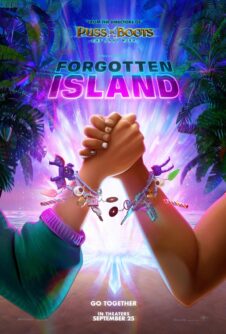
FORGOTTEN ISLAND
Two best friends fight for their memories on a magical island.
Should You Watch It?
Families should approach this one with serious caution. It pushes the PG rating to the limit and beyond. The story draws from Philippine folklore, with colorful magic, mythical creatures, and supernatural lore woven throughout.
Like KPOP DEMON HUNTERS, its dazzling fantasy may captivate younger viewers before they grasp the important difference between cultural mythology and biblical truth. With portals, spells, potions, vampires, and demons, the story takes several dark turns.
Although the movie targets younger audiences, it explores distinctly teenage topics. Impressionable minds will take in nipple rings, tattoos, and “firerhea,” burned buns. Add even more scatological humor, crude language, and frightening creatures, and Nakali Island offers far more mature material than the rating suggests.
The Story
NO SPOILERS — WE KEEP THE SURPRISESOn the eve of Raissa’s move to the United States, lifelong best friends Jo and Raissa face a major change. Jo worries that distance could pull them apart. As children, the girls heard stories from Raissa’s grandmother about the creatures and lore of Filipino folklore.
Then, the girls discover a mysterious portal that takes them to Nakali, a magical island filled with creatures from those stories. As Jo and Raissa search for a way home, they encounter strange allies, frightening creatures, and a terrible secret. Escape may come at the cost of their memories of each other.
Now, the best friends must find a way off the island before they lose the one thing they hope to save: their friendship.
Is It Any Good?
Three stars for the animation alone, this is a Dreamworks movie, afterall. The screen bursts with gorgeous visuals that seamlessly shift from polished 3D animation to anime-inspired sequences and comic book-style artwork. The changes feel natural, not jarring, and each style adds its own splash of energy and imagination.
The ’90s setting also delivers a killer soundtrack, with nostalgic hits and Filipino artists that give the movie musical personality. The voice cast brings plenty of charm, too. H.E.R. and Liza Soberano bring Jo and Raissa warmth and genuine best-friend chemistry.
The storyline, however, sometimes feels all over the place. After a wild night, Jo and Raissa have only Polaroid pictures from the previous evening to help piece together what happened and find the magical key to getting home.
The setup has a quirky THE HANGOVER for kids quality as the girls try to reconstruct a night they barely remember while navigating a magical island packed with mythical creatures. The result makes for a colorful, chaotic adventure that looks incredible, sounds fantastic, and occasionally leaves viewers wondering what in the world just happened.
The Worldview
Make no mistake, this movie carries a strong pagan and occult worldview rooted in Filipino folklore. The Manananggal, the terror of Nakali, splits her body in half and flies off to feed on blood. Her only companion? Her own dark thoughts. The girls team up with a goofy weredog, a tiyanak (a ghost baby), a kapre giant, a merman prince, and mushroom duwendes. Batiba, a giant spirit cat based on the batibat, will send the girls home only if they hand over their memories.
Here, memories hold magic power, and a memory demon adds to the danger. Portals, spells, magical charm bracelets, amulets, talk of fate, and even quantum tunneling drive the story. The peril stays intense and relentless as Raissa fights to save their memories, building to an epic showdown with the Manananggal. Nakali runs on bargains and superstition, with no biblical truth behind it.
Beneath the magic sits a moral story about friendship, family, tradition, loyalty, and forgiveness. The biggest threat to Jo and Raissa comes from the secrets they keep. Raissa hides her dream of college in America, and Jo quietly sabotages their way home because she can't bear to lose Raissa.
Their friendship survives only when they own up and forgive each other. Jo then gives up her memories so Raissa can chase her dream. Now THAT shows real love. The movie also honors Jo's grandmother, Lola, whose tales first brought the girls together. Nakali demands a price to go home, but Christ already paid it in full.
The Content Guide
The specifics — spoilers included by nature — so you can judge for your own family.
Dominant Worldview and Other Worldview Content/Elements
Strong pagan and occult worldview drawn from Philippine mythology, featuring a vampiric Manananggal, a tiyanak, a kapre, a kataw, duwendes, a weredog, and a batibat spirit that trades passage home for memories. Includes portals, spells, charms, a sand dollar key to a quantum tunnel, references to fate, and quantum tunneling in a realm governed by deals and folk belief rather than God's truth. Strong biblical and moral elements celebrate friendship, loyalty, honesty, redemption, and forgiveness, as two best friends confess the lies that nearly tear them apart and reconcile. One friend surrenders her memories so the other can pursue her future, exemplifying selfless love that reflects Christ. A light Christian element appears when a character addresses a portrait of Jesus and says, "What's up, Jesus," alongside pro-family themes that honor heritage and a grandmother whose stories spark the girls' childhood bond
Foul Language
Frequent mild foul language with several uses of stupid, crap, son of (stops short of saying it), losers, OMG, frickin’, dang, nards, hella, bunghole, shut up, screw it, pissing, butts, idiot, etc. A photo of a girl throwing up, a character burps and farts fire, a weredog urinates multiple times to mark his territory, fart jokes, and bathroom humor; a childbirth scene is depicted, though nothing explicit is shown.
Violence
Frequent fantasy violence includes a bus losing control and crashing into the beach, fireworks, characters slapping, hitting, falling into a portal, characters duct tape another to a tree, a dance-off with a switchblade that impales a weredog’s leg, a girl falling into the water and nearly drowning, and epic supernatural battles. Intense peril runs throughout, with terrifying creatures breathing fireballs, flying, possessing separable body parts, moving jerkily, glowing eyes, sharp claws, and a merman transforming from a dehydrated skeleton back again. An oversized baby demon with a third eye ignites and yells when angry
Sex
No sexual content. Two girls hold hands and embrace in a non-sexual, platonic manner. One character dances over a radio with pelvic gyrations, shot from a low camera angle looking up
Nudity
Frequent animated upper male nudity as characters walk around in swimsuits at the market. A girl discovers that a crown she woke up wearing is a nipple ring belonging to a mythical man, with a camera pan to a man's bare chest and nipple rings. An effeminate merman wears netting for a top with singing starfish pasties over his sculpted bare chest. A burned bare bottom is shown after a character burps fire, and a photograph displays a baby with a bare bottom sitting on a toilet
Alcohol Use
No alcohol use, but fairies consume a highly caffeinated energy drink and appear buzzed before closing shop to throw a rave
Smoking and/or Drug Use and Abuse
No smoking. Several characters drink various potions from potion bottles
Miscellaneous Immorality
Two girls skip going into the principal's office. A bully calls two characters losers, leading them to steal his car parts to create a rocket. A character steals wings from a demon vampire. A memory demon exhibits agoraphobia and tricks individuals into trading their memories for homeward passage. A weredog double-crosses characters, luring them to the memory demon’s cave. A character conceals the key to open the portal home. Best friends argue and say hurtful things to one another. Characters express jealousy and act out of greed but ultimately demonstrate remorse, repent, apologize, and forgive each other in the end.
Talk About It
Questions for the drive home, the dinner table, or the youth group.
When a story presents magic, spells, portals, and supernatural creatures as part of an exciting adventure, how can Christian families help children distinguish fantasy from the spiritual truth found in Scripture? Deuteronomy 18:10–12
Why does Scripture call believers to seek God for wisdom and guidance rather than look to supernatural powers, even when those powers appear helpful or harmless? James 1:5
What does the Bible teach about the importance of guarding our hearts and minds when entertainment makes spiritual darkness look colorful, exciting, or appealing? Proverbs 4:23
When friendship, courage, and loyalty form the heart of a story, how can those good qualities point us toward biblical truth without making the story’s supernatural worldview true? 1 Thessalonians 5:21–22
The Final Word
FORGOTTEN ISLAND charms the eye and tugs at the heart, but it pulls kids into a pagan world of spirits and superstition. The scares hit hard, the humor runs crude, and little of it lines up with Scripture. The story does wrestle with a question every graduate faces: can friendship survive a goodbye? Sadly, a few sweet moments don't outweigh the darkness. Families should skip this trip altogether.