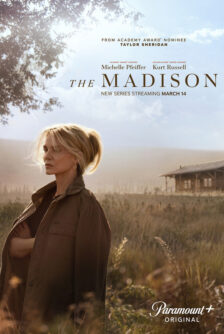
THE MADISON: Episode 1.1
Gorgeous, well-made grief drama — but the content says skip it.
Should You Watch It?
Here's the tension at the heart of this one. THE MADISON's first episode is genuinely well-made — Michelle Pfeiffer and Kurt Russell anchor a story about a sudden widow discovering her late husband's hidden love for the Montana wilderness, and the source calls it four-star television: beautiful landscapes, emotional music, strong performances, a family finding each other again through grief. Craft alone would make this an easy recommendation.
But the content rating lands at −3, and that number carries real weight. In 68 minutes, the episode delivers seven f-words, four s-words, a woman punched in the face, and storylines that treat dodging honesty and legal responsibility as almost reasonable. That's a lot of ground for one episode, and it's exactly what Movieguide reserves its strongest cautions for, whatever the filmmaking around it looks like.
So the honest answer: admire the craft if you're curious, but don't plan family viewing around it, and don't expect an easy conscience watching it alone either.
The Story
NO SPOILERS — WE KEEP THE SURPRISESPreston Clyburn is a wealthy New Yorker with a secret second life: an annual fishing trip to his brother's cabin in the Montana wilderness, far from his family's Manhattan apartment. When tragedy strikes on that trip, his wife, Stacy, and their grown daughters must leave the city behind to face what he left unfinished — and to discover why this rugged, unglamorous place meant more to him than the life they built together.
Is It Any Good?
Four stars, and the source's admiration is real. The direction leans hard into two contrasting worlds — the sweeping, unhurried beauty of Montana rivers and mountains against the frantic, phone-fixated churn of Manhattan life — and that contrast does real emotional work. Performances carry the weight: a family caught in shock and grief that never tips into melodrama, with comic relief from city people out of their depth in the country that lightens without cheapening the loss. The episode is patient where it needs patience — journal entries, remembered phone calls, small objects left behind — building toward Stacy's quiet realization that she spent years avoiding the one place that mattered most to her husband. It's confident, well-acted television, elevated, in the source's words, "beyond another Montana story like Yellowstone."
The Worldview
The source finds a strong moral worldview running through this episode, and it's easy to see why. At its center is a marriage the story takes seriously — a wife who loved her husband deeply even as she avoided the place that fed his soul, and a widow who discovers, through his absence, how little true wealth has to do with money. The daughters' brokenness — one drowning in a bad divorce, one selfish and immature — never excuses them from showing up for their mother; family, this episode insists, is worth the discomfort of reconnecting.
The episode also treats mortality with unusual seriousness, letting characters name their own regret at working so hard for so long without living. That's a biblically sound instinct, even stated in secular terms.
One worldview note is worth naming plainly: the episode uses a character's fear of being dismissed for political reasons as commentary on what the source calls "the absurdity of modern society's political standards." That's a deliberate cultural argument embedded in the storytelling, not incidental, and viewers should know it's there.
What the episode can't offer is the full answer its own grief is reaching for. A family discovering "wealth beyond money" in a mountain cabin is groping toward something real — but the fullest answer to that ache isn't in Montana. It's in the treasure Jesus points to: "Do not lay up for yourselves treasures on earth... but lay up for yourselves treasures in heaven" (Matthew 6:19–20).
The Content Guide
The specifics — spoilers included by nature — so you can judge for your own family.
Dominant Worldview and Other Worldview Content/Elements
A strong moral worldview that depicts a true loving marriage as a sudden widow grapples with the shocking loss of her husband. She had already been noticing the disappointment of her life which was lacking in true meaning outside of her marriage.. The daughters don’t have a strong relationship with their father, as conversations focus on money. One daughter struggles with a bad divorce, the other is selfish and immature. However, they are both sticking with their mother to also make up for their part in the broken relationship they have with their father. This strong sense of family shines through the grief, showing a purposeful willingness to be there for each other in this difficult time. With this shocking loss, both her and her children begin to reconnect, finding a simpler life through the pieces her husband left behind. There are strong themes of mortality and the passing of time through generations: as both the widow and her husband separately discuss being too old to enjoy life after working so hard. She knew that he gained so much from Montana trips, but she always stayed away: partly due to the lack of indoor plumbing but mainly to allow him a sense of freedom without pressure to keep her and the kids happy. While religion is not expressly discussed, the sentiment throughout the plot of this episode is morally sound. A majestic backdrop of nature with the ticking clock of mortality, this family is coming together in a quiet, simple but rewarding adventure to discover what their father wanted so desperately to share with them
Foul Language
Strong language, two instances of profanity, 11 instances of obscenity with seven uses of the “f’ word and four uses of the “sh” word
Violence
A man punches a woman in the face and steals her shopping bags without warning. A plane crash is implied but not shown. Body bags are shown but remains are not
Sex
No sex is shown or implied. Husband mentions having sex with his wife in a phone conversation but no details are discussed.
Nudity
A woman is shown in the bath, but no nudity shown
Alcohol Use
Characters drink socially and to cope with stress
Smoking and/or Drug Use and Abuse
No smoking or drug abuse shown;
Miscellaneous Immorality
Moral relativism where the law often contradicts a humane approach such as a woman being asked to identify her husband’s body. She struggles with the emotional weight of having to carry the image, despite lawful necessity. One character’s left-leaning political correctness precludes her from reporting her attacker or being taken seriously – illustrating the absurdity of modern society’s political standards. Stealing. Dysfunctional family behavior in the beginning (always on phones, no true connection) but it seems that the plot of this series aims to resolve.
Talk About It
Questions for the drive home, the dinner table, or the youth group.
Stacy realizes she avoided Montana for years, and only after losing her husband does she understand what he needed there. Where might you be avoiding something that matters to someone you love?
Proverbs 27:1 · Ephesians 5:33The daughters don't have a strong relationship with their father, and money crowded out real conversation. What does Scripture say we should treasure above wealth?
Matthew 6:19–21 · 1 Timothy 6:9–10The story suggests true wealth is found beyond money, in family and simplicity. How does that compare with what Ecclesiastes concludes about life "under the sun"?
Ecclesiastes 2:11 · Ecclesiastes 5:10One storyline shows a character silenced by fear of political judgment rather than telling the truth. When should conscience outweigh fear of how others will judge us?
Proverbs 29:25 · Galatians 1:10The Final Word
THE MADISON is a beautifully made piece of television, and if craft were the only measure, we'd send you straight to Paramount+. But between the profanity, the violence, and the moral relativism tucked into its family drama, the content outweighs the artistry here. Our answer stays what it started as: skip it, and look instead at for a Montana story your whole family can watch together.