SYLVIE’S LOVE
Beautifully styled romance, but its adultery calls for adult discernment.
Should You Watch It?
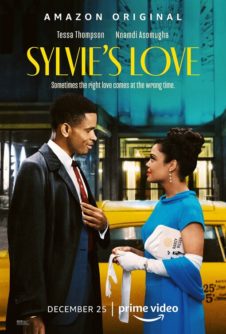
Sylvie’s Love has real appeal. Its late-1950s and early-1960s New York setting comes alive through fantastic sets, costumes, and music. The performances are good, and the romance begins with a compelling setup involving a young woman with television ambitions and an aspiring saxophone player.
But the movie’s positive ideas are repeatedly compromised. It celebrates romantic love, providing for one’s family, honesty, and showing grace to people who have wronged you. At the same time, its story centers on secrets, an illicit affair, and a continuous stream of implied sexual encounters and deceit. The modern sensibility sometimes overwhelms the old-fashioned style.
This is best saved for discerning adults at home, where you can discuss its ideas and control the experience.
The Story
NO SPOILERS — WE KEEP THE SURPRISESSet in New York in the late 1950s and early 1960s, the film follows Sylvie, a young woman who dreams of working in television, and Bobby, an aspiring saxophone player. They meet while Sylvie works at her father’s Harlem record shop, but her family has steered her toward an engagement with a wealthy man named Lacy.
As Sylvie and Bobby grow closer, family expectations and Bobby’s musical ambitions pull them in different directions. Years later, their past still shapes the choices they must make.
Is It Any Good?
Three stars means this is a good-looking, appealing film whose weaknesses keep it from becoming truly satisfying. The period atmosphere is a major strength. The sets, costumes, and music are fantastic, and the performances are good.
The problem is the storytelling. Endless melodramatic beats and occasional odd pacing weaken the compelling first-act setup. The movie’s stylish presentation remains engaging, but the melodrama increasingly overshadows its strongest elements.
The Worldview
The movie presents a strong, slightly mixed pagan worldview in which characters often deny that their actions have severe consequences. Its view of sex is hedonistic and unbiblical, while its romantic framework treats an illicit affair as central to the characters’ pursuit of love.
The film also includes feminist elements. Sylvie’s character arc toward career goals and her old lover is presented as a form of feminist empowerment. That emphasis can sit uneasily beside the movie’s more constructive themes: honesty, providing for one’s family, and showing grace to people who have wronged you.
The film recognizes that dishonesty damages relationships and that lies can have profound consequences. Those moral insights align with biblical wisdom, even as the movie’s treatment of sex and romantic fulfillment departs from a biblical view. Scripture calls believers to speak truthfully: “Therefore, having put away falsehood, let each one of you speak the truth with his neighbor” (Ephesians 4:25).
The Content Guide
The specifics — spoilers included by nature — so you can judge for your own family.
Dominant Worldview and Other Worldview Content/Elements
Strong, slightly mixed pagan worldview set in the late 1950s and early 60s where characters often deny that their actions have severe consequences, there is a hedonistic, unbiblical view of sex with many implied affairs, with some feminist elements where the lead female character eventually pursues career goals, mitigated by light moral, redemptive themes of the importance of honesty, providing for one’s family and showing grace to people who have wronged you
Foul Language
Two “d” words, one “s” word, no profanities, and a brief racist conversation
Violence
No violence
Sex
Partially depicted fornication scene, an adulterous affair, many implied extramarital affairs, brief suggestive dancing, and the story is a romance and centers around one character not sharing that she’s pregnant out of wedlock
Nudity
Brief upper male nudity, some dancers wear revealing clothing, two people appear in their underwear in bedroom scene, but camera cuts away Alcohol Use/Abuse: Consistent drinking throughout including bars, parties and at home, with several characters being seen drunk
Smoking and/or Drug Use and Abuse
No drugs, but lots of smoking throughout to fit the time period;
Miscellaneous Immorality
There’s a theme of dishonesty and deceit in regards to relationships throughout the entire movie.
Talk About It
Questions for the drive home, the dinner table, or the youth group.
The film presents romantic love alongside dishonesty. Why do secrets damage relationships, even when people believe they are protecting love?
Ephesians 4:25 · Proverbs 12:22What does it mean to provide for one’s family without allowing money, status, or career goals to control a relationship?
1 Timothy 5:8 · Matthew 6:19–21The movie includes people who have wronged one another. What is the difference between showing grace and pretending that wrongdoing does not matter?
Ephesians 4:32 · Romans 12:18–21Sylvie pursues career goals while navigating family and romantic expectations. How can ambition be used faithfully rather than selfishly?
Colossians 3:23–24 · Philippians 2:3–4The Final Word
Sylvie’s Love is stylish, well performed, and filled with fantastic period music and design. Its better themes cannot outweigh the persistent sexual immorality and deceit. WAIT FOR HOME — ADULTS ONLY. For a different family movie night, see.