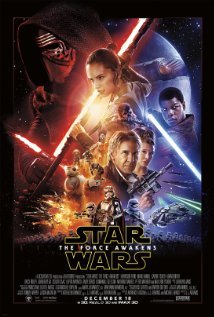
STAR WARS: THE FORCE AWAKENS
Wonderfully familiar and fresh — but its worldview demands adult discernment.
Should You Watch It?
This is the STAR WARS movie many fans have been waiting for. It is exciting, emotional, well acted, and filled with strong moral content, redemptive moments, pro-family sentiments, and opposition to totalitarian bullies. Harrison Ford and newcomer Daisy Ridley stand out, while the action keeps the movie moving.
The serious concern is its worldview. The film presents the Force as an impersonal energy in everything and around everyone. It also introduces mystical visions, mind control, and confusing ideas about balance between good and evil. Those ideas conflict with the movie’s stronger message that the good must overcome the dark side.
Adults can find much to enjoy and discuss here. But because the film’s worldview is central rather than incidental, it is not a family-suitable choice for children or young teens. WORTH THE TRIP — ADULTS ONLY.
The Story
NO SPOILERS — WE KEEP THE SURPRISESA new threat called the First Order seeks to destroy the new republic. General Leia Organa sends her best pilot, Poe Dameron, to find a map that may reveal where her missing brother, Luke Skywalker, has gone.
The republic needs Luke to train new Jedi warriors. Soon, a repentant storm trooper named Finn and a feisty scavenger named Rey become essential to the effort to get the map to Leia and her resistance fighters.
Is It Any Good?
Four stars means this is among the finest STAR WARS films since the original trilogy, probably since THE EMPIRE STRIKES BACK. It has a tight script, exciting action, strong characterizations, clever one-liners, nostalgic moments, and emotional scenes.
J.J. Abrams directs the action skillfully and works well with the actors. Harrison Ford, Carrie Fisher, and Mark Hamill make excellent use of their familiar roles. Daisy Ridley is a striking discovery, and John Boyega fits naturally with the ensemble. Adam Driver makes an imposing antagonist.
A few lines of exposition and some dialogue in the second half are weaker. The music can feel repetitive, Oscar Isaac’s character needed more development, and the redemptive climax could have been stronger. Even so, this is a superb popcorn movie.
The Worldview
The film contains strong moral elements. It opposes totalitarian control, extols doing the right thing, expresses pro-family sentiments, and presents sacrifice, repentance, and redemption positively. One character resists pressure to conform, and the story insists that the good must defeat the dark side.
Its central problem is the Force. The movie presents it as a universal, impersonal energy that is part of everything and surrounds everyone. Characters use it to control minds and move objects and people without touching them. Mystical visions and talk about restoring “balance” create a confused mixture of monism and moral dualism, even though the story itself argues that darkness must be overcome.
The film’s redemptive moments fit better with ethical monotheism than with an impersonal universe where morality is ultimately an illusion. Christian viewers should distinguish this mystical system from the Gospel’s teaching about redemption through a personal God and fellowship with Jesus Christ through the Holy Spirit.
The Force offers an impersonal answer to human longing for power, purpose, and redemption. Scripture points instead to a personal Savior: “I am the way, and the truth, and the life” (John 14:6).
The Content Guide
The specifics — spoilers included by nature — so you can judge for your own family.
Content Summary
Strong pagan, somewhat mixed, worldview with New Age monism regarding the impersonal and all-encompassing Force, (including confusing talk about restoring “balance” to the Force although it’s clear that the “good side” of the Force must overcome and perhaps even destroy the “dark side” of the Force), characters use the occult power of the Force to control minds and move objects and people without physically touching them, some pagan mysticism includes mystical visions, but mitigated by strong moral elements and some redemptive elements including strong anti-totalitarian message, villains try to control people and make them conform, but one character resists, doing the right thing is explicitly extolled, strong pro-family sentiments expressed, and sacrifice and repentance promoted; two “h” obscenities; strong, exciting action violence includes explosions, laser gunfights, lightsaber battles, people killed, spaceships flying about and chasing one another, fighting, character thrown against tree, characters wounded, large monsters attack people, brief images of blood, and character apparently has been beaten up, and villain tries to torture characters to talk; no sexual content, but some implied romance and hugs; no nudity; implied alcohol use; no smoking or drugs; and, brief lying but exposed and lead villain gets uncontrollably angry when things don’t go his way.
Talk About It
Questions for the drive home, the dinner table, or the youth group.
The film presents the Force as an impersonal power, while the Gospel presents God as personal and relational. Why does that difference matter?
John 14:6 · Acts 17:24–25The story praises resistance to tyranny and pressure to conform. What does Scripture teach about standing for what is right when powerful people demand obedience?
Acts 5:29 · Romans 12:2The film suggests that people who fall into darkness can turn back. How is biblical repentance more than simply changing sides?
2 Corinthians 7:10 · 1 John 1:9The movie values sacrifice and family loyalty. How do these themes point toward the greater sacrifice described in Scripture?
John 15:13 · Ephesians 5:25The Final Word
This is a thrilling, well-made STAR WARS adventure with moral and redemptive strengths. Its impersonal mysticism and confused view of good and evil require serious discernment. For adults who can engage those ideas thoughtfully, WORTH THE TRIP — ADULTS ONLY. For younger viewers, choose something else.