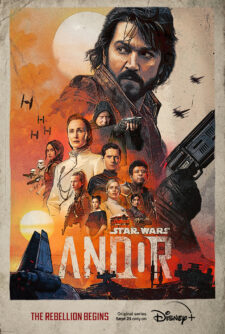
STAR WARS: ANDOR: Episodes 1.1-3
This isn’t your grandfather’s Rebel Alliance — discerning adults should wait.
Should You Watch It?
The first three episodes of STAR WARS: ANDOR have real strengths. The acting, art direction, setting, and editing are excellent. The third episode becomes action packed and compelling after the first two move slowly. The story also presents anti-totalitarian themes and affection between Andor and his adoptive mother, along with his search for his missing sister.
The serious problem is moral. Andor murders a security guard in cold blood, yet a Rebel Alliance spy recruits him without addressing that crime. The Empire is evil, but the police are still right to pursue accountability for murder. That moral ambiguity compromises the series’ otherwise positive themes.
For discerning adults, wait and see rather than make this a family viewing choice. It is not for children or young teens.
The Story
NO SPOILERS — WE KEEP THE SURPRISESCassian Andor, a thief living and working in the shadows, travels to another planet searching for his long-lost sister. After two security guards accost him in an alley, Andor becomes wanted for murder.
A young police inspector begins investigating while a mysterious off-world contact tries to recruit Andor for the Rebel Alliance. At the same time, Andor’s life with his adoptive mother and memories of the sister he left behind come into focus.
Is It Any Good?
The listed source rating is four stars, reflecting the show’s excellent acting, art direction, setting, and editing. The third episode is action packed, while the first two are somewhat engaging but move slowly as the story follows Andor’s life as a thief and explores his past.
The source’s prose gives the overall episodes three stars, creating a rating discrepancy noted above. Either way, the craft is a clear strength, even though the opening episodes take time to become compelling.
The Worldview
The series presents an anti-totalitarian viewpoint. The Empire is run by an evil emperor and supported by extensive military and police forces, while the general population sympathizes with the Rebel Alliance. That resistance to tyranny is a positive element.
The deeper moral framework is strongly Romantic and antinomian. The Rebel Alliance recruits a thief wanted for murder, and the recruiter ignores the fact that Andor recently killed a man in cold blood. The police pursuing Andor work for the Empire, but they are still right to seek accountability for his crime. The story’s opposition to totalitarianism is therefore morally compromised.
The episodes also contain positive family elements. Andor’s adoptive mother rescues him as an orphaned teenager and takes him under her wing. Andor continues searching for the younger sister he was forced to leave behind.
The series longs for family love and justice, but it does not clearly connect those goods to moral accountability before God. Scripture says, “For the anger of man does not produce the righteousness of God” (James 1:20).
The Content Guide
The specifics — spoilers included by nature — so you can judge for your own family.
Dominant Worldview and Other Worldview Content/Elements
Strong Romantic, antinomian worldview in three episodes where the Rebel Alliance hires a thief wanted for murder to help it fight against a totalitarian galactic empire run by an evil emperor, his right-hand man and vast military and police forces, so there’s some positive morality and anti-totalitarianism (the three episodes show the general populace’s sympathies lie against the Empire and in favor of the Rebel Alliance), but it’s morally compromised, and woman finds the title character as an orphaned teenager whom she takes under her wing and has become his adopted mother, so there’s some love and affection there, and the title character is looking for his long-lost sister whom he was forced to leave behind
Foul Language
Brief foul language in two of three episodes, including no obscenities or profanities in Episode 1.1, one obscenity and zero profanities in Episode 1.2, and three obscenities (including one “s” word) and one light OG profanity in Episode 1.3
Violence
Strong action violence includes title character is jumped in an alleyway by two off-duty security guards, one of the guards accidentally dies during the fight so the title character shoots the witness dead in cold blood, a military spaceship of some kind crashes, teenage scavengers investigates the crash site, two or three of the passengers are still alive and kill one teenager so the other teenagers use arrows to shoot one dead, and there’s a long gunfight between two men and Imperial police trying to arrest one of the men for murder, plus explosions occur during that fight
Sex
In Episode One, title character visits a bar with dancing girls in a brothel where his long-lost sister was working and in Episode Two implied fornication occurs when a female friend of the title character sleeps with her boyfriend (another man) at boyfriend’s place (there’s some brief passionate kissing before they go into his bedroom)
Nudity
No explicit nudity, but woman has a T-shirt and shorts on when she wakes up in her boyfriend’s bed (boyfriend is already dressed and up), and there’s some female dancing in the background at a bar located in a brothel (the dancers are clothed, so nothing salacious is shown)
Alcohol Use
Some alcohol use
Smoking and/or Drug Use and Abuse
No smoking or drugs;
Miscellaneous Immorality
Implied thievery (title character appears to make a living by stealing things and being a scavenger who lives and works in the shadows), title character evades the police by shooting his way out because he’s wanted for murder, a man from a “Rebel Alliance” who wants to recruit the title character helps him evade the police by shooting their way out of a trap, the title character describes the Empire as so prideful, “fat” and “satisfied” that they’re vulnerable to clever thieves like him.
Talk About It
Questions for the drive home, the dinner table, or the youth group.
Andor is wanted for murder, yet the Rebel Alliance recruits him anyway. Why does opposing an evil government not make every action morally right?
Romans 12:9 · Isaiah 5:20The police inspector believes the murder should not be ignored, even though he serves the Empire. Why does justice matter even when imperfect people or institutions pursue it?
Micah 6:8 · Romans 13:3–4Maarva rescues Andor and becomes his adoptive mother. What does this relationship show about the responsibility to protect vulnerable people?
James 1:27 · Psalm 82:3–4Andor continues searching for his long-lost sister. How can love for family shape perseverance and courage?
1 Corinthians 13:7 · Galatians 6:2The Final Word
ANDOR is well-crafted science fiction with excellent acting, art direction, setting, and editing. But its moral ambiguity is serious: the Rebel Alliance recruits a thief wanted for murder without confronting his crime. For discerning adults, WAIT AND SEE — ADULTS ONLY. For family viewing, consider.