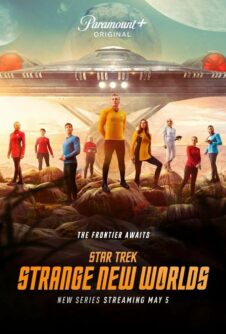
STAR TREK: STRANGE NEW WORLDS: Episodes 101-104
Star Trek makes a comeback with fun, idealism, and moral questions.
Should You Watch It?
These first four episodes are the closest Paramount has come to the original Star Trek series. They recapture its fun and heroic idealism while offering moral, humanist, and sometimes redemptive messages. The fourth episode is especially redemptive and includes biblical allusions.
The content is mostly clean, but the episodes include intense violence and peril, brief foul language, and two implied sexual situations in one episode. The first episode also presents a utopian, politically correct, globalist approach to political conflict that does not seriously consider whether one side might be more right or wrong than the other.
If your family includes older children who can handle those concerns, this is a worthwhile return to classic Star Trek's exploratory spirit. Watch the first four episodes with discernment, remembering that the remaining episodes could contain more of the same—or worse.
The Story
NO SPOILERS — WE KEEP THE SURPRISESThis prequel follows Christopher Pike, the second captain of the Enterprise, as he leads the crew into deep space for the United Federation of Planets.
Across four episodes, the crew works to stop a planetary conflict, investigates a planet-destroying comet, searches for a missing colony of genetically modified humans, and faces the ruthless alien Gorn. Each mission tests the Enterprise crew with life-and-death situations among strange and sometimes beautiful beings.
Is It Any Good?
Three stars means this is a good, enjoyable return to the original Star Trek's style, though not a flawless one. The first four episodes capture the original series' fun and heroic idealism more successfully than Paramount's other recent Star Trek productions.
The episodes also offer a mixture of moral, humanist, and sometimes redemptive messages. The fourth episode is the strongest in those terms and includes biblical allusions. The first episode's treatment of social upheaval and political conflict is more limited, presenting an idealistic humanist vision without fully considering the possibility that one faction may be mostly right and the other mostly wrong.
The Worldview
Star Trek: Strange New Worlds continues the franchise's utopian humanist outlook. It presents space exploration, science, technology, and an ideal society as ways to improve human life. It also recognizes that science and advanced computer systems can be used for evil purposes, while emphasizing that wisdom, logic, and moral tradition should guide how people resolve conflicts and fix problems.
This series is less humanist and more redemptive than many later Star Trek programs. Its first four episodes contain strong moral elements and occasional biblical allusions. Captain Pike says, “The best miracles are born from truth.” The series also includes mystical aliens with strong religious beliefs, and the Enterprise crew learns a lesson about bigotry and undue prejudice.
At the same time, the first episode promotes a utopian, politically correct, globalist approach to political conflict. Pike persuades two warring factions to make peace, but the episode does not consider whether one faction might be mostly right and the other mostly wrong. The series' worldview remains more human-centered than biblical, even when its moral instincts point in a constructive direction.
The show's longing for peace connects with Scripture's call to pursue it: “If possible, so far as it depends on you, live peaceably with all” (Romans 12:18).
The Content Guide
The specifics — spoilers included by nature — so you can judge for your own family.
Dominant Worldview and Other Worldview Content/Elements
A humanist, utopian worldview overall favoring a globalist attitude with some occasional socialist leanings, but often mitigated by strong moral elements and, sometimes, by some solid redemptive elements with biblical allusions such as the main hero says, “The best miracles are born from truth” in Episode 1.4
Foul Language
Seven obscenities (five “h” words and two “d” words) and no profanities in Episode 1.1, no foul language in Episode 1.2, five obscenities and no profanities in Episode 1.3, and one “h” obscenity in Episode 1.4
Violence
Strong and light, sometimes scary, action violence in first four episodes such as a military team fights to free crew members of spaceship who’ve been kidnapped, a huge ion storm threatens two men on a planet and spaceship above planet, crew members are infected by a genetically induced sickness from planet, colonists trying to reverse their illegal genetic modifications have been transformed into scary energy beings, a weapon blasts a makeshift connecting tunnel between two spaceships, and intense spaceship battles occur between the good guys and a race of mysterious and ruthless aliens who are said to eat their prey, including humans
Sex
Two implied fornication scenes in Episode 1.1 but no sexual content in Episodes 1.2, 1.3, 1.4
Nudity
Upper male nudity in two scenes in Episode 1.1, but no nudity in Episodes 1.2, 1.3, 1.4
Alcohol Use
Brief alcohol use in Episode 1.2
Smoking and/or Drug Use and Abuse
No smoking or drugs;
Miscellaneous Immorality
Some misguided aliens kidnap crew members in the first episode, the Enterprise crew misjudges a race of mystical aliens with strong religious beliefs but learns a lesson about bigotry and undue prejudice, doctor on spaceship is harboring a secret that has endangered its crew.
Talk About It
Questions for the drive home, the dinner table, or the youth group.
The Enterprise crew encounters people with strong religious beliefs. How can we reject prejudice while still testing every belief against truth?
1 John 4:1 · Acts 17:11The first episode urges two warring factions to make peace. What does biblical peacemaking require, and when might peace require truth and justice rather than surrendering principles?
Romans 12:18 · Isaiah 1:17The series presents science and technology as tools that can help or harm people. How should wisdom and moral tradition guide what we do with knowledge?
Proverbs 1:7 · James 3:17Captain Pike says, “The best miracles are born from truth.” What does Scripture teach about truth, and how does truth bring hope?
John 8:31–32 · John 14:6The Final Word
These first four episodes bring back Star Trek's fun, exploration, and heroic idealism. Their content calls for discernment, especially for younger viewers, but older children and adults can find worthwhile moral and redemptive themes here. Our answer is WORTH WATCHING — OLDER CHILDREN AND UP.