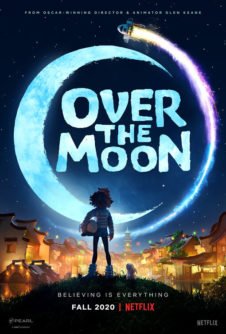
OVER THE MOON
A beautiful family musical, with mythology parents should weigh.
Should You Watch It?
Yes, if your family can engage thoughtfully with its mythology. Over the Moon is a warm, beautifully animated musical about grief, family, forgiveness, sacrifice, and learning to love again. Its music, performances, and animation work together especially well, while lighthearted creatures and humor balance the story’s sadness.
The concern is not the film’s moral heart but its spiritual backdrop. The story features a moon goddess, a moon-goddess holiday, and children who go looking for her after adults dismiss the stories as myth. That calls for discernment, especially with younger children.
If you want an emotionally rich family film and are ready to discuss its mythology, this is worth watching with middle schoolers and up.
The Story
NO SPOILERS — WE KEEP THE SURPRISESFei Fei is a razor-sharp 12-year-old Chinese girl whose mother once told her stories about Chang’e, a moon goddess. Four years after her mother’s death, Fei Fei struggles when her father begins dating another woman.
Determined to prove that her mother’s stories are true, Fei Fei builds a rocket to the moon. Her future stepbrother Chin and her pet bunny join the adventure, which leads them to a fantastic lunar kingdom filled with strange, funny creatures.
Is It Any Good?
Four stars means this is a highly entertaining, beautifully made film. The animation is lovely, and the music and performances blend effectively with the story. The film’s lighthearted animated fun gives needed balance to its heavier elements of sadness and loss.
Its emotional center is Fei Fei’s journey through grief and toward love for her new family. The moon goddess’s pop-star presentation can be jarring when Fei Fei and Chin first enter the moon’s fantasy realm, but the film remains endearing and moving overall.
The Worldview
The film presents a strong pagan, mixed worldview through Chinese folklore. It features a moon goddess, a holiday celebrating her, and a quest to find her, even though adults dismiss the stories as myth. The goddess mythology is used to highlight Fei Fei’s imagination and her love for her mother.
The film exalts family, love, sacrifice, forgiveness, and the healing that can come through relationships. Characters learn valuable lessons through hardship and eventually respond with love. Those moral and redemptive themes align with biblical concern for compassion, forgiveness, and caring for people who are hurting.
The film departs from a biblical view by placing these truths against a pagan spiritual backdrop rather than directing worship toward the one true God. Its central longing is healing after loss, a need Scripture recognizes: “He heals the brokenhearted and binds up their wounds” (Psalm 147:3).
The Content Guide
The specifics — spoilers included by nature — so you can judge for your own family.
Dominant Worldview and Other Worldview Content/Elements
Strong pagan, mixed worldview includes a moon goddess, celebration of a moon goddess holiday, children go in search of the moon goddess even though stories about the goddess are dismissed as myth by adults, the pagan backdrop is used to highlight the lead female character’s imagination and love for her mother, with some strong moral elements such as characters learn valuable lessons of how to heal, deal with grief and love others, a strong emphasis on the healing power of family and love, plus some moral, redemptive themes such as sacrifice and forgiveness
Foul Language
No foul language, but some brief name-calling
Violence
Some light violence and jeopardy/death includes a young girl loses her mother to illness and struggles to overcome her grief, references to a scary place called the Chamber of Exquisite Sadness, stories about a goddess on the moon who fought off demons and took an immortality potion to await reunion with her loved one even though she doesn’t know he has already died on earth, a boy thinks he can run through walls but only runs into them, animated fantasy violence, rocket almost falls back to earth but instead crashes on the moon, and other moments of mild peril
Sex
No sex
Nudity
No nudity Alcohol Use/Abuse: No alcohol
Smoking and/or Drug Use and Abuse
No smoking or drugs;
Miscellaneous Immorality
Some brief verbal bullying.
Talk About It
Questions for the drive home, the dinner table, or the youth group.
Fei Fei struggles to grieve her mother while accepting changes in her family. How can God meet us in grief, and how can a family show love to someone who is hurting?
Psalm 147:3 · Romans 12:15The film places family love and healing at its center. What are some practical ways your family can forgive, listen, and make room for one another?
Ephesians 4:32 · Colossians 3:13The story uses a moon goddess and a holiday celebrating her. How can we appreciate another culture’s stories while remembering whom Scripture calls us to worship?
Exodus 20:3 · Acts 17:22–31Fei Fei wants to prove that her mother’s stories are true. How should Christians respond when feelings, family traditions, and truth seem to pull in different directions?
John 17:17 · 1 Thessalonians 5:21The Final Word
Over the Moon offers beautiful animation, memorable music, and a tender story about grief and family healing. Its pagan mythology means younger children need careful parental judgment. For middle schoolers and up, it is WORTH THE TRIP — MIDDLE SCHOOL AND UP.