WHERE’S MARLOWE
A cold detective mockumentary best watched at home.
Should You Watch It?
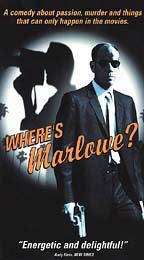
WHERE’S MARLOWE? has an appealingly odd premise. Two filmmakers document a small-time private-eye firm, then decide to help a likable but moody detective keep working long enough to pay his bills. The result brings silly documentary-style conversations, clumsy dream-chasing, and a real murder case.
But the film’s modest entertainment value comes with serious costs. Its satire treats humanity rather coldly. It also includes a strong sexual scene with partial nudity, plenty of strong foul language, and frightening gun threats, including a scene in which an old woman is nearly scared to death.
The movie may interest adults who enjoy low-budget mockumentaries and detective fiction, but the R-rated content makes it unsuitable for children and young teens. Watch it at home only if you are a discerning adult prepared for those concerns.
The Story
NO SPOILERS — WE KEEP THE SURPRISESTwo filmmakers set out to document a small private-eye agency run by friends Joe Boone and Kevin Murphy. After the friendship breaks apart, the filmmakers help Boone pursue cases so he can pay his bills before closing the office.
Their documentary project turns into a string of comical situations and a real murder case. The film’s mockumentary style follows these working men as they clumsily pursue their dreams.
Is It Any Good?
Two stars means the film has an identifiable comic idea but limited overall appeal. Its mockumentary approach, modeled on This Is Spinal Tap, creates many silly conversations in documentary format. The detective-fiction setup also draws on Raymond Chandler and Dashiel Hammett.
The film’s low-budget presentation and cold satire may make its comedy feel uneven. Boone is a sympathetic, sad-sack character, but the story’s final implication about film’s inability to reveal the truth of people’s lives leaves the movie more curious than satisfying.
The Worldview
The movie takes a romantic worldview while satirizing humanity, private-detective movies, and documentaries. Its satire is rather cold, although Joe Boone remains sympathetic as a sad-sack working man. Boone and the filmmakers are portrayed as people clumsily pursuing their dreams.
The film’s final scene implies that the art of film can never really reveal the truth of people’s lives. That idea leaves truth uncertain in a way that departs from a biblical view, in which God fully knows people’s hearts and lives. Scripture says, “O LORD, you have searched me and known me” (Psalm 139:1).
The Content Guide
The specifics — spoilers included by nature — so you can judge for your own family.
Content Summary
Romantic worldview satirizing humanity, private detective movies & documentaries; 29 obscenities & 15 profanities, a couple vulgar lines & non-graphic sexual references, & an image of dog feces; some violence, the strongest of which are two scenes where men hold guns at other people while shouting, in one case nearly scaring an old woman to death, & murder takes place off screen, but no corpse is shown; images of depicted sex between unknown couple, adultery & voyeurism; upper male & female nudity in depicted sex scene; alcohol use; smoking; and, lying, fits of anger, stealing confessed.
Talk About It
Questions for the drive home, the dinner table, or the youth group.
The filmmakers pursue a dream through a project that never fully reveals people’s lives. What can our ambitions reveal about what we value?
Matthew 6:21 · Proverbs 16:3The story satirizes humanity in a cold way. How can you tell the truth about human weakness without losing compassion?
Ephesians 4:15 · Colossians 3:12The film includes adultery, lying, anger, and stealing. Why does Scripture treat private choices as matters of character rather than merely personal decisions?
Luke 16:10 · Galatians 6:7–8The story includes gun threats and a murder case. What does Scripture teach about anger, fear, and the value of human life?
Matthew 5:21–22 · Genesis 1:27The Final Word
This low-budget mockumentary has an unusual premise and some silly detective-fiction comedy, but its cold satire and R-rated content limit its audience. For discerning adults who remain interested, watch it at home—not with children or young teens. Our answer is WAIT FOR HOME — ADULTS ONLY. For safer family viewing, see.