
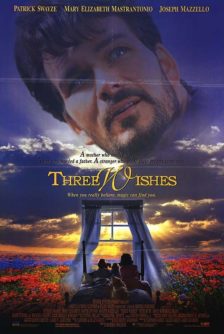
THREE WISHES
A warm family fantasy best saved for home and thoughtful discussion.
Should You Watch It?
THREE WISHES is gentle, family-affirming, and focused on love, self-sacrifice, and contentment. Jeanne welcomes a wounded stranger into her home, cares for her children, and receives kindness in return. The family bonds at the center of the film are its strongest feature.
But the film builds those values around a magical premise. A vagabond’s traveling companion is a genie disguised as a dog, and the genie grants the family three wishes. The source review describes that magical thinking as abhorrent to God, even while recognizing the film’s moral and uplifting qualities.
The movie is also warm yet forgettable, earning two stars for entertainment quality. Watch it at home if your family can discuss the difference between its worthwhile family values and its false magical framework. The practical answer: wait for home, especially for middle schoolers and up.
The Story
NO SPOILERS — WE KEEP THE SURPRISESIn the 1950s, young Tommy lives with his younger brother, Gunny, and their widowed mother, Jeanne. After Jeanne accidentally hits a traveling vagabond named Jack with her car, she invites him into their home while he recovers.
Jack’s traveling companion is more than an ordinary dog. As the family cares for their unexpected guest, a strange opportunity arises: each family member receives a wish. What follows tests their love for one another and points toward the possibility of contentment.
Is It Any Good?
Two stars means this film has worthwhile qualities but limited staying power. It is warm, moral, and uplifting in its attention to family bonds and self-sacrifice. Jeanne’s care for the stranger and her children gives the story a sincere heart.
The film is also forgettable. Its magical plot device may put off some viewers, and the story’s strengths do not overcome that central concern. It can provide two hours of innocuous entertainment, especially when parents are ready to explain its falsehoods.
The Worldview
The film exalts love between family members, generosity toward a stranger, self-sacrifice, and contentment. Jeanne welcomes Jack into her home after the accident, and the family’s kindness becomes central to the story. Jack also expresses the idea that a person’s thoughts shape who that person becomes, and he concludes with wisdom about being content in all things.
The major departure from a biblical worldview is the film’s magical premise. Jack is the companion of a genie disguised as a dog, and the genie grants wishes. The source review identifies this magical thinking as abhorrent to God. The film also includes meditation and prayer in an unknown language, with no clear non-Christian religion endorsed.
The story’s call to contentment points toward a biblical truth, but the film does not provide the source of that contentment. Scripture says, “I have learned in whatever situation I am to be content” (Philippians 4:11). For Christians, lasting contentment is found not in wishes but in Jesus Christ.
The Content Guide
The specifics — spoilers included by nature — so you can judge for your own family.
Content Summary
Moral worldview extolling love between family members with strong magical premise; 6 mild obscenities & 2 exclamatory profanities; man hit by car implied & boys have brief fist fight; brief rear & upper male nudity; alcohol use; and, man meditates & prays in unknown language with no clear non-Christian religion endorsed
Talk About It
Questions for the drive home, the dinner table, or the youth group.
The family welcomes Jack after Jeanne accidentally hits him with her car. What does Scripture teach about showing hospitality to strangers?
Hebrews 13:2 · Romans 12:13The film connects love and self-sacrifice with family life. How did Jesus describe the greatest kind of love?
John 15:13 · 1 John 3:16–18Jack speaks about being content in all things. What is the difference between biblical contentment and getting whatever we wish for?
Philippians 4:11–13 · Matthew 6:31–33The story uses a genie and wishes to solve problems. How should Christians think about magical promises and God’s real power?
Deuteronomy 18:10–12 · Acts 17:24–25The Final Word
THREE WISHES offers warm family values, kindness toward strangers, and a helpful conversation about contentment. Its magical premise remains a serious concern, and the film is more moral than memorable. Watch it at home, where you can guide the discussion. WAIT FOR HOME. For other options, see.