
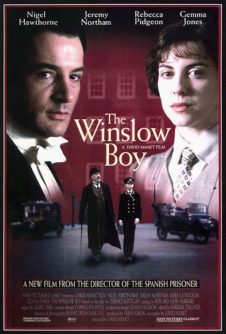
THE WINSLOW BOY
Let right be done in a thoughtful, family-friendly drama.
Should You Watch It?
A G-rated drama is unusual enough. A genuinely entertaining one is rarer still. THE WINSLOW BOY brings your family into a 1910 English household facing a son's accusation, then asks what justice costs when doing right disrupts comfort, reputation, health, and even love.
The film is especially strong in its moral questions. It considers whether a parent is pursuing justice or pride, how much one should sacrifice for truth, and whether the powerless deserve protection from the powerful. Its pivotal argument turns to Jesus, giving the story a distinctly Christian center, even as the film leaves several questions open for discussion.
The result is a worthwhile dramatic experience for the whole family. See it if you want a thoughtful film that will continue the conversation after the credits.
The Story
NO SPOILERS — WE KEEP THE SURPRISESIn England in 1910, 13-year-old naval cadet Ronnie Winslow is expelled from Osborne College after being accused of stealing a five shilling postal order. His father refuses to accept the accusation without a fight.
With the help of the celebrated attorney Sir Robert Morton, the Winslow family takes on a case that reaches far beyond one boy's reputation. As the pressure mounts, they must decide what they are willing to sacrifice for justice and truth.
Is It Any Good?
Four stars means this is an excellent film, and THE WINSLOW BOY earns that rating through its performances, writing, period detail, and powerful conclusion. The actors give fine performances, with Jeremy Northam brilliant as Sir Robert Morton and Rebecca Pidgeon compelling as the headstrong Catherine.
David Mamet's attention to period detail transports viewers to early-20th-century British society. The movie also builds carefully toward an extremely powerful ending.
There are flaws. The editing and sound are rough in several opening scenes, and Mamet's subtle direction and dialogue may make too fine a point of its stylistic games. Even so, this is a very good, worthwhile drama that may reward several viewings.
The Worldview
THE WINSLOW BOY presents a strong Christian worldview of justice. The powerless should be protected from the powerful, and doing what is right may require sacrifice. The film's moral questions are not shallow: it asks whether Arthur is pursuing justice or merely defending his pride, and whether truth is worth the damage done to a family's health, home, publicity, and relationships.
The movie also values family responsibility. Arthur is portrayed as a caring head of the family, parents receive respect from their children, and the story depicts the financial circumstances surrounding marriage in that period. The contrast between Arthur and his suffragette daughter, Catherine, raises questions about women's rights and causes Catherine to reconsider her views.
The film's Christian center arrives when Sir Robert quotes Jesus: “Whatever you do to the least of these, you do to me.” The story also includes humanist and moral elements, leaving the audience to ponder whether people must give up everything before turning to the One who can cause right to be done.
The cast gives the material strong performances, especially Jeremy Northam as Sir Robert Morton and Rebecca Pidgeon as Catherine. Mamet's careful period detail further strengthens the film's picture of early-20th-century British society.
Scripture calls us to “do justice, and to love kindness, and to walk humbly with your God” (Micah 6:8). This film's longing for justice points toward that calling, even as it leaves the final questions open.
The Content Guide
The specifics — spoilers included by nature — so you can judge for your own family.
Content Summary
Strong Christian worldview of justice where the pivotal argument winning the Winslow case (that the powerless must be protected against the powerful king) is summed up in Jesus' statement "Whatever you do to the least of these, you do to me," with some humanist & moral elements; 1 obscenity & two appeals to God; no violence; no sex; no nudity; smoking; and, issues of women's suffrage in the early 1900s.
Talk About It
Questions for the drive home, the dinner table, or the youth group.
Arthur asks whether justice is worth the cost. How can you tell when standing for what is right requires courage rather than pride?
Micah 6:8 · Philippians 2:3–4Sir Robert argues that the powerless must be protected from the powerful. Who around you might need someone to speak up for them?
Matthew 25:40 · James 2:1–6The film quotes Jesus: “Whatever you do to the least of these, you do to me.” How does that change the way we treat people who seem unimportant?
Matthew 25:35–40The Winslow family sacrifices comfort and security for truth. What does faithfulness look like when doing right becomes costly?
Galatians 6:9 · Hebrews 10:23The Final Word
THE WINSLOW BOY is a delightful, beautifully acted G-rated drama about justice, family responsibility, and the cost of doing what is right. Its thoughtful questions and Christian center make it an excellent choice for family viewing. WORTH THE TRIP.









