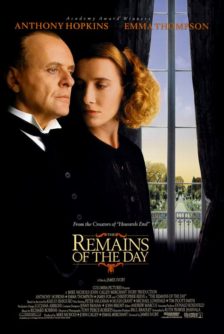
THE REMAINS OF THE DAY
Nearly perfect filmmaking about love, duty, and a life withheld.
Should You Watch It?
Yes. The Remains of the Day is filmmaking at its best, anchored by Anthony Hopkins’s colossal performance as Stevens, a proper and dedicated English butler, and Emma Thompson’s outstanding work as Miss Kenton, the forward-speaking housekeeper who challenges his rigid formalism.
The film considers what happens when duty becomes a prison. Stevens serves faithfully, but his propriety keeps him from expressing his love for Miss Kenton. Its positive portrayal of English life before World War II, Christian overtones, excellent performances, direction, screenplay, and cinematography make this a deeply rewarding choice.
If your family welcomes quiet, mature storytelling about love and service, this is worth seeing.
The Story
NO SPOILERS — WE KEEP THE SURPRISESStevens is the head butler at Darlington Hall, where he hires Miss Kenton as housekeeper. His master, Lord Darlington, hosts an international “peace” conference with delegates from several countries, including Germany, in the 1930s before World War II.
As Stevens and Miss Kenton work together, affection grows between them. Stevens must face what his devotion to propriety and service has kept him from saying.
Is It Any Good?
Four stars means this is nearly perfect filmmaking, and the source review strongly supports that judgment. Anthony Hopkins gives a colossal performance, using penetrating eyes, body language, and facial expressions to make Stevens’s restraint visible. Emma Thompson is superb as the efficient, outspoken Miss Kenton.
James Ivory’s direction, Ruth Prawer Jhabvala’s screenplay, and the cinematography also receive high praise. The film works through both exterior scenes and intimate close shots. Every performance is described as outstanding, making this a compelling example of filmmaking at its best.
The Worldview
The film presents English life at various societal levels before World War II in a positive moral light, with Christian overtones. It exalts dedication, order, service, and the possibility of love between people who work closely together.
At the same time, Stevens’s rigid formalism distorts those virtues. His sense of propriety and devotion to serving prevent him from divulging his true feelings. The film therefore recognizes that duty can become imprisoning when a person is too busy serving to listen, speak, or receive love.
Its central longing is for love that remains unspoken and a life that might have been lived more fully. Scripture reminds us that “love is patient and kind” (1 Corinthians 13:4), calling us toward love expressed in action and truth rather than hidden behind formality.
The Content Guide
The specifics — spoilers included by nature — so you can judge for your own family.
Content Summary
A positive moral portrayal of English life in various societal levels prior to World War II with Christian overtones; and, nothing objectionable.
Talk About It
Questions for the drive home, the dinner table, or the youth group.
Stevens is dedicated to serving, but his rigid formalism keeps him from expressing his feelings. When can self-control become an excuse for hiding what needs to be said?
Ephesians 4:15 · 1 Corinthians 13:4Lord Darlington hosts an international “peace” conference. What responsibilities do people have when they are given influence over others?
Micah 6:8 · James 3:1Stevens says, “I was too busy serving to listen to the speeches.” What might his words reveal about the difference between serving faithfully and failing to pay attention?
Luke 10:38–42 · Philippians 2:4The Final Word
With outstanding performances, graceful direction, and a thoughtful account of love, duty, and propriety, The Remains of the Day is a nearly perfect film. Its positive moral portrayal and Christian overtones make it a rewarding choice for families who appreciate mature storytelling. WORTH THE TRIP.