THE PRINCESS DIARIES
A delightful, wholesome fairy tale about responsibility, service, and growing up.
Should You Watch It?
Yes. THE PRINCESS DIARIES is a rare G-rated teen movie that is both entertaining and morally serious. Its fairy-tale premise gives young viewers the wish-fulfillment of discovering royal identity, but the film quickly turns that wish into a lesson about responsibility, virtue, service, and doing the right thing under pressure.
The movie is carefully crafted, with a coherent script, an intriguing plot, good acting, and unexpected turns that keep the story moving. Its content is gentle: minor slapstick, teenage kissing, revealing costumes, and a few worldview concerns, but no profanity or obscenity. The film's strongest message is that respect and privilege should lead to serving others.
For a wholesome family movie night, especially with children or young teenagers, this is an easy WORTH THE TRIP.
The Story
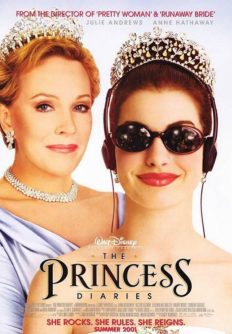
NO SPOILERS — WE KEEP THE SURPRISESMia Thermopolis is an awkward 15-year-old in San Francisco who feels invisible at her private school. Then her grandmother arrives with astonishing news: Mia is a princess and heir to the throne of Genovia, a small European nation.
Mia has only two weeks to decide whether she will accept her royal responsibilities and prepare to meet representatives from several nations. Queen Clarisse and her entourage begin transforming an ordinary teenager into a princess.
Is It Any Good?
Four stars means this is high-quality entertainment, even if it is not a great film. THE PRINCESS DIARIES is carefully made, with a coherent script, an intriguing plot, good acting, and an unexpected story that carries viewers along.
Anne Hathaway plays Mia wonderfully, while Julie Andrews portrays Queen Clarisse with aplomb. Hector Elizondo brings a twinkle to Joseph. The film's makeover story also has genuine substance: Mia's transformation is not merely about appearance but about learning responsibility, virtue, and service.
The Worldview
THE PRINCESS DIARIES presents a Christian moral worldview through a modern fairy tale. It treats responsibility, civility, confession, self-control, and service as virtues. Mia learns that becoming a princess means more than receiving respect and love; it means serving the people around her. The film also rebukes lying, abandonment, divorce implicitly, selfishness, tattoos, ear-piercing, and teenage romance.
The film includes very few romantic and politically correct notions, along with mild humor at the expense of homosexuality and other politically correct elements. Feng shui practices are mocked, and the story includes an appeal to God and a positive statement about an older brother joining the church as a priest. At a critical moment, Mia cries out to God for help.
The film's central lesson is that privilege brings responsibility. Scripture gives the same principle: “Everyone to whom much was given, of him much will be required” (Luke 12:48).
The Content Guide
The specifics — spoilers included by nature — so you can judge for your own family.
Content Summary
Christian moral worldview with very few romantic & politically correct notions & many moral messages including mild humor at the expense of homosexuality & other politically correct elements, an appeal to God, & a positive statement about older brother joining the church as a priest; no profanities, no obscenities & a nun says “For the love of God”; some minor slapstick violence such as a couple of pratfalls, girl falls off her chair several times, minor car accident, car hits garbage cans, & boy hit by baseball but nobody really hurt; some teenage kissing, cheerleaders perform & spoof teenage girl bands; no nudity, just some revealing costumes; wine at dinner; no smoking; and, lying rebuked, abandonment rebuked, divorce implicitly rebuked, transvestitism rebuked, selfishness rebuked, tattoos rebuked, ear-piercing rebuked, teenage romance frowned upon, & feng shui practices mocked.
Talk About It
Questions for the drive home, the dinner table, or the youth group.
Mia discovers that being a princess means serving others. How can responsibility change the way we use respect, influence, or privilege?
Mark 10:43–45 · Luke 12:48Several characters must confront resentment, jealousy, or selfishness. What does it look like to confess those attitudes and seek an adjustment?
1 John 1:9 · Philippians 2:3–4Mia cries out to God for help at a critical moment. When are you most tempted to handle a difficult responsibility alone?
Psalm 46:1 · Philippians 4:6–7The film emphasizes civility. What does Scripture teach about speaking and acting toward people who may be overlooked?
Ephesians 4:29 · Romans 12:10The Final Word
THE PRINCESS DIARIES is carefully crafted, funny, wholesome, and full of good messages about responsibility and service. It gives children and young teenagers a fairy tale with a moral center. For a family-friendly movie night, our answer is clear: WORTH THE TRIP.