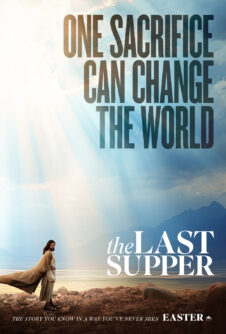
THE LAST SUPPER
A powerful, faithful retelling of Christ's passion and resurrection.
Should You Watch It?
This is the Gospel story told with real visual power. THE LAST SUPPER follows Jesus into Jerusalem, through the cleansing of the Temple, and into the Last Supper and its aftermath — and it preserves the heart of the story: Jesus lives, dies, and conquers death for all who repent and believe in Him.
The film does take creative license — most notably in dramatizing Satan's temptation of Judas — and some of that material runs longer than it needs to, while other significant Gospel moments feel rushed by comparison. It also doesn't shy away from the suffering: the beating and crucifixion of Jesus are depicted with real weight, and there are several dark, scary moments along the way, including a demonic torment that ends in an off-screen suicide.
For older children, teens, and adults, this is a worthwhile and often striking depiction of the most important event in human history. For younger or more sensitive children, a parent's caution is warranted. Take older kids and adults; think twice before bringing the very young.
The Story
NO SPOILERS — WE KEEP THE SURPRISESTold from the Apostle Peter's perspective, Jesus rides into Jerusalem on a donkey to the crowd's acclaim — and immediately confronts the money changers defiling His Father's house. His boldness draws the attention of Caiaphas and the Jewish leaders, who decide He must die and begin working on the one Apostle they think they can turn. Meanwhile, Jesus quietly prepares His closest friends for a Passover supper unlike any before it.
Is It Any Good?
Four stars means this is excellent, purposeful filmmaking — and the source material earns every bit of it. The movie tells the Gospel account in a "powerfully picturesque manner," with striking moments that capture love, faith, and self-reflection.
Pacing is the one real flaw. Some pivotal moments in Christ's life feel rushed, while other, more invented sequences — particularly the demonic torment of Judas — run longer than their weight in the story warrants. Dialogue is added to explain Jewish traditions and rituals for modern audiences, a reasonable choice for accessibility. None of it derails the film's central purpose: the main story is preserved, faithfully and movingly.
The Worldview
This film exalts the Gospel without apology. It portrays the cleansing of the Temple, the Last Supper, the betrayal, the crucifixion, the resurrection, and the empty tomb, culminating in Christ's charge to Peter to "feed my sheep." The Christian worldview here is strong and unmistakable — the film wants you to see exactly what the Gospels record.
The main departure from Scripture is dramatic license, not doctrinal distortion. Satan's temptation of Judas is staged as a monster and a snake convincing him to save himself rather than trust Jesus — an invented scene, but one that illustrates a true spiritual reality: temptation preys on fear and pride. Some added dialogue explains Passover traditions for viewers unfamiliar with them. None of this changes the substance of the Gospel account; it simply dramatizes it.
What the film ultimately offers is the truest story there is — a God who "so loved the world that He gave His one and only Son, that whoever believes in Him shall not perish, but have eternal life" (John 3:16). The ache the whole film moves toward is answered plainly: Christ suffers, dies, and rises, so that all who repent and believe might live.
The Content Guide
The specifics — spoilers included by nature — so you can judge for your own family.
Dominant Worldview and Other Worldview Content/Elements
Very strong Christian, biblical where the cleansing of the temple, the Last Supper, Jesus Christ’s betrayal, His crucifixion, the Resurrection and the empty tomb, and Jesus Christ’s instructions to Peter to “Feed my sheep” are portrayed
Foul Language
No foul language
Violence
Non-gratuitous violence of the suffering, beating and crucifixion of Jesus Christ with soldiers beating him, Satan or a demon torments and manipulates a man to commit suicide, the suicide takes place off-screen, but man can be seen hanging by the neck from behind; and, Jesus whips a crowd and turns over their money tables in the Temple after He enters Jerusalem on a donkey, as prophesied by Zechariah 9:9
Sex
No sex
Nudity
Upper male nudity of Jesus as He washes the feet of the Apostles
Alcohol Use
Jesus and the apostles drink wine with their Passover dinner as Jesus institutes the communion of the New Covenant
Smoking and/or Drug Use and Abuse
No smoking or drugs
Miscellaneous Immorality
Jewish leaders reject Jesus and ask the Romans to crucify Jesus.
Talk About It
Questions for the drive home, the dinner table, or the youth group.
Jesus insists that Peter must let Him wash his feet, or Peter "cannot be saved." What does this scene teach about humility, service, and receiving grace we didn't earn?
John 13:6–9 · Philippians 2:5–8Judas is tempted by fear for himself and his friends rather than trust in Jesus. Where do fear and self-preservation tempt you to betray what you know is right?
James 1:14–15 · Proverbs 29:25Jesus tells Caiaphas the truth about who His Father is, even knowing it will cost Him His life. What does it cost you to speak the truth today, and what gives you courage to do it anyway?
John 8:32 · Acts 4:19–20The film shows Christ's suffering as both tragic and necessary. Why does Scripture call the cross "good news" rather than just a tragedy?
Romans 5:8 · 1 Peter 2:24The Final Word
THE LAST SUPPER tells the most important story ever told, and tells it with real craft — even when a few scenes run long or short. It's honest about the suffering of the cross and unwavering about the hope of the resurrection. Our verdict stands: worth the trip — older children and up. Bring the family, but know your younger kids before you do.