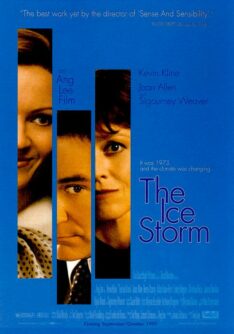
THE ICE STORM
A beautifully crafted drama overwhelmed by sexual chaos and moral emptiness.
Should You Watch It?
Skip it. Ang Lee’s film is a polished and compelling drama, with strong performances, precise direction, and a carefully observed picture of the early 1970s. It portrays adults and adolescents drifting into sexual experimentation while family relationships grow cold and confused.
The movie’s artistic skill does not redeem its moral failure. Sexual indulgence and liberation dominate the story, while judgment is largely absent. Parents act like adolescents, adolescents lack healthy role models, and the resulting anguish never becomes a clear moral warning.
The film may interest adults studying how promiscuity and moral disintegration are portrayed on screen. It is not a wise choice for your family or for viewers who want sexual wrongdoing examined with biblical clarity. The practical answer is simple: skip this one.
The Story
NO SPOILERS — WE KEEP THE SURPRISESIn November 1973, the Hood family faces a Thanksgiving weekend filled with tension. Ben Hood is unfaithful to his wife, Elena, while their children, Wendy and Paul, struggle with their own sexual awakenings.
As an ice storm approaches New Canaan, Connecticut, the parents and children move through separate experiments and frustrations. A party involving spouse-swapping brings the family’s private disorder closer to the surface, while the storm forces painful moments of truth.
Is It Any Good?
Three stars means this is a genuinely accomplished film despite its moral failure. Ang Lee brings precision to the direction and adapts the story’s nuances and texture with remarkable skill. The screenplay, which won the 1997 Cannes Film Festival Best Screenplay Award, works closely with the performances and visual design.
The cast gives strong, resounding performances. The film also creates a distinctive visual style through its portrayal of the 1970s, including the ice storm and its aftermath. It is moving, relevant, and compelling as cinematic drama—but its craft cannot overcome the destructive sexual content and lack of moral judgment.
The Worldview
The film portrays the Watergate-era sexual liberation of the 1970s as a moral vacuum in which adults and adolescents cross boundaries without healthy guidance. It shows parents detached from their children, children drifting without role models, and sexual activity and drinking used to break through emotional numbness.
The movie understands that this breakdown produces anguish and chaos. It gives its lost characters compassionate attention and includes a small gesture toward grace. But it remains sympathetic to the rebellion against older moral values, and it fails to judge the promiscuity that causes the suffering. Its final religious gesture feels more like obligation than genuine spirituality or a desire to please God.
The film’s central failure is not that it depicts sin, but that it cannot clearly see the sin’s destructive nature. Scripture gives the needed clarity: “Flee from sexual immorality” (1 Corinthians 6:18).
The Content Guide
The specifics — spoilers included by nature — so you can judge for your own family.
Content Summary
Pagan worldview involving immoral sexual activities; 8 vulgarities, 4 obscenities & 8 profanities; adultery, sexual parties, sexual experimentation, sexual references in conversations among young teenagers, implied fondling, implied situation where young couple show each other private parts, young boy & girl in bed, & implied situations of sexual spouse-swapping; implied nudity & man in underwear; alcohol use among young teenagers & adults; smoking; and, miscellaneous immorality with an overriding theme of rampant sexual promiscuity, shoplifting, & negative parent role models
Talk About It
Questions for the drive home, the dinner table, or the youth group.
What happens when parents stop serving as moral and spiritual examples for their children?
Deuteronomy 6:6–7 · Ephesians 6:4How does the pursuit of sexual freedom affect the families in this story? What does Scripture teach about the purpose and protection of sexual intimacy?
1 Corinthians 6:18–20 · Hebrews 13:4The film includes a gesture toward grace. How is biblical grace different from a merely polite religious observance?
Ephesians 2:8–9 · Titus 2:11–12Why is it important to recognize that sin has consequences, even when a culture calls it liberation?
Galatians 6:7–8 · Romans 6:23The Final Word
THE ICE STORM is skillful, moving, and strongly performed. It is also filled with sexual promiscuity and moral confusion, without the clear judgment your family needs. For a better choice, see our family-friendly picks.
SKIP IT.