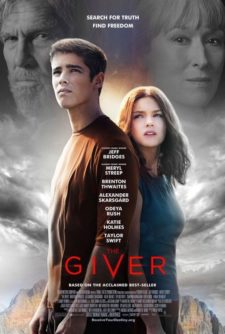
THE GIVER
Redemptive, liberating science fiction fable for older children and adults.
Should You Watch It?
If you want a thoughtful science fiction story about freedom, love, family, and the value of life, this is a strong choice. The film presents an absorbing fable with a clear storyline, good acting, no crude content, and a powerful pro-life message.
Its concerns are real but limited. The story includes light Romantic elements, false religious and pagan references, politically correct elements, and some light violence. Still, its Christian, redemptive moral vision is much stronger: love, compassion, faith, family, and self-sacrifice are honored, while authoritarian control and euthanasia are challenged.
For older children and adults, The Giver is worth seeing, with parents using discernment for younger children.
The Story
NO SPOILERS — WE KEEP THE SURPRISESJonas lives in a dystopian society without color, feeling, or memories of the past. When he turns 18, he is assigned a special role: receiving the memories held by the community’s only other keeper of history.
As Jonas begins to experience pain, joy, sorrow, and love, he realizes what his society has sacrificed in its attempt to create a perfectly organized life. He must then decide whether to obey the authorities or help his community become fully human again.
Is It Any Good?
Four stars means this is a highly effective film. The Giver is interesting, inspiring, and absorbing, with a clear storyline and some fine acting. The story should strongly interest older children and teenagers.
The production values are high quality, although the memories Jonas receives sometimes look like stock photography. Based on a best-selling novel, the film succeeds as a science fiction fable with a strong emotional and moral center.
The Worldview
The Giver presents a strong Christian, redemptive worldview. It extols love, compassion, faith, family, self-sacrifice, and the value of life. The film’s pro-life message includes an anti-euthanasia message, while its central conflict attacks authoritarian humanist schemes that allow a large government to control every person.
The film also includes a baptism scene and important references to the Christmas hymn “Silent Night,” which is heard twice as a symbol of hope and love. These Christian references and allegorical elements are mixed with light Romantic elements about following your heart and defying authority. A few scenes also include false religious and pagan references, including Islam, Hinduism, and a witch doctor. The film contains some politically correct elements as well, including an environmentalism message.
At its heart, the film argues that people cannot be fully human without truth, love, and the freedom to feel. Jesus said, “and you will know the truth, and the truth will set you free” (John 8:32).
The Content Guide
The specifics — spoilers included by nature — so you can judge for your own family.
Content Summary
Strong Christian, redemptive allegory promoting love and faith with very strong moral, anti-statist content, including baptism is shown, the Christmas song “Silent Night” is heard twice as a symbol of hope and love, a pro-life message includes an anti-euthanasia message, the importance of families loving each other is shown, and self-sacrifice is exalted, mixed with some Romantic elements of following your heart and defying authority, some false religious/pagan elements include a Muslim prayer, Sufi dancers, witch doctor, and a Hindu worshippers inserted, and some politically correct elements such as an environmentalism message wherein an elephant is shot by hunters; no foul language; light violence but nothing graphic such as main character hits his friend in the face, chase scene, main characters falls off cliff but is okay, baby injected with a poison that kills it; no sex scenes or sexual immorality but teenagers kiss a couple times; no nudity; no alcohol use; no smoking or drug use; and, lying.
Talk About It
Questions for the drive home, the dinner table, or the youth group.
The community removes painful and joyful memories in the name of happiness. What do we lose when we refuse to face truth and sorrow?
John 8:32 · Romans 5:3–5Jonas discovers that love and compassion are worth suffering for. How can love move us toward costly action for someone else?
John 15:13 · Philippians 2:3–4The film challenges a society that controls every person. What does Scripture teach about the value and responsibility of human freedom?
Galatians 5:13 · 1 Peter 2:16The story includes a pro-life message. Why does every human life deserve protection and care?
Genesis 1:27 · Psalm 139:13–16The Final Word
The Giver is an absorbing, inspiring fable with a clear moral center. Its light concerns are outweighed by its Christian themes of love, faith, family, life, and self-sacrifice. For older children and adults, the answer is WORTH THE TRIP — OLDER CHILDREN AND ADULTS.