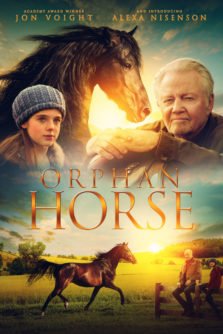
ORPHAN HORSE
A grieving horse trainer, a runaway girl, and a gentle story of healing.
Should You Watch It?
Yes — and gladly. This is exactly the kind of movie Movieguide loves to point families toward: clean, moving, and built around a moral world where doing right, seeking forgiveness, and punishing evil actually matter. Jon Voight and young Alexa Nisenson carry it with performances strong enough to earn the emotion the story asks for.
It isn't flawless. The pace is slow through the middle, and the ending resolves everything — a family rift, a horse's recovery, a marriage proposal, an arrest — a little too fast and neatly in one closing scene. But the content stays clean throughout, and the payoff is a story about broken people and broken families finding restoration.
If your family likes horses, autumn scenery, and stories that end in healing rather than cynicism, this one is worth the trip.
The Story
NO SPOILERS — WE KEEP THE SURPRISESBen Crowley (Jon Voight) is a curmudgeonly retired horse trainer carrying a tragic, unspoken past. His solitary life is upended when Shelly, a 12-year-old girl fleeing abusive foster parents, takes shelter in his stables — right as wolves attack, killing one horse and orphaning another. Ben wants her gone. Shelly, drawn to the surviving horse she renames Orphan, isn't leaving. What starts as one reluctant night together becomes the beginning of something neither of them expected.
Is It Any Good?
Three stars means this is a solidly good, well-made film with a couple of soft spots. The direction and performances are genuinely strong — Voight and Nisenson carry real emotional weight, and the autumn horse-country setting is shot beautifully, with the golden light doing real work.
The story earns patience: it's slow to unfold, but the gradual reveal of Ben's backstory is what makes the film work, drawing you deeper into who he is rather than just telling you. The weak point is the finish — a healing miracle, a family reconciliation, and a full resolution all arrive in a single rushed scene, wrapping things up a bit too neatly. Viewers who love happy endings won't mind; those looking for a tighter final act might wish for more room to breathe.
The Worldview
This film operates from a strong moral worldview, and it's a welcome one. Doing the right thing is honored. Forgiveness is sought, not skipped past. Evil — here, the wicked foster parents who abuse a child for state money — is discovered and punished. None of this is preachy; it's simply the air the story breathes.
The Christian content is light but present: Shelly tells a grieving Ben that God loves all creatures, and the two build a cross in memory of the horse they lost. It's a small moment, but it's an honest one, and it fits the film's larger vision — that broken lives, broken families, and broken trust can be restored.
That's the film's real center: an orphaned girl and an orphaned horse, each grieving a mother, each finding a home. Scripture speaks directly to that longing — "Religion that is pure and undefiled before God, the Father, is this: to visit orphans and widows in their affliction" (James 1:27). A film that quietly practices that visitation, even in fiction, has done something worth honoring.
The Content Guide
The specifics — spoilers included by nature — so you can judge for your own family.
Dominant Worldview and Other Worldview Content/Elements
Very strong moral worldview with Christian elements where doing the right thing is honored, forgiveness is sought, evil is punished, God’s love is mentioned, and a cross is built in memory of a horse that died
Foul Language
Two “damns” are uttered by an old man
Violence
Man hits another man once on the jaw but there’s consequences, implied offscreen beating of child, off screen car crash, off screen a car strikes a beloved horse
Sex
No sexual content, though mention of test tube horse breeding and semen, as well as oblique references to a couple living together
Nudity
No nudity
Alcohol Use
No alcohol
Smoking and/or Drug Use and Abuse
No smoking or drugs;
Miscellaneous Immorality
Wicked foster parents beat the children in their care and are only in it for the state’s funding.
Talk About It
Questions for the drive home, the dinner table, or the youth group.
Ben and Shelly are both grieving losses they don't talk about at first. Why is it so hard to let people see our pain, and what changes when we finally do?
Psalm 34:18Shelly and Orphan the horse both lose a "mother" and find a new home. What does Scripture say about God's heart for the orphan and the vulnerable?
James 1:27 · Psalm 68:5The foster parents in this story do real harm while pretending to care. How do we tell the difference between people who truly love us and people who are just using us?
1 John 3:18Ben's healing takes the whole movie; the story's resolution comes in a rush at the end. Does real forgiveness and healing usually happen quickly, or slowly? What has that looked like in your own life?
Colossians 3:13The Final Word
This is a small, sincere film that trusts a slow-building story and two strong performances to do the heavy lifting — and mostly, they do. It's clean enough for the whole family and warm enough to earn real tears by the end, even if the last scene ties every bow a little too fast. Our answer: worth the trip.