
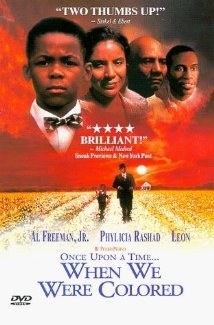
ONCE UPON A TIME…WHEN WE WERE COLORED
A Christian community stands against the cruelty of segregation.
Should You Watch It?
This is a worthwhile historical drama with a clear moral center. It presents a tightly knit Christian community whose faith, love, kinship, family loyalty and personal responsibility help a young man face racial intolerance in the deep South of the 1950s and early 1960s.
The film contains moderately questionable elements, but its overall direction is positive. It promotes Christianity and a biblical worldview while offering a learning experience about the swelling tide that led to the Civil Rights Movement.
If your family can thoughtfully engage with its content and subject matter, this movie is worth the ticket price.
The Story
NO SPOILERS — WE KEEP THE SURPRISESIn Glen Allen, Mississippi, young Clifton Taulbert grows up in the segregated deep South of the 1950s and early 1960s. His tightly knit “colored” community teaches him about faith, love, family and responsibility even as he encounters racial intolerance beyond the railroad tracks.
His early lessons begin with learning the difference between facilities marked “Whites only” and those marked for the “Colored.”
Is It Any Good?
Three stars means this is a solid, worthwhile film with some limitations. The cast includes excellent actors, and the production quality is generally fine for an independent movie.
The producers do a fine job creating the look and feel of the era. The film’s historical setting and community life give it value, even though the review does not offer more detailed craft criticism.
The Worldview
The film presents Christianity positively and depicts a community shaped by faith, love and kinship. It promotes family loyalty, personal responsibility and a biblical worldview while contrasting the community’s understanding of tolerance with the racial intolerance experienced in the segregated South.
Its moral vision also values community. The story presents people learning from one another and drawing strength from close relationships during a period of profound racial division. The film’s Christian perspective and positive references to God are central to that encouragement.
The film’s central longing is for a community where people are treated with dignity rather than divided by racial intolerance. Scripture calls believers to a shared life in Christ: “so we, though many, are one body in Christ, and individually members one of another” (Romans 12:5).
The Content Guide
The specifics — spoilers included by nature — so you can judge for your own family.
Content Summary
Moral biblical worldview with positive references to God & many, many positive depictions of Christianity; positive portrayals of community; 6 vulgarities (mostly use of the "N" word in reference to blacks); KKK parade, seductive fondling & dancing results in a juke joint fight involving a razor, broken bottle, & a baseball bat as weapons; implied fornication (not justified); boys ogle women dancing in carnival girly show; alcohol consumption in juke joint; boy steals money but promises to pay it back; and, birth of baby in cotton fields
Talk About It
Questions for the drive home, the dinner table, or the youth group.
What can a close-knit community teach a child about faith, love and responsibility? How can your family practice that kind of care?
Galatians 6:2 · Romans 12:10The film contrasts tolerance with racial intolerance. What does Scripture require of us when we see partiality or prejudice?
James 2:1–4 · Micah 6:8How should Christian faith shape the way we respond to injustice and pressure?
Romans 12:18 · 1 Peter 3:15–16What does personal responsibility look like when someone has done wrong?
Proverbs 28:13 · Luke 19:8The Final Word
ONCE UPON A TIME...WHEN WE WERE COLORED is a solid, faith-affirming drama about community, family loyalty and personal responsibility amid racial intolerance. Its questionable elements deserve attention, but its overall message is positive. For families prepared to discuss its content, it is WORTH THE TRIP.









