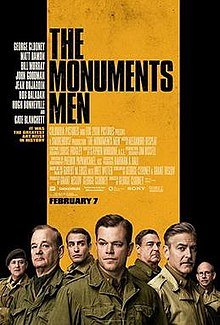
THE MONUMENTS MEN
Preserving art from tyrannical National Socialists.
Should You Watch It?
The Monuments Men tells a profound, touching story from near the end of World War II. Its heroes risk their lives to preserve art that represents culture, faith, and the values Hitler’s National Socialists sought to destroy. Their sacrifice, patriotism, and brotherly care for one another give the film a strong moral center.
The movie also offers positive references to Christian and Jewish culture, especially through church art and scenes set inside churches. But its tone never fully settles. Goofy banter and music lighten the story while the mediocre script avoids character depth and explains its themes too directly. The mission also lacks urgency until late in the film.
The strong language and war violence keep this from being a carefree family choice. For teenagers and adults, it is worth seeing with discernment.
The Story
NO SPOILERS — WE KEEP THE SURPRISESNear the end of World War II, art historian Frank Stokes asks the President to protect priceless art threatened by the chaos of war. He gathers a small, unconventional team of art experts and sends them to the front lines.
The group must locate and recover stolen artifacts, working across Europe as Hitler’s forces lose power. Their mission takes them from battle zones to museums and churches, where preserving art becomes a way of protecting the cultures and convictions represented by it.
Is It Any Good?
Three stars means a touching, worthwhile film held back by uneven storytelling. The older men are cast very well, and each brings a distinct comedic and dramatic quality. The film’s different perspective on World War II also helps it stand apart from more cynical war movies.
Its central weakness is the script. The story gets stuck between comedy and drama, with goofy banter and music that undercut the seriousness. Dialogue pushes the themes too directly, character depth is limited, and the mission does not feel urgent until the climax. The result is meaningful but mediocre filmmaking.
The Worldview
The film presents a strong moral and Christian worldview centered on protecting cultural heritage and the values expressed through Christian art. The stolen works include church relics such as the Madonna and the Ghent Altarpiece, while several scenes take place inside churches. The movie also recognizes Christian and Jewish culture and emphasizes patriotic sacrifice, courage, and fighting for the soldiers beside you.
Its best insight is that the mission is not merely about saving objects. The art represents the culture and convictions of the people who made it. The film says a soldier’s life is worth more than art, yet argues that defending art can also defend the values through which a society understands itself.
The story’s brotherly bond reflects a biblical call to sacrificial love, though the film frames that courage primarily through moral and patriotic duty. Jesus said, “Greater love has no one than this, that someone lay down his life for his friends” (John 15:13).
The Content Guide
The specifics — spoilers included by nature — so you can judge for your own family.
Content Summary
Strong moral and Christian worldview, emphasizing fighting for your Christian culture and the art that represents those values, multiple scenes in churches and many shots of artwork pertaining to Christianity, plus strong patriotic themes of sacrifice, fighting for the soldiers around you, and fighting against National Socialist tyranny; 13 obscenities and nine strong profanities; comparatively mild war violence, but still present, two different men are shot in battle and bleed, a bombed town is shown; no sexual content, but a married man gets a little too close to a Frenchwoman, though nothing happens; the Ghent Alterpiece includes a nude painting of Adam and Eve that gets some screen time, and there’s upper male nudity when man takes shower; some light drinking and one man is a drunk, though shown this is shown negatively and he redeems himself; cigarettes; and, villains steal art and plan on destroying it when they start losing a war.
Talk About It
Questions for the drive home, the dinner table, or the youth group.
The men risk their lives to preserve art that represents a culture. What makes a culture worth protecting, and how can Christians preserve what is good without treating objects as more valuable than people?
Philippians 4:8 · Matthew 22:37–39The team members fight for one another as well as for their mission. What does sacrificial friendship look like in your life?
John 15:13 · Philippians 2:3–4The film connects churches and Christian artwork with European culture. How should Christians think about beauty, craftsmanship, and the worship they are meant to express?
Exodus 31:1–5 · Psalm 96:9Hitler’s National Socialists seek to destroy what they cannot control. What does Scripture say about the proper use and limits of power?
Micah 6:8 · Mark 10:42–45The Final Word
The Monuments Men is a touching, morally serious war story with Christian and patriotic values, even if its script cannot choose between comedy and drama. Strong language, war violence, and revealing artwork call for discernment. For teenagers and adults, it is WORTH THE TRIP — AGES 13 AND UP.