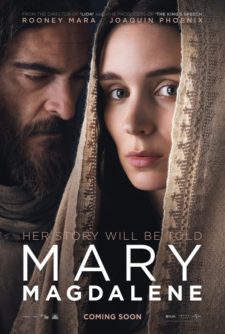
MARY MAGDALENE
An incomplete, ultimately misleading gospel — skip it.
Should You Watch It?
MARY MAGDALENE has a worthwhile starting point: one woman follows Jesus, hears Him teach about God’s Kingdom and faith, and becomes the first person to whom He talks after His physical resurrection. But the film’s slow, talky, anticlimactic presentation makes the experience difficult to recommend.
More seriously, the movie removes most of the biblical dialogue and surrounding material that give its events meaning. It also distorts major moments, including the Last Supper and the Resurrection. Its message about love, care, forgiveness, and the suffering is incomplete because it leaves out central truths about Christ’s Death and Resurrection.
If you want a biblical drama that treats the Gospel accurately, skip this one.
The Story
NO SPOILERS — WE KEEP THE SURPRISESMary lives in Magdala when Jesus and His apostles visit her town. Jesus’ teaching about God’s Kingdom, faith, being “born anew,” and doing God’s Will changes her life.
Despite her father’s wishes, Mary leaves Magdala to follow Jesus and His apostles. She travels with them toward Jerusalem, where Passover brings Jesus’ ministry to its climax. The story then turns to the events surrounding His Death and Resurrection.
Is It Any Good?
Two stars means this is a weak viewing experience despite its important subject. MARY MAGDALENE often moves slowly, relies on extended conversation, and becomes anticlimactic in too many places.
The film does relate some biblical events, but it leaves out the dialogue and surrounding material that give those events context and meaning. Christian viewers who know their Bibles will likely find those omissions frustrating.
The Worldview
The film presents a strong mixed pagan worldview about Mary Magdalene and Jesus. It includes some positive Christian, biblical, and moral content, but it offers an incomplete Christology and Soteriology. Biblical events are sometimes included without the dialogue that explains them, and sometimes distorted.
The film also gives Mary a feminist subtext that attacks Peter and the Early Church. Rather than simply honoring Mary Magdalene, it tears down Peter and presents a narrow account of God’s Kingdom as bringing faith, love, care, and forgiveness to the humble, poor, and suffering. That message contains biblical concerns, but it is incomplete and therefore misleading when separated from the Gospel’s fuller meaning.
The movie’s central longing is to know God and live according to His Will. Scripture calls us to seek God truly: “You will seek me and find me, when you seek me with all your heart” (Jeremiah 29:13).
The Content Guide
The specifics — spoilers included by nature — so you can judge for your own family.
Dominant Worldview and Other Worldview Content/Elements
Strong mixed pagan worldview about Mary Magdalene and Jesus with an incomplete Christology and Soteriology, and a feminist subtext attacking Peter and the Early Church in a false feminist way, with some positive Christian, biblical, moral content and some anti-biblical content that includes some events from the Bible but leaves out important dialogue from the Bible that gives meaning to those events and (at other times) actually distorts the biblical event (The Lord’s Supper, for example has no Words of Institution, and Jesus never says “Father, forgive them for what they’re doing” and in reciting the Lord’s prayer to His followers, Jesus ends with “Lead us not into times of testing” with no “but deliver us from evil”), plus strong revisionist history to support the movie’s feminist, unbiblical fantasies
Foul Language
No foul language
Violence
Strong violence with some blood includes scenes of Jesus being crucified, Jesus hanging from the Cross, Jesus carrying the Cross down the street, Jesus overturning the merchants in the Temple in Jerusalem, crowds of people pressing in on Jesus, a scene with a baby being born, an image of Judas hanging dead from a window, a burnt victim of a crucifixion lying on the ground, images of men with blood on them from sacrificing animals during Passover, and a couple slaps
Sex
No actual sexual content or scenes but woman relates a tale about an adulteress being raped and then executed by the men in Cana
Nudity
No nudity
Alcohol Use
No alcohol use
Smoking and/or Drug Use and Abuse
No smoking or drugs;
Miscellaneous Immorality
Men mistreat women and the movie’s Mary Magdalene character delivers a half-hearted Gospel message, where she contradicts Peter and says that God’s Kingdom is designed just to bring faith, love, care, and forgiveness to the humble, poor and suffering.
Talk About It
Questions for the drive home, the dinner table, or the youth group.
Mary says she longs “to know God.” What does it mean to seek God sincerely, and how does God promise to respond?
Jeremiah 29:13 · James 4:8The film presents an incomplete message about God’s Kingdom. What essential parts of the Gospel must not be left out?
1 Corinthians 15:3–4 · Mark 1:15Jesus teaches about doing God’s Will. How can you recognize the difference between hearing God’s Word and obeying it?
Matthew 7:24–27 · James 1:22The movie changes familiar biblical events. Why does the surrounding context of Scripture matter when we understand Jesus’ Death and Resurrection?
Luke 24:44–47 · 2 Timothy 3:16–17The Final Word
MARY MAGDALENE has an important subject but delivers an incomplete and misleading Gospel message through slow, anticlimactic filmmaking. Because it distorts significant biblical events and carries excessive content, SKIP IT. For a better family viewing choice, see.