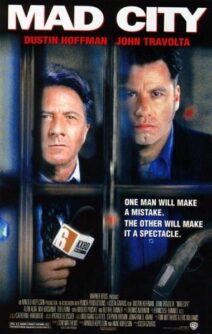
MAD CITY
An entertaining, morally tangled warning about media manipulation.
Should You Watch It?
Mad City is a tense, exciting, and sometimes funny critique of television journalism. Its central concern is compelling: reporters and the instant celebrities they cover can manipulate public sentiment, while cameras and microphones reshape the crisis they claim merely to report.
The film is also morally confused. It indicts media manipulation while seeming to accept the criminal act that begins the hostage crisis. Its lead character’s change of heart feels insufficiently explained, especially because he helped engineer the media circus in the first place. The result is entertaining and insightful, but not as probing or powerful as its subject deserves.
Older teenagers and adults can find worthwhile discussion here, provided they recognize the film’s contradictory moral qualities. For your family, the practical answer is: watch it with discernment if its media critique interests you, but choose something else for younger children.
The Story
NO SPOILERS — WE KEEP THE SURPRISESA small-town television reporter, Max Brackett, wants to return to national news after losing his previous job. He sees an opportunity when he stumbles upon a hostage crisis involving Sam Baily, an unemployed museum guard, a shotgun, and a group of school children.
Max persuades Sam to demand a televised interview, turning the crisis into a media event. But as other journalists manipulate the story and the pressure mounts, the situation becomes increasingly dangerous.
Is It Any Good?
Three stars means this is a solid, entertaining social drama with significant weaknesses. The interactions among Max, Sam, the police, and the network anchor make much of the film absorbing. The story is tense and exciting, with moments of humor and insight.
The film’s main weakness is its superficial treatment of the issues it raises. Max’s shift from manipulator to critic of media manipulation is not fully explained, and his self-righteousness feels especially unbelievable because he created the media circus himself. Those problems keep Mad City from becoming a truly powerful film.
The Worldview
Mad City has a basically moral worldview, but it is marred by confusing pagan and humanistic elements. The film criticizes television news for manipulating people and events, yet its apparent acceptance of Sam’s initial criminal action weakens that moral indictment. Max’s inconsistent character also makes the film’s judgment difficult to follow.
The film includes only a few references to religion. Sam belongs to “a church,” asks forgiveness from people he hurts, and hears that someone will pray for him. A street preacher says the Bible has “news for all time.” These references do not provide a deeply developed biblical framework.
The film also contains politically correct, socialist, environmentalist, and revisionist history elements, including a notable element concerning American Indians. These additions contribute to the movie’s confusing moral and cultural perspective.
At its center, the film longs for truth in a world where people can manipulate the public through images and stories. Scripture calls believers to a different standard: “Therefore, having put away falsehood, let each one of you speak the truth with his neighbor” (Ephesians 4:25).
The Content Guide
The specifics — spoilers included by nature — so you can judge for your own family.
Content Summary
Basically moral worldview marred by confusing pagan & humanistic elements, including an ultimate acceptance of the initial criminal action & an inconsistent lead character; 8 obscenities & 6 profanities; brief action violence, mostly shooting off guns, all injuries except 1 minor one take place off camera; abuse of stimulant pills by lead character; and, miscellaneous politically correct, socialist, environmentalist, and revisionist history elements including a notable one concerning American Indians.
Talk About It
Questions for the drive home, the dinner table, or the youth group.
The film portrays journalists shaping public sentiment through their coverage. Why does truth matter when telling someone else’s story?
Ephesians 4:25 · Proverbs 12:22Max manipulates people while criticizing other journalists for doing the same thing. Why is it difficult to recognize our own hypocrisy?
Matthew 7:3–5 · Romans 2:1Sam asks forgiveness from people he hurts. What makes an apology genuine, and how is forgiveness connected to repentance?
Luke 17:3–4 · 2 Corinthians 7:10A street preacher says the Bible has “news for all time.” What kind of news does Scripture give people living amid confusion and wrongdoing?
John 3:16–17 · Romans 1:16The Final Word
Mad City offers older viewers a tense and often insightful warning about media manipulation. Its moral contradictions and content call for discernment, but its questions can lead to worthwhile conversation. Our answer is WORTH THE TRIP — OLDER TEENS AND ADULTS.