
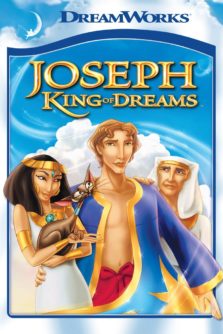
JOSEPH: KING OF DREAMS
A gorgeous, God-centered retelling of Joseph's story, worth every family's time.
Should You Watch It?
Yes — and gladly. Before there was DreamWorks' Prince of Egypt, there was this: Joseph's story told with real craft and a clear, unembarrassed focus on God. The songs credit Him. The story's whole point is that God, not man, is writing history — "His story, not ours."
A few dramatic liberties are taken, most notably the timing of Benjamin's birth, and purists may grumble. But the movie stays close to the biblical account in almost every other respect, and it never loses sight of what matters: that God was at work in Joseph's suffering and exaltation alike.
The only real caution is for the very youngest viewers — a dream about wolves attacking a flock, and a dungeon with rats and scorpions, might unsettle a small child, though the source calls these scenes tame by animated-movie standards. Watch it together, and expect to be moved. This one's worth the trip.
The Story
NO SPOILERS — WE KEEP THE SURPRISESJacob's long-awaited son arrives as a miracle, and his father can't help favoring him — a favoritism his older half-brothers feel keenly. As Joseph grows, he begins having dreams that seem to come from God himself, dreams that hint at a future none of his brothers want to see. Family tension builds toward a breaking point. Where it leads him — from a well in the wilderness toward the height of Egypt's power — we'll let you discover for yourself.
Is It Any Good?
Four stars, and the film earns them. The animation is excellent throughout, but the dream sequences are something more — a beautiful, Van Gogh-like quality that sets them apart, alongside hieroglyphic imagery reminiscent of The Prince of Egypt. The music matches the visuals: five new songs carry real spiritual weight, performed by accomplished vocal talent.
The handful of frightening moments — dreamed wolves, a dungeon of rats and scorpions — are handled with restraint, gentler than comparable scenes in other animated features. The one real complaint is circumstantial: this is a feature-quality film that went straight to video instead of the big screen it deserved.
The Worldview
This film knows what story it's telling, and Whose story it is. Every credit for Joseph's success — his rise under Potiphar, his gift for interpreting dreams, his eventual power in Egypt — is given openly to God, not to Joseph's own cleverness. Even the songs testify to Him. The film's central conviction is that God is sovereign over history, working through betrayal, slavery, and famine toward a purpose His people couldn't see in the moment. That is about as biblical a theme as an animated film can carry.
The dramatic changes made for the story's flow — chiefly the timing of Benjamin's birth — are minor and don't bend the film's faithfulness to Scripture in any way that undercuts its message. This is a film that honors and lifts up God, which the source rightly calls the whole point.
The songs are performed by a strong roster of vocal talent, including a singer known for her work in The Little Mermaid — a detail worth mentioning only because it speaks to the film's genuine musical craft.
Joseph's own words to his brothers, decades after their betrayal, capture the film's heart better than any review could: "As for you, you meant evil against me, but God meant it for good" (Genesis 50:20).
The Content Guide
The specifics — spoilers included by nature — so you can judge for your own family.
Content Summary
Strong Judeo-Christian biblical worldview; minor action violence such as a dream about wolves, wolves attack a flock & rats & scorpions in dungeon; and, brother sells Joseph into slavery.
Talk About It
Questions for the drive home, the dinner table, or the youth group.
Joseph's brothers meant to destroy him, but God used their betrayal to save many lives, including theirs. Can you think of a hard season in your own life that God later used for good?
Genesis 50:20 · Romans 8:28Jacob's favoritism toward Joseph fed real resentment in his family. How does favoritism — even well-meant — cause damage, and how should families guard against it?
James 2:1 · Ephesians 6:4Joseph gives God, not himself, the credit for his gift and his success. What does it look like to give God credit for what you're good at?
1 Corinthians 4:7Years later, Joseph forgives the brothers who sold him into slavery. What made that forgiveness possible, and what would it cost you to forgive someone who hurt you that deeply?
Genesis 45:4–5 · Ephesians 4:32The Final Word
This is Joseph's story told the way it deserves to be told — beautifully animated, musically rich, and unmistakably about God's hand in a hard, winding life. It's gentle enough for young children and substantial enough for the adults watching with them. Our answer is simple: worth the trip.









