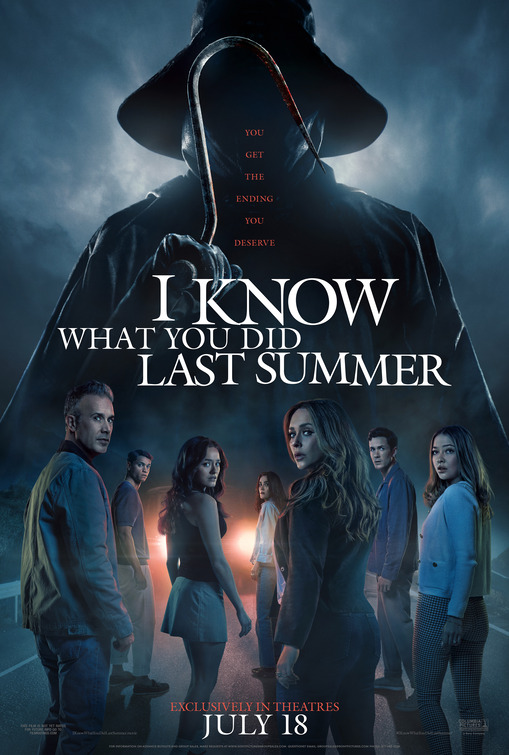
I STILL KNOW WHAT YOU DID LAST SUMMER
A bloody, obscenity-filled sequel best left unseen.
Should You Watch It?
This sequel offers little beyond bloody shocks and cheap scares. Julie James remains guilt-ridden and tormented by horrifying hallucinations, but her escape to the Bahamas with friends only gives the killer a new setting for stalking and murder.
The movie also trades logic for thrills. The source review calls some scenes stupid, describes the sequel as mundane, and says it is not as exciting as the original. Its brief elements of confession and sexual restraint do not redeem the excessive violence, obscenities, and pagan worldview.
The practical answer is simple: skip this movie and choose something else for your family or your own viewing.
The Story
NO SPOILERS — WE KEEP THE SURPRISESJulie James is still haunted by guilt, paranoia, and terrifying visions connected to the murder she confessed. Hoping for relief, she travels to the Bahamas with her friends during the July Fourth weekend.
At the hotel, they discover that other guests are leaving as hurricane season begins. Then the killer finds them, stalks the hotel staff, and works his way toward Julie and her friends.
Is It Any Good?
Two stars means this is a weak, tired sequel rather than a satisfying horror thriller. The movie has attractive stars, modern rock music, and a familiar hook-wielding killer, but the source review finds the result mundane and less exciting than the original.
The biggest craft problem is its logic. Scenes abandon intelligence for cheap thrills and scares, while the bloody violence becomes excessive rather than genuinely effective. The film’s fast-track production and changed creative team do not recapture the earlier movie’s impact.
The Worldview
The film presents a pagan college-student world in which young people try to escape a serial killer. It includes a scene of Julie entering a Catholic church and a confessional booth to confess her sin, along with implied voodoo practices by an old man. These elements appear without a deeper treatment of sin, forgiveness, or God.
The movie does offer limited positive ideas. Julie practices sexual restraint by refusing to sleep with Will, and Karla keeps her lustful boyfriend at a distance. The source also notes that the killer seems to attack highly sexualized people, a drug user, and a strange person while leaving the “purer” women unharmed. Still, these moral patterns remain within a violent, pagan slasher framework rather than becoming a clear moral vision.
The sequel also adds Brandy and Mekhi Phifer, a casting and marketing choice the source connects with an effort to reach a larger demographic. That production calculation does not improve the film’s artistic or moral substance.
The film’s treatment of guilt points toward a truth it does not fully explore: sin needs more than fear or survival. “If we confess our sins, he is faithful and just to forgive us our sins” (1 John 1:9).
The Content Guide
The specifics — spoilers included by nature — so you can judge for your own family.
Content Summary
Strong Pagan worldview of pagan college students avoiding a serial killer with one scene of girl confessing her sin to a priest & implied voodoo practices by old man; 55 obscenities & 11 profanities; extensive violence including stalking, numerous killings with large fishing hook, knifings, impalings, threats with knives, car chases after man, fighting, kicking, shooting, man punches woman; sexual innuendo, man continually states his desire for sex, but no depicted or implied fornication; no nudity but men & women in skimpy swim suits & some cleavage-bearing low cut dresses; stoned man tries to sell marijuana, man uses marijuana & smoking; 19-year-olds drink alcohol in the Bahamas where it is legal; and, vomiting, images of occult items & severe compulsion to kill.
Talk About It
Questions for the drive home, the dinner table, or the youth group.
Julie confesses her sin, but the movie does not explore forgiveness deeply. What does genuine confession look like before God?
1 John 1:9 · Psalm 32:5The characters face pressure to pursue sexual relationships. How can Christians practice self-control when others encourage desire without commitment?
1 Thessalonians 4:3–5 · Galatians 5:22–23The film uses fear, violence, and occult imagery as entertainment. How should believers decide whether frightening media is wise for their conscience?
Romans 14:22–23 · Philippians 4:8The story treats guilt as a source of torment. Where can a person find lasting freedom from guilt?
Romans 8:1 · Hebrews 9:14The Final Word
This sequel offers bloody violence, excessive obscenities, and cheap scares without enough intelligence or excitement to justify them. Its brief references to confession and sexual restraint cannot overcome the content concerns. For your family or your own viewing, SKIP IT. For better options, see.