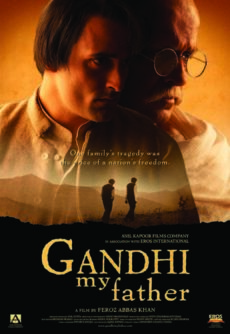
GANDHI, MY FATHER
Second-generation tragedy, better reserved for discerning adults at home.
Should You Watch It?
GANDHI, MY FATHER is well acted and well produced, but its central experience is punishing. The film follows Mahatma Gandhi’s son, Harilal, through repeated failures, alcohol abuse, prostitution, strained family relationships, and a growing inability to escape the consequences of his choices.
The story does raise serious questions. At what point must a person stop blaming his parents and take responsibility for his own life? Yet the movie offers tragedy after tragedy without showing a convincing path toward repentance, forgiveness, or restoration. That makes the drama feel more bleak than illuminating.
Because the film has real craft but troubling content and little encouragement, watch it at home if you are a discerning adult who wants to discuss its ideas. Do not choose it for children or young teens, or for family movie night.
The Story
NO SPOILERS — WE KEEP THE SURPRISESHarilal Gandhi grows up under the enormous shadow of his famous father, Mahatma Gandhi. He wants an education, independence, and a life of his own, but his choices repeatedly bring disappointment to himself and his family.
As Harilal struggles with work, money, marriage, religion, alcohol, and prostitution, the film asks whether his failures belong mainly to an uncaring father—or to a son who refuses to change.
Is It Any Good?
Three stars means this is a competently made drama with good acting and production quality. The performances give weight to the painful father-son conflict, and the production treats the real-life story seriously.
But the film’s long, meandering focus on Harilal’s failures drains much of its entertainment value. Watching a central character continue to lose for over two hours is difficult, especially when the story provides no clear solution. The result is a worthwhile subject handled with solid craft, but not an uplifting or especially enjoyable viewing experience.
The Worldview
The film presents a confused spiritual world. Harilal’s false conversion to Islam for financial gain, followed by a return to Hinduism, shows religion being used as a means to an end rather than as a sincere response to truth. The film includes false religious elements, though it also makes one favorable remark about Christianity.
Its strongest moral idea is that a person must eventually stop blaming parents and take responsibility for his or her own choices. The review’s Christian perspective goes further: repentance, salvation, forgiveness, and God’s guidance are needed to break free from destructive patterns such as prostitution and alcohol. The film, however, does not provide that solution.
The story also places Gandhi’s family tragedy against the upheaval surrounding colonial rule. Gandhi opposed British rule and racist laws in many colonies, but the departure of the British was followed by riots, slaughters, corrupt government, and Gandhi’s assassination. Colonial governments were flawed and sometimes racist, yet they also brought laws protecting basic rights and responsibilities, including Christian principles. The review contrasts America’s revolution, which sought to build a nation on Christian principles, with godless revolutions such as Zimbabwe’s, which can devastate previously wealthy and peaceful nations.
The film’s tragedy points toward a need no parent, achievement, or ideology can finally meet: the need for redemption. Scripture says, “If anyone is in Christ, he is a new creation” (2 Corinthians 5:17).
The Content Guide
The specifics — spoilers included by nature — so you can judge for your own family.
Content Summary
Confused pagan worldview with false religious elements including a false conversion to Islam to get money and then back to Hinduism, but one favorable remark made about Christianity; no foul language; newsreel riots shown, an unknown black man whipped in a jail scene, but no physical violence between main characters; main character visits prostitute, nothing shown, but many such visits implied; upper male nudity; heavy alcohol use, little actual drinking shown but drunkenness and stumbling in multiple scenes; no smoking; and, major character swindles people out of money and even converts to Islam for monetary gain.
Talk About It
Questions for the drive home, the dinner table, or the youth group.
When should a person stop blaming parents and accept responsibility for personal choices? What does genuine repentance look like?
Ezekiel 18:20 · 2 Corinthians 7:10Harilal uses religion for money rather than truth. How can we tell the difference between sincere faith and using religion for personal gain?
Matthew 6:24 · James 2:14–17The film shows destructive patterns involving alcohol and prostitution. How does Scripture describe freedom from sin, and where can a person seek help?
John 8:34–36 · Galatians 5:1Gandhi’s story is set amid conflict, injustice, and political upheaval. What responsibilities do governments have toward justice and human life?
Micah 6:8 · Romans 13:1–4The Final Word
GANDHI, MY FATHER has good acting, solid production, and a serious subject. But its relentless tragedy, troubling content, and lack of a hopeful solution make it a poor family choice. For discerning adults who want to engage its questions, the answer is WAIT FOR HOME — ADULTS ONLY. For family viewing, choose something more uplifting.