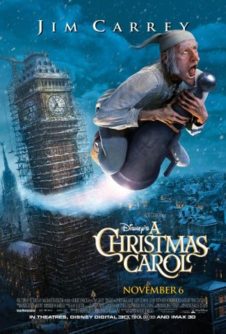
DISNEY’S A CHRISTMAS CAROL
A brilliant, Christ-centered redemption tale—too frightening for young children.
Should You Watch It?
Disney’s animated A Christmas Carol is a magnificent, emotionally powerful adaptation of Charles Dickens’ classic. It is vividly realized, achingly poignant, and deeply committed to the story’s Christian message of sin, repentance, redemption, and new life.
The cost is fear. The film uses frightening supernatural imagery and nightmarish danger to convict Ebenezer Scrooge of his selfishness and show him the consequences of sin. That approach is artistically purposeful, but it may overwhelm young children and susceptible adults.
If your older children can handle intense scares, this is a stirring Christmas film about the need for repentance and God’s blessing. For young or sensitive viewers, choose something gentler.
The Story
NO SPOILERS — WE KEEP THE SURPRISESEbenezer Scrooge is an old, hard-hearted miser whose selfishness has pushed away family, friends, and the needy. Seven years after the death of his business partner, Jacob Marley, Marley’s ghost visits Scrooge on Christmas Eve.
Bound by long chains and heavy chests, Marley warns Scrooge that he is headed toward damnation unless he changes. Three spirits then arrive to take Scrooge on a frightening, life-changing journey through Christmas Past, Christmas Present, and Christmas Yet-To-Come.
Is It Any Good?
Four stars means this is an exceptional film. Jim Carrey gives a remarkable motion-capture performance as Scrooge and the three spirits, while the animation brings his expressions and movements vividly to life.
Robert Zemeckis’ sensitive adaptation captures the fear, conviction, depth, and artistry of Dickens’ classic. The realistic live-action animation gives the story a sweeping, dreamlike, nightmarish quality. The result is funny, frightening, poignant, and absolutely spellbinding.
The Worldview
This film presents a strongly Christian and redemptive worldview. It openly references Jesus Christ, God, the Father, Son, and Holy Spirit, the Bible, church, and Christmas carols that name Jesus as Savior. Tiny Tim refers to biblical prophecy about Jesus making the blind see and the lame walk, while Scrooge repeatedly pleads for a second chance.
The film also depicts the frightening consequences of sin, especially avarice and selfishness. Its ghosts, chains, death imagery, and supernatural warnings are used to convict Scrooge and make the power of repentance clear. The story’s central movement is from a life chained to sinful idols toward a transformed heart and new life in the Spirit.
The film’s Christian message is expressed through a classic Dickens story and traditional Christmas music, including the proclamation, “Glory to the newborn King!” It presents redemption as something that requires Scrooge to open his heart and soul to God and undo his years of sin.
The story’s longing for transformation aligns with Jesus’ words: “Unless one is born again he cannot see the kingdom of God” (John 3:3).
The Content Guide
The specifics — spoilers included by nature — so you can judge for your own family.
Content Summary
Very strong Christian, moral, born-again, redemptive worldview with overt references to Jesus Christ, God, meaningful and theologically powerful Christmas carols, the Bible, church; one exclamatory “My God!”; sometimes very scary violence includes ghostly face on doorknob causes old man to fall down, ghost wearing ghostly chains shackled to ghostly chests throws the chests into room, man falls a couple times from great heights, extended scene where scary carriage with scary black horses with red eyes chases man around some London streets and alleys, large barrel comes spinning toward man, images of other scary ghosts flying through the air (one of whom is banging his own head with a book of some kind), images of a dead man in a coffin, man slides down an icy hill for fun but falls down, the Ghost of Christmas Present turns into a skeleton and eventually to dust at the stroke of midnight, man shrunk down to tiny size must avoid a man of normal size trying to kill a large rat, man shrunk down to tiny size escapes injury or death by hiding in an icy drain pipe of some kind; no sex; no nudity; implied alcohol use in toasts; no smoking; and, servant woman steals clothes and curtains of dead rich man, and selfishness and sin rebuked.
Talk About It
Questions for the drive home, the dinner table, or the youth group.
Scrooge’s selfishness has chained him to his sins. What habits or desires can keep a person from loving God and others?
Matthew 6:19–21 · 1 Timothy 6:9–10Marley warns Scrooge about the consequences of the life he has chosen. How can a warning become an opportunity for repentance rather than merely a source of fear?
2 Corinthians 7:10 · Acts 3:19The story connects Christmas with Jesus as Savior. What does Christ’s coming offer that money, comfort, and self-protection cannot?
Luke 2:10–11 · Titus 2:11–14Scrooge pleads for a second chance. How does the Bible describe God’s mercy toward someone who turns from sin?
1 John 1:9 · Ephesians 2:4–5The Final Word
This is a magnificent, Christ-centered Christmas classic with a powerful message of repentance and redemption. Its frightening imagery is real and sometimes intense, so it belongs with older children and adults—not young or susceptible viewers. For that audience, WORTH THE TRIP — OLDER CHILDREN AND ADULTS. For a gentler option, see.