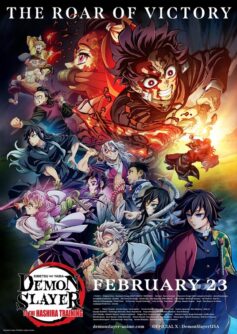
DEMON SLAYER: KIMETSU NO YAIBA – TO THE HASHIRA TRAINING
Beautiful animation, brutal violence, and a good-versus-evil heart — for grown-ups.
Should You Watch It?
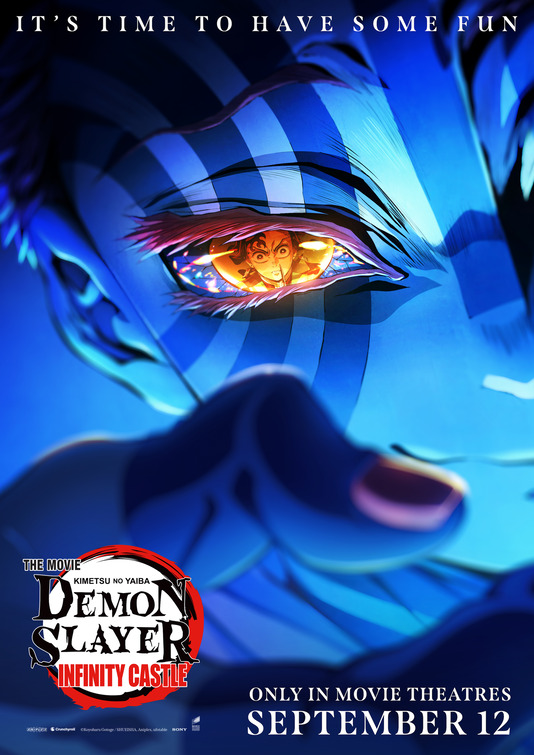
Here is the decision plainly. This is a beautifully animated entry in a hugely popular franchise, and underneath the spectacle beats something genuinely good: a young hero who fights for justice and to protect the sister and friends he loves, in a story where evil is called evil and good is called good.
But it earns its R. The entire film is built around violence, and the source calls it heavy enough to concern even adults — beheadings, burnings, a hero fighting on a broken leg. Its world runs on pagan and occult mythology, too: magic-wielding vampire demons, "spiritual cores," magical marks, reincarnation, and a villain drawn from a Japanese spirit-creature. And the story itself is lopsided — an exciting opening, then a slow final act that assumes you've watched the TV series it stitches together.
So: if you're an adult who follows this franchise, watch it at home, where you control the experience. If you're choosing for children, choose something else — this one was never for them.
The Story
NO SPOILERS — WE KEEP THE SURPRISESJapan, in the early twentieth century. Tanjiro is a teenage boy who joined the elite Demon Slayer Corps for one reason: to save his sister, Nezuko, who was turned into a demon by the evil Lord Muzan.
As the film opens, Tanjiro, Nezuko, and their friend Genya are locked in battle to protect a village from one of Muzan's most powerful demons. Win or lose, the war is far larger than one monster — and the Corps' highest-ranking warriors are about to decide that the only way to defeat Muzan once and for all is to train together. That's where we'll leave it.
Is It Any Good?
Two stars, and here's what they mean. The animation is genuinely beautiful, and the source praises the movie's exciting first stretch, where the battle against the "Upper Moon" demon delivers the physics-defying swordplay fans come for.
The trouble is structure. This film is really two things bolted together — the end of the show's third season and the premiere of its fourth — and the seam shows. After the strong opening, the third act slows to a crawl. Worse, if you haven't seen the episode this continues, the story is likely to feel "quite a bit off," in the source's words. It's lovely to watch and hard to follow — a movie made for people already in the middle of the series.
The Worldview
This film carries a genuinely mixed worldview, and a discerning viewer should know both halves. On one side stands something the source honors: a strong sense of moral right and wrong, where good is good and evil is evil. Tanjiro is a good older brother to his sister and his friends. He fights for justice and to protect the people he loves — not for thrill or pleasure. Love and family are the movie's beating heart.
On the other side runs a current of pagan and occult mythology. Characters speak of a "spiritual core," take on power through a magical mark, and mention reincarnation. The villains all use magic and are drawn as cannibalistic vampires. One is based on the tengu, a creature from Japanese legend described as a kind of spirit or demi-god. These are not the demons of Scripture but a fantasy blend of vampire and cosmic horror — still, the false theology is real, and it shapes the world the story lives in.
What the film longs for is worth naming: a brother willing to lay everything down for his sister, and heroes who fight so others might live. That instinct points beyond itself. "Greater love has no one than this, that someone lay down his life for his friends" (John 15:13) — a love the gospel names fully and this story can only glimpse.
The Content Guide
The specifics — spoilers included by nature — so you can judge for your own family.
Dominant Worldview and Other Worldview Content/Elements
Mixed pagan with strong moral, occult, mythological undertones where characters discuss their “spiritual core,” take on magical powers with a magical mark or mention reincarnation, the villains all use magic and are portrayed as cannibalistic vampires, and one villain is based on a mythological, legendary creature from Japan called a tengu, which is a kind of spirit or demi-god, but the hero is a good older brother to both his sister and his friends, love and family are major themes, and the hero and his sister fight for justice and fight to protect and save others, not for thrill or pleasure
Foul Language
Five “d” obscenities and no profanities
Violence
The entire film is centered around violence, three teenagers take on one monster while protecting a village, hero fights with a broken leg, teenage girl fights giant wooden serpent dragons, blacksmith in fits of rage smacks the main character a lot, a teenager beheads the same demon twice, one character gets so incredibly burned she’s almost unrecognizable, and one man trains other members of the justice-fighting group of good guys by hitting them
Sex
No sexual content or references
Nudity
Upper male nudity in a couple scenes done by one main character wears the head of the boar animal who raised him when his mother was killed and has no shirt, other instances of upper male nudity occur when the good guys undergo stamina training with no shirts
Alcohol Use
No alcohol use
Smoking and/or Drug Use and Abuse
No smoking or drugs;
Miscellaneous Immorality
The villain is a coward who never takes responsibility for his actions, and one character has three wives.
Talk About It
Questions for the drive home, the dinner table, or the youth group.
Tanjiro fights not for thrill but to protect his sister and save strangers. What does it mean to spend yourself for the good of others, and where does that impulse ultimately come from?
John 15:13 · Philippians 2:3–4The film's villain is a coward who blames everyone but himself for his failures. Why is taking responsibility for our own sin so hard — and what does confession actually free us to do?
Genesis 3:11–13 · 1 John 1:9This story's world runs on reincarnation, spiritual "cores," and magic. How does the Bible's picture of what happens after death differ, and why does that difference matter?
Hebrews 9:27 · 2 Corinthians 5:8Good is clearly good and evil clearly evil in this story. Where do we get our sense that some things are truly right and others truly wrong?
Romans 2:14–15 · Isaiah 5:20The Final Word
This is a beautiful, brutal, lopsided film with a good heart and a false mythology, and it was never made for children. For the adults who already follow this franchise, our answer stands: wait for home — adults only, where you control the experience. Planning family movie night instead? Start with our latest family-friendly picks.