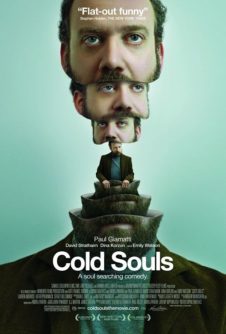
COLD SOULS
A brilliantly written, religious comedy for discerning adults.
Should You Watch It?
COLD SOULS is one of the best-written independent movies in a long time. It is laugh-out-loud funny in places, deeply insightful, and ultimately religious in its understanding of what happens when a person gives up the soul that makes life meaningful.
The film’s message is carried by its storyline and dialogue rather than technical effects or locations. It exposes the soullessness of modern society and makes a strong case that people need their souls back. But the film also includes strong foul language, nudity, sexual content, alcohol, smoking, and drug use. Much of the profanity occurs after the protagonist loses his soul, yet there is too much casual language for many viewers.
Adults who can engage the film’s ideas without being turned away by its content may find it worth seeing. Families should choose something else.
The Story
NO SPOILERS — WE KEEP THE SURPRISESPaul Giamatti, playing himself, is preparing to star on Broadway while suffering through a very dark night of the soul. His agent introduces him to a company that promises to alleviate suffering by removing a person’s soul.
After the procedure, Paul discovers that his acting and his life have changed. He wants his soul back, but recovering it leads him into a strange international adventure involving Russian souls, art, commerce, and a question no one can easily answer: what is a person without a soul?
Is It Any Good?
Four stars means this film’s writing, ideas, and comic insight are exceptional. COLD SOULS is very witty and laugh-out-loud funny in parts, with wonderful allusions, metaphors, bon mots, and profound references. Its storyline and dialogue carry its power.
This is also a low-budget independent movie. The soul-extraction machine is simply an adapted MRI machine, and the film does not depend on technical effects or impressive locations. Its strengths are its intelligence, performances, and writing.
The Worldview
COLD SOULS presents a light Christian worldview through positive moral allegories. Its central idea is that a person cannot live fully after surrendering the soul. Paul must eventually admit that giving up his soul was selfish, while the film’s strange comic adventure exposes what it sees as the soullessness of modern society.
The movie also includes humanist pseudo-science, but that idea is ultimately refuted. The film does not present its message with heavy-handed preaching. Instead, the story suggests that people need their souls back, and that suffering cannot simply be removed through a technical procedure.
The film’s religious perspective is complicated by its content. Many of the profanity and morally questionable encounters occur after Paul has lost his soul, but the language, nudity, sexual material, alcohol, smoking, and drug use remain significant concerns for discerning viewers.
At its heart, the film asks what a person gains by pursuing comfort while surrendering the soul. Jesus asks the same searching question: “For what does it profit a man to gain the whole world and forfeit his soul?” (Mark 8:36).
The Content Guide
The specifics — spoilers included by nature — so you can judge for your own family.
Content Summary
Light Christian worldview with lots of positive moral allegories, plus some humanist pseudo-science that is ultimately refuted; 13 obscenities and 20 profanities but many are almost an invocation of God, although too many are casual; light violence includes a woman gets a nosebleed from carrying other people’s souls back and forth to Russia, a rough “soul extraction” procedure, and some threats of violence; married couple in bed but man cannot have intercourse, some groping and touching, suggestive dancing; nude picture of a woman in a “soul arousal” test, full live female nude models in Russian art institute but standing in such a way you cannot see private parts and nude statues; alcohol use and drinking to get drunk; smoking and drug use; and, soul extraction machine.
Talk About It
Questions for the drive home, the dinner table, or the youth group.
Paul gives up his soul because he wants relief from suffering. What kinds of comforts can tempt us to trade away what matters most?
Mark 8:36 · Matthew 6:19–21The film suggests that suffering cannot simply be removed without changing the person. How can suffering shape character, and where can we seek help when life feels unbearable?
Romans 5:3–5 · 2 Corinthians 1:3–4Paul eventually recognizes that he was selfish to give up his soul. Why is recognizing our wrongdoing important, and what is the difference between remorse and repentance?
2 Corinthians 7:10 · 1 John 1:9COLD SOULS exposes what it sees as the soullessness of modern society. Where do you see people treated as products rather than as persons made in God’s image?
Genesis 1:27 · Philippians 2:3–4The Final Word
COLD SOULS is exceptionally well-written, funny, insightful, and ultimately religious. Its strong language and nudity keep it from being suitable for families, but adults who can engage its message may find the journey worthwhile. Our verdict is WORTH THE TRIP — ADULTS ONLY. For a family movie night, see.