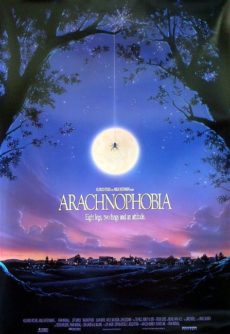
ARACHNOPHOBIA
Well-made spider terror best left at home for discerning adults.
Should You Watch It?
Arachnophobia is a technically strong horror thriller with well-paced suspense, good camera work, and music that can be absolutely spectacular. Its premise also contains a biblical idea: overcoming fear in order to protect the people you love.
But the film makes comedy out of victims’ deaths, including their facial expressions at the time of death. That is not a positive message. The chills are intense, the profanity is substantial, and the movie can leave viewers with nightmares for weeks.
This is not a family movie, even with its solid picture of family life. If you are a discerning adult who enjoys scary thrillers, watch it at home rather than taking the trip; otherwise, leave it alone.
The Story
NO SPOILERS — WE KEEP THE SURPRISESDuring a scientific expedition to Venezuela, an entomologist discovers an eight-inch, bird-eating spider that is highly poisonous, fearsomely intelligent, and ready to attack. The creature reaches a small California town, where it begins producing deadly soldier spiders.
A doctor who has moved there to raise his family soon loses patients to unexplained spider bites. As more townspeople die, he joins forces with an exterminator and the entomologist to stop the spreading threat—while confronting his own fear of spiders.
Is It Any Good?
Three stars means this is a good, effectively made thriller with serious drawbacks. The suspense is well paced and plays on familiar fears, from spiders in toilets to spiders crawling into empty slippers. The camera work and music are good, and sometimes spectacular; the opening features soaring vistas reminiscent of Cinerama.
The film also shows the influence of Steven Spielberg, Alfred Hitchcock, Psycho, and The Birds. Laughter balances the chills at times, but the terror is too intense for all but the most robust viewers. The movie’s strongest weakness is its lack of sensitivity in turning deaths into humor, while the couple dozen profanities and obscenities further mar an otherwise polished picture.
The Worldview
The film’s central idea is that a person can overcome fear to protect loved ones. That basic premise is biblical, and the movie presents family life positively. Its doctor hero must face a threat that endangers his patients and his family.
However, the film does not really pursue how he overcomes his arachnophobia. More significantly, it draws much of its humor from people dying, especially from their expressions at the moment of death. That treats death as entertainment rather than as a serious consequence, weakening the film’s moral center.
The movie’s central longing is courage for the sake of those we love. Scripture says, “for God gave us a spirit not of fear but of power and love and self-control” (2 Timothy 1:7).
The Content Guide
The specifics — spoilers included by nature — so you can judge for your own family.
Content Summary
Two dozen obscenities and profanities; brief partial female nudity; and, using death as a basis for humor.
Talk About It
Questions for the drive home, the dinner table, or the youth group.
The film’s basic premise involves overcoming fear to protect loved ones. When has love helped you act courageously, and how is biblical courage different from simply refusing to feel afraid?
2 Timothy 1:7 · Joshua 1:9What happens when a movie asks us to laugh at someone’s death? How does Scripture teach us to think about the seriousness of death and the dignity of people?
Romans 12:15 · Ecclesiastes 7:2The doctor moves his practice to a small town to raise his family. What responsibilities come with caring for the people God has placed around us?
Philippians 2:4 · Galatians 6:2The film does not explain how its hero overcomes his fear. What helps a Christian face fear with wisdom, prayer, and love?
Psalm 56:3–4 · 1 John 4:18The Final Word
Arachnophobia has strong craftsmanship and well-built suspense, but intense scares, profanity, and death-based humor make it unsuitable for children and young teens. For discerning adults who choose to watch, stay home and keep control of the experience. Otherwise, choose something else:
WAIT FOR HOME — ADULTS ONLY