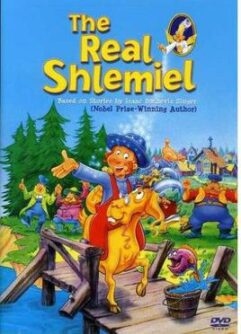
AARON’S MAGIC VILLAGE
A bright, funny animated musical about courage confronting evil.
Should You Watch It?
AARON'S MAGIC VILLAGE is a delightful animated musical with a funny, uplifting story and a clear moral center. Its 10-year-old Orthodox Jewish hero faces evil with courage, while the film introduces children to a whimsical version of Eastern European Jewish culture before the Holocaust.
The animation is superlative, and the music complements the movie's humor and warmth. The one concern is its minor occult content: a sorcerer and a fairy cast spells. That element calls for simple parental discernment, but it does not overwhelm the film's message about confronting evil.
For a G-rated family viewing with courage, humor, and biblical truth, this is worth the trip.
The Story
NO SPOILERS — WE KEEP THE SURPRISESTen-year-old Aaron comes to live with his Uncle Shlemiel and Aunt Sarah in the mythical Polish village of Chelm, where the inhabitants are known for their foolish and eccentric ways.
Outside the village, a dastardly sorcerer creates a clay monster named Golem and seeks the secret that will bring it to life. As danger approaches, Aaron heads toward the sorcerer's castle, armed with courage and determined to save Chelm.
Is It Any Good?
Three stars means this is a very good animated film, and the review praises its animation as superlative. The bouncy musical score adds energy, while the funny, quirky moments support the uplifting story.
The film also succeeds as a humorous sojourn into Eastern European Jewish culture before the Holocaust. It does not take itself too seriously, yet it still imparts biblical truth and tells a morality tale about confronting evil.
The Worldview
The film presents a strong biblical worldview through an Orthodox Jewish boy who saves his village from a monster. Aaron’s courage, the villagers’ concern for their synagogue, and the story’s emphasis on confronting evil all support a moral vision in which good resists destruction.
The movie also blends biblical material with folklore. Its opening uses the Genesis narrative, then adds a fictional story about angels distributing intelligence, wisdom, and foolishness. The film’s sorcerer and the fairy Lantuch cast spells, creating minor occult elements that depart from a biblical view of spiritual power.
Culturally, the film celebrates the peculiar habits and eccentric ways of Eastern European Jewish culture before the Holocaust. Its village setting, synagogue life, Jewish characters, and references to the Promised Land give children a lighthearted introduction to that world.
The film’s central longing is for courage to face evil and protect a community. Scripture says, “Be strong and courageous. Do not fear or be in dread of them, for it is the LORD your God who goes with you” (Deuteronomy 31:6).
The Content Guide
The specifics — spoilers included by nature — so you can judge for your own family.
Content Summary
Strong biblical worldview of an orthodox Jewish boy who saves his Eastern European village from a monster with redemptive elements; occult elements as a sorcerer & a fairy cast spells; and, a giant clay monster threatens a village.
Talk About It
Questions for the drive home, the dinner table, or the youth group.
Aaron faces danger with courage. What does it mean to be strong and courageous when evil threatens others?
Deuteronomy 31:6 · Ephesians 6:10–11The film presents a story about angels, wisdom, and foolishness alongside its Genesis opening. How can we tell the difference between biblical truth and imaginative additions?
Acts 17:11 · 1 Thessalonians 5:21The sorcerer and the fairy use spells. Why does Scripture warn God’s people against sorcery, and how should that shape our media choices?
Deuteronomy 18:10–12 · Philippians 4:8Aaron acts to save his village rather than protecting only himself. Who around us may need courage, help, or encouragement?
Philippians 2:4 · Galatians 6:2The Final Word
AARON'S MAGIC VILLAGE offers families superlative animation, good music, cheerful humor, and a courageous hero. Its minor occult elements deserve parental discernment, but its uplifting morality tale makes it WORTH THE TRIP.