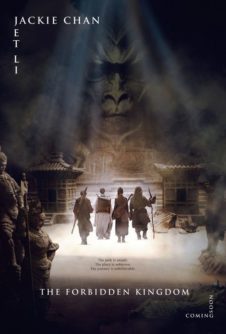
THE FORBIDDEN KINGDOM
Lively martial arts fantasy with mythological ideas for discerning teens.
Should You Watch It?
THE FORBIDDEN KINGDOM is a solid three-star adventure with lively action, colorful Chinese mythology, and a lush visual style. Its climactic battle is especially exciting, and its story rebukes tyranny while including moral elements such as the defeat of an evil witch.
The movie also asks for discernment. It treats Chinese legends and mythology mainly as entertainment rather than as an attempt to indoctrinate viewers, but it includes allusions to Buddhism, ethical monotheism, paganism, and Chinese folklore. Strong action violence, profanity, alcohol use, and drunkenness add to the concerns.
If you are choosing for a teenager or adult who can thoughtfully engage those elements, it is worth seeing. For younger children, choose something else.
The Story
NO SPOILERS — WE KEEP THE SURPRISESYoung Jason finds an ancient Chinese fighting staff in a pawnshop in New York City. When danger comes to the shop, the staff transports him to ancient China.
There Jason learns that he must return the staff to the fabled Monkey King, who has been imprisoned by the Jade War Lord. Three warriors join Jason’s quest, but first he must learn kung fu from two of them.
Is It Any Good?
Three stars means a solid, enjoyable film that falls short of greatness. THE FORBIDDEN KINGDOM is winsome, lively, and lushly photographed, with exciting moments in its action sequences and especially in the climactic battle.
The characters are not extremely deep, however, and the action is not consistently spectacular or thrilling. Jason needs a more developed backstory, making his motivations feel shallow and weakening some of the jeopardy he faces. The result is entertaining and well-made, but not a four-star martial arts fantasy.
The Worldview
THE FORBIDDEN KINGDOM draws on Chinese, Buddhist, and Taoist mythology, treating these legends primarily as entertainment and fantasy. The film includes immortal beings, fulfilled prophecies, a God-figure who goes away to meditate, the Monkey King, the Jade Emperor, and the Jade War Lord. It also includes brief allusions to Buddhism, ethical monotheism, paganism, and Chinese folklore.
The review understands Chinese mythology as a distorted version of biblical accounts involving creation, fallen angels, Adam and Eve, and the Great Flood. It also connects the idea of the benevolent Creator God Shang-di, or the Jade Emperor, with ethical monotheism, while noting that later Buddhist, Taoist, and folkloric depictions distort that concept. The film’s Jade War Lord serves as the rebellious satanic figure who establishes tyranny, while the story ultimately rebukes tyranny and defeats an evil witch.
The movie does not overtly attempt to indoctrinate viewers into non-Christian belief systems. Still, the mythological world is religiously mixed, so Christian viewers should distinguish fantasy storytelling from biblical truth.
The film’s moral center is the defeat of evil and tyranny. Scripture gives that hope a clearer foundation: “Do not be overcome by evil, but overcome evil with good” (Romans 12:21).
The Content Guide
The specifics — spoilers included by nature — so you can judge for your own family.
Content Summary
Strong pagan, slightly mixed, worldview with immortal characters and a couple allusions to Buddhism (including a God-figure who goes away to meditate), ethical monotheism, paganism, and Chinese folklore, plus some moral elements, including the defeat of an evil witch; four obscenities and one strong profanity mentions Jesus; strong action violence with a little blood includes martial arts duels with people being thrown against mountains and pillars, battle scenes, man shot with arrow, woman falls to her death, etc.; no sex scenes but one chase scene goes through building where men are with women, who might be Chinese prostitutes; no nudity; alcohol use and drunkenness; no smoking; and, tyranny rebuked and magical elixir can render one immortal.
Talk About It
Questions for the drive home, the dinner table, or the youth group.
The film presents tyranny as something that must be rebuked. How should Christians respond when power is used to harm others?
Micah 6:8 · Romans 12:21The story draws on several religious traditions. How can you appreciate a culture’s stories while testing their spiritual ideas against Scripture?
Acts 17:22–31 · 1 Thessalonians 5:21Jason must learn discipline and skill before facing the dangers ahead. Where do you need patience and faithful preparation?
Proverbs 21:5 · Galatians 6:9The film includes immortal beings and a magical elixir. What does the Bible say about where lasting life comes from?
John 3:16 · 1 John 5:11–12The Final Word
THE FORBIDDEN KINGDOM is a lively, lushly photographed martial arts fantasy with an exciting climax and a clear rebuke of tyranny. Its mythology, violence, profanity, and alcohol use call for discernment. For discerning teenagers and adults, the answer is WORTH THE TRIP — AGES 13 AND UP.