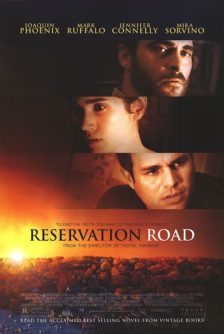
RESERVATION ROAD
An intense, well-acted drama about guilt, grief, and responsibility.
Should You Watch It?
Reservation Road takes a terrible accident and follows the damage it causes in two families. Its strongest qualities are its emotional intensity and the cast’s ability to make a formulaic story feel real. The film also treats repentance, forgiveness, and taking responsibility as serious moral concerns.
That seriousness comes at a cost. The subject matter is painful, and the movie contains plenty of strong foul language. Its family-content rating is −2, so this is not a family movie, even though its central moral lessons have value.
If you are an adult seeking a thoughtful, intense drama and can accept the content, it is worth seeing. For children and young teens, choose something else.
The Story
NO SPOILERS — WE KEEP THE SURPRISESEthan Learner and his family are returning from a beach recital when their son Josh is struck and killed by a passing car. The driver, Dwight Arno, is traveling with his 11-year-old son and speeds away in panic.
As Ethan searches for the person responsible, Dwight struggles with guilt and the consequences of what he has done. Their lives become connected in ways neither family expects.
Is It Any Good?
Three stars means this is a solid, emotionally effective film with noticeable limitations. The cast — including Joaquin Phoenix, Mark Ruffalo, Jennifer Connelly, and Mira Sorvino — does a good job making the story feel real and heightening its emotional qualities.
The plot is somewhat formulaic and may remind viewers of an earnest television drama. Still, the performances give the material weight, making this an intense drama rather than a merely predictable one.
The Worldview
Reservation Road presents a light Christian worldview with some strong moral elements. It takes seriously the need to face wrongdoing rather than hide it, and it ultimately extols repentance, forgiveness, and taking responsibility for your actions.
The film’s central moral concerns align with biblical teaching, especially its insistence that wrongdoing cannot simply be concealed and that forgiveness matters. Its treatment is presented through an intense family drama rather than an explicitly theological story, but it points viewers toward confession, responsibility, and mercy.
The film’s deepest longing is for healing after terrible harm. Scripture says, “Whoever conceals his transgressions will not prosper, but he who confesses and forsakes them will obtain mercy” (Proverbs 28:13).
The Content Guide
The specifics — spoilers included by nature — so you can judge for your own family.
Content Summary
Light Christian worldview with some strong moral elements; 16 obscenities (including some “f” words), 11 strong profanities and eight light profanities; some violence such as car apparently hits child, man forced into trunk and gun held on a person; married couple in bed kiss passionately briefly; upper male nudity; alcohol use; no smoking; and, hit and run driver hides his crime and kidnapping.
Talk About It
Questions for the drive home, the dinner table, or the youth group.
Why is taking responsibility difficult after doing wrong? What does Scripture promise to those who confess and forsake sin?
Proverbs 28:13 · 1 John 1:9What is the difference between forgiveness and pretending that harm did not happen?
Matthew 6:14–15 · Ephesians 4:32How can grief affect the way a person treats family and neighbors? Where can hurting people seek help?
Psalm 34:18 · Galatians 6:2When should justice be pursued, and how can it be pursued without surrendering to revenge?
Micah 6:8 · Romans 12:19–21The Final Word
This is a well-acted, intense drama with a formulaic plot and meaningful themes of repentance, forgiveness, and responsibility. Its strong language and painful subject matter make it unsuitable for children and young teens. For discerning adults, WORTH THE TRIP — ADULTS ONLY. For other family options, see.