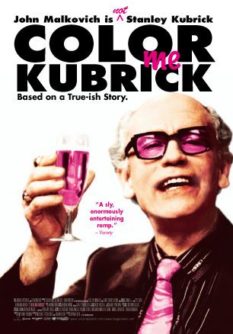
COLOUR ME KUBRICK: A TRUE…ISH STORY
Brilliantly funny, morally murky, and meant for discerning adults.
Should You Watch It?
John Malkovich gives a brilliantly crazy performance as Alan Conway, a con man who poses as the reclusive director Stanley Kubrick. The result is often hilarious, especially as Conway changes accents and invents new schemes to exploit people's fascination with fame.
But this is not clean comedy. The film contains at least 39 obscenities, three strong profanities, sexual references, substance abuse, smoking, and marijuana use. Its moral lessons are present, but mostly implied. Some viewers could miss the warning and admire Conway's deceit instead.
The film is best for discerning adults who can recognize the difference between exposing foolishness and celebrating it. For families with children or young teens, choose something else. For adults prepared for the content, it is worth the trip.
The Story
NO SPOILERS — WE KEEP THE SURPRISESAlan Conway discovers that pretending to be Stanley Kubrick can open almost any door. Because the real director is famously reclusive, people are eager to believe Conway's claim.
Soon, Conway is collecting money, drinks, dinners, and other favors from people dazzled by celebrity. Police, embarrassed victims, and mental-health professionals become part of his increasingly elaborate deception.
Is It Any Good?
Four stars means this is a highly entertaining film with impressive performances and plenty of cleverness. John Malkovich is the main attraction, shifting among different accents—including Southern and thick New York Jewish accents—to make Conway whatever his victims expect.
The comedy is often hilarious, and musical references to Stanley Kubrick's movies add another layer for viewers who recognize them. The film also benefits from the connection of its makers to Kubrick's movies. Its weakness is not craft but clarity: the moral lessons are more implied than spelled out.
The Worldview
The film exposes the deceitfulness of a famous con man and warns against gullibility, misplaced compassion, and obsession with fame, fortune, and celebrity. People are so eager to meet someone famous that they overlook obvious questions until Conway's deception has harmed them.
It also mocks psychiatry and the British government's ineffectual handling of crime, welfare, and the mentally ill. The story includes a homosexual protagonist, strong and sometimes crude homosexual references, and a morally confused environment. Because the film does not clearly state its moral lessons, some viewers may come away with erroneous conclusions or treat Conway's schemes as clever rather than destructive.
The movie's central warning aligns with Scripture's call for wisdom and discernment. “The simple believes everything, but the prudent gives thought to his steps” (Proverbs 14:15).
The Content Guide
The specifics — spoilers included by nature — so you can judge for your own family.
Content Summary
Light, implied moral worldview exposing the deceitfulness of a famous con man and warning people about being gullible, having misplaced compassion and about becoming obsessed with fame, fortune and celebrity to the point of hurting themselves and hurting other people, plus strong, sometimes crude homosexual references; at least 39 obscenities (mostly "f" words), three strong profanities, one light profanity; light violence such as angry man chases another man and sick man collapses; brief and implied sexual references such as protagonist is a homosexual who often has an effeminate accent, implied homosexuality and some crude sexual references; brief upper male nudity; alcohol use and drunkenness; smoking and marijuana use; and, lying, deceit, fraud, stealing, and con man poses as a famous reclusive celebrity.
Talk About It
Questions for the drive home, the dinner table, or the youth group.
Conway succeeds because people want to believe they are meeting someone important. Where do you need wisdom before believing a flattering or exciting claim?
Proverbs 14:15 · 1 John 4:1The film shows people being harmed by misplaced compassion. How can Christians show mercy while still practicing good judgment?
Matthew 10:16 · Ephesians 4:15Conway's victims are driven by fascination with fame and celebrity. What does Scripture say is more valuable than public recognition?
Mark 8:36 · 1 Peter 3:3–4The film's moral lessons are mostly implied rather than stated. Why does it matter to examine what a story seems to praise or excuse?
Philippians 4:8 · Romans 12:2The Final Word
COLOUR ME KUBRICK is brilliantly acted, clever, and often hilarious—but it is also profane, sexually crude, and morally ambiguous. Adults who can exercise discernment may find the satire worthwhile. Families with children or young teens should pass. Our answer is WORTH THE TRIP — ADULTS ONLY.