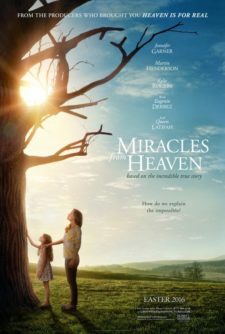
MIRACLES FROM HEAVEN
A true story of suffering, doubt, and an uplifting postcard from God.
Should You Watch It?
Here is the decision: this is a movie Movieguide commends, without qualification. It tells the true story of a desperately sick child with warmth, humor, and a very strong Christian worldview — the girl at its center witnesses to Jesus Christ even in her own suffering, and the film doesn't shy away from her mother's real crisis of faith or her anger at God.
The craft matches the conviction. Jennifer Garner brings compelling human warmth to the mother, and Queen Latifah adds genuine humor to heavy material without undercutting it. The story even makes room for real opposition — churchgoers who judge the family and an antagonistic atheist reporter — which gives the film honesty instead of easy sentiment.
The only content to note is mild: brief upper male nudity and scenes of illness, hospitals, and a frightening fall that are simply painful to watch, as true stories about sick children often are. This one is worth the trip for nearly every family.
The Story
NO SPOILERS — WE KEEP THE SURPRISESAnna Beam is twelve years old, and something is seriously wrong with her. Her mother, Christy, knows it before the doctors do — most of whom misdiagnose her again and again. When the family finally reaches an expert at Boston Children's Hospital, the news isn't good, and things only get harder from there. A waitress's kindness, a hospital roommate, and a skeptical reporter all cross Anna's path before an unexpected accident brings the family to the edge of losing her entirely. What happens next, we'll leave for you to see.
Is It Any Good?
Four stars means this one earns its praise on craft, not just conviction. The film is, in the source's words, "well-orchestrated," building strong jeopardy around Anna's illness without tipping into melodrama. Jennifer Garner carries real human warmth as the mother, and Queen Latifah's supporting role brings humor that keeps the story from becoming hackneyed. The decision to include real opposition — judgmental church members and a hostile atheist reporter — gives the film a realism that a simpler, more sentimental version of this true story might have lost. It's a small, sick-child story that could have played as a Hallmark card; instead, the cast and filmmakers make it both heartrending and genuinely entertaining.
The Worldview
This is, as the source puts it, a "very strong Christian worldview" film — and it earns that description honestly rather than by decoration. Anna witnesses to Jesus Christ from the middle of her own suffering, many scenes take place in churches, and the story doesn't flinch from the hardest part of faith: Christy's own crisis of belief and her anger at God when her daughter's suffering makes no sense to her.
The film also refuses to make Christians look uniformly good. Some churchgoers falsely accuse Anna's parents of hidden sin as the cause of their daughter's disease — an old, bad theology Job's friends knew well — and the story lets a pastor answer them rightly: you can't control who walks through your church doors, but you can love them. An atheist reporter's hostility toward Anna's witness is treated with realism rather than caricature, which makes the film's faith feel earned rather than assumed.
At its heart, this is a story about the ache of unanswered suffering and the hope that God is present in it anyway — a longing Scripture speaks to directly: "The Lord is near to the brokenhearted and saves the crushed in spirit" (Psalm 34:18).
The Content Guide
The specifics — spoilers included by nature — so you can judge for your own family.
Content Summary
Very strong Christian worldview about a very young girl with an extremely serious digestive disease that’s killing her which witnesses to Jesus Christ, with many scenes set in churches, with girl’s mother suffering a crisis of faith and even getting angry at God; no foul language; painful disease and visits to children’s hospital with children with other diseases and child falls into a 60-foot tree; no sexual immorality (marital couple kisses); upper male nudity when farmer changes shirt; no drinking; no smoking or illegal drugs; and, women in church falsely accuse mother and father of having sin in their lives causing their daughter’s disease, but pastor says you can’t control who comes to church but you can love them.
Talk About It
Questions for the drive home, the dinner table, or the youth group.
Christy gets angry at God as she watches her daughter suffer. Is anger at God, honestly brought to Him, a failure of faith or part of it?
Job 13:15 · Psalm 13:1–2Some church members assume Anna's illness must be punishment for hidden sin, but the pastor tells them to love instead of judge. Have you seen this mistake made — or made it yourself?
John 9:2–3 · 1 Corinthians 13:4–7Even while sick, Anna witnesses about Jesus to a dying roommate. What makes it possible to point others to hope while suffering yourself?
2 Corinthians 1:3–4The atheist reporter is hostile to Anna's faith, but the film treats him with realism rather than mockery. How can Christians engage skeptics with both conviction and respect?
1 Peter 3:15The Final Word
This is a small story told well — a true account of one sick girl, one family's faith under pressure, and the honesty to let doubt and opposition sit alongside belief. It earns its praise both as a faith film and as a film, period. Our answer: worth the trip.