
LOVE & COURAGE: THE BATTLE OF BUSHY RUN
A stirring, faith-filled colonial war epic — caution for younger kids.
Should You See It?
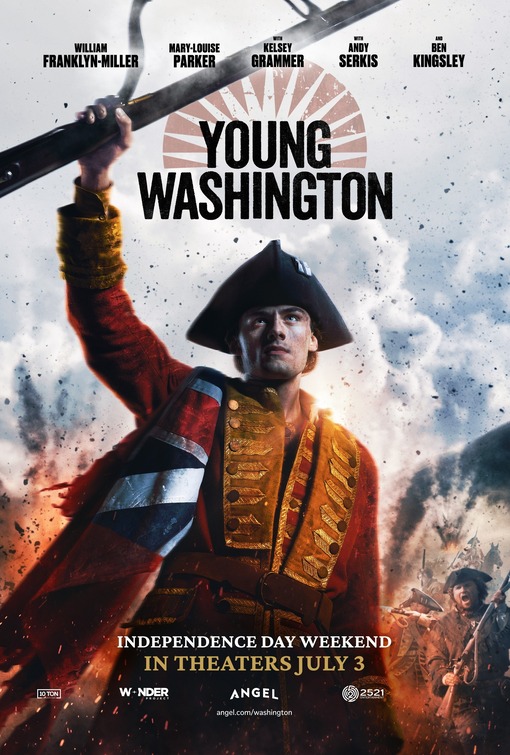
This one earns its four stars. LOVE & COURAGE tells the true story of Colonel Henry Bouquet, who in 1763 led an outmatched, exhausted army of Brits, Scottish Highlanders, and American volunteers to save Fort Pitt from Pontiac's tribes — and, with it, the future of the British colonies. It's compelling and powerful, with genuinely good performances, and it pulls off something hard: making history feel alive rather than lectured.
What makes it worth your time isn't just the battle — it's what the film honors along the way. Heroism. Self-sacrifice. Faith. Family. Duty. A colonel writing a goodbye letter to the woman he loves before riding into a fight he may not survive. That's rare, sturdy storytelling, and it's aimed at the whole family.
The caution is real but modest: war violence, a kidnapping-and-separation storyline, and a few morally messy characters (all clearly wrong in the end). Older kids and up will be moved by this one. Watch it together.
The Story
NO SPOILERS — WE KEEP THE SURPRISESIt's 1763. The French and Indian War has just ended, and the British colonies think their fighting days are over. Colonel Henry Bouquet isn't so sure. When reports arrive that Chief Pontiac's tribes are laying siege to British forts — believing the British mean to turn on them now that the French are gone — Bouquet realizes everything is at stake: Fort Pitt, and possibly all thirteen colonies.
He's built a quiet, hopeful life and a courtship with his beloved, Anne Willing. But duty calls him back to war. What happens when he and his ragtag army reach the breaking point at Bushy Run — we'll leave that for you to watch.
Is It Any Good?
Four stars means this is a genuinely strong film, and the source material backs it up: compelling, powerful, and carried by some great acting. The hardest trick in historical drama is making dialogue that dramatizes real events feel human rather than staged, and this film pulls it off. It informs like a documentary or a living historical performance — but never loses the charm of likeable characters or the kind of broad, old-fashioned entertainment that never goes out of style.
The Worldview
This is a very strong Christian, redemptive, morally uplifting, and patriotic film, and it wears that conviction openly. It celebrates family and liberty. Its military characters risk and sacrifice their lives to protect others — a living picture of laying down one's life for a friend. Bouquet himself turns to "the Lord" for help in his darkest hour, and in a tender close, he thanks his beloved for the love that has made his life complete.
The film doesn't pretend its world is simple. Lying, deceit, kidnapping, revenge, greed, envy, racism, moral relativism, gambling, and hypocrisy all appear — but the story doesn't excuse them. Every one of these is ultimately rebuked, which is exactly how a Christian worldview should handle sin: named, not glamorized.
At its heart, this is a story about sacrificial love — a man willing to risk everything, even his future with the woman he loves, for people who are not his own kin. Scripture calls that love by name: "Greater love has no one than this, that someone lay down his life for his friends" (John 15:13).
The Content Guide
The specifics — spoilers included by nature — so you can judge for your own family.
Very strong Christian, redemptive, morally uplifting, patriotic worldview promotes family and liberty, plus military characters risk and sacrifice their lives to help and protect others, main character asks “the Lord” for help, and main character thanks his beloved for showing him the love which makes his life complete
Hell is used to describe captivity and torture
Strong war violence, but the violence isn’t gratuitous or graphic
No sexual immorality (there’s a brief romantic kiss at the conclusion)
No nudity
Two opposing sides gamble over bottles of liquor
No smoking or drugs;
Strong miscellaneous immorality such as some lying, deceit, kidnapping, revenge, greed, envy, racism, moral relativism, gambling, hypocrisy, and a bad role model, but all ultimately rebuked.
Talk About It
Questions for the drive home, the dinner table, or the youth group.
Colonel Bouquet gives up the peaceful life he'd hoped for to go fight for people he's never met. What does Scripture say about laying down your own comfort for others?
John 15:13 · Philippians 2:3–4The film shows lying, greed, and revenge — but it doesn't let any of them win. Why do you think stories that show sin honestly, and then correct it, matter more than stories that pretend sin doesn't exist?
Romans 12:9 · Galatians 6:7–8Bouquet turns to "the Lord" when the odds are against him. When have you had to trust God in a situation you couldn't control?
Proverbs 3:5–6 · Psalm 46:1Families are separated and threatened throughout this story. How does the film's portrayal of duty and sacrifice for the sake of others reflect — or fall short of — a biblical picture of love?
1 John 3:16The Final Word
This is the kind of history lesson you actually want your family to sit through: true, moving, and unafraid to name both courage and sin for what they are. It has some hard edges — war violence, kidnapping, family separation — so older kids and up is the right audience. Our verdict stands: worth the trip — older kids and adults.