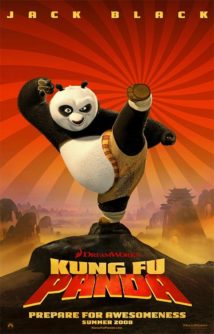
KUNG FU PANDA
Hilarious, exciting, adorable—and very clean.
Should You Watch It?
KUNG FU PANDA is an unusually strong family adventure: funny, exciting, clean, and filled with cute characters. It celebrates virtue, honor, loyalty, sacrifice, humility, kindness, and doing the right thing. It also avoids much of the sarcasm and double-entendre found in previous DreamWorks movies.
The concern is not profanity, sex, or adult humor. There is none of that. The concern is a mystical message that can sound like belief alone gives you unlimited power, along with martial-arts violence that may trouble younger children.
You and your older children can confidently make this a family movie night, while using discernment with younger children.
The Story
NO SPOILERS — WE KEEP THE SURPRISESPo is a chubby, clumsy, warm-hearted panda who helps at his father’s noodle shop but dreams of kung fu. Through an unexpected turn of events, he is chosen as the legendary Dragon Warrior, charged with protecting his village from Tai Lung, a vengeful snow leopard.
Now Po must train alongside the Furious Five, even though their master believes he is a failure. When Tai Lung escapes from prison, this unlikely hero becomes the village’s last hope.
Is It Any Good?
Four stars means this is a top-tier animated family movie. The review calls it the best-written, best-executed, best-produced, and best-animated movie of 2008 so far.
It is very funny, very exciting, and full of adorable characters. The film’s jokes and wordplay draw on Confucian- and Taoist-type aphorisms, while its kung fu sequences are described as some of the most exciting cartoon martial-arts scenes ever. Its moral themes give the entertainment a strong center.
The Worldview
KUNG FU PANDA has a mixed worldview. It contains strong moral and redemptive themes: overcoming limitations, sacrificing for others, doing what is right, showing kindness, and practicing humility. It also includes Romantic themes about following your heart and pursuing your dreams, along with a light capitalist context involving vocation or calling.
The concern is its non-specific Eastern mysticism. The film suggests that there is no secret to success and that believing can enable a person to do anything. It also presents a mystical view of death and the afterlife. The review notes that these ideas often seem tongue-in-cheek, but they may still confuse younger children.
A Christian view recognizes that belief must rest on reality, not wishful thinking. Christians do not become powerful simply by believing in themselves; they need a real Savior. The movie’s call to humility is valuable, but Scripture says, “God opposes the proud but gives grace to the humble” (James 4:6).
The Content Guide
The specifics — spoilers included by nature — so you can judge for your own family.
Content Summary
Non-specific Eastern, nominalistic, slightly mixed pagan worldview that tends to indicate it doesn’t matter if there’s good or evil and that people just pass on into the ether somehow which, although done tongue-in-cheek and humorously, could be problematic for younger children, but beyond the worldview there are strong moral and redemptive themes and character traits with Christian, biblical values such as extolling overcoming one’s limitations, sacrificing oneself for others, doing the right thing, being kind to others, and being humble, but mitigated by the central premise that, if you only believe, you can do anything, mixed with some Romantic themes of following your heart and pursuing your dreams, but with a light capitalist context of finding one’s vocation or one’s calling; no foul language whatsoever; lots and lots of cartoon slapstick violence, including some of the most exciting cartoon kung fu sequences ever, but the violence includes shooting bows and arrows, throwing spears and ninja devices, beatings, kickings, and a host of other martial arts activities that will be problematic for younger children; no apparent nudity; no sex; no alcohol; no smoking; and, ridicule and mocking of slovenly fat kid.
Talk About It
Questions for the drive home, the dinner table, or the youth group.
Po is told, in effect, that believing can make anything possible. How is hopeful faith different from pretending that our own belief gives us unlimited power?
Hebrews 11:1 · John 15:5The film praises humility, kindness, sacrifice, and doing what is right. Which of these virtues is hardest to practice, and what would it look like this week?
Philippians 2:3–4 · Micah 6:8Po overcomes limitations while learning who he is meant to be. How can gifts and calling be received with gratitude rather than pride?
Romans 12:3–8 · 1 Peter 4:10The movie includes mystical ideas about death and power. How does the Bible describe the true source of wisdom and strength?
James 1:5 · 2 Corinthians 12:9The Final Word
KUNG FU PANDA is a rare family film that delivers big laughs, thrilling action, adorable characters, and strong moral themes without profanity or sexual content. Younger children may need guidance because of the mysticism and martial-arts violence. For older children through adults, the answer is clear: WORTH THE TRIP.