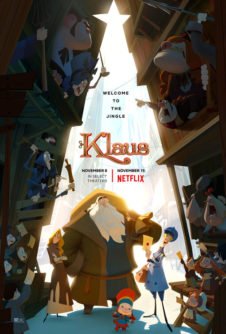
KLAUS
A witty, warm-hearted Santa origin story worth the whole family's time.
Should You Watch It?
Yes, and gladly. KLAUS reimagines how the Santa Claus legend might have begun, and it does so with real wit and warmth. Watching one small act of selflessness snowball into a whole town's transformation is the kind of storytelling that earns its heartwarming moments instead of manufacturing them.
The film has a strong moral spine — honoring parents, rebuking hatred, prizing kindness and education — wrapped in a story that's genuinely funny. There's some cartoon violence and a tense scene with dogs chasing the young postman, though he's never actually hurt. A little implied magic shows up too, and the movie sidesteps Christmas, Jesus, and St. Nicholas entirely.
None of that undercuts what's here. This is a movie you can hand to nearly any family and trust to leave them better than it found them.
The Story
NO SPOILERS — WE KEEP THE SURPRISESJesper, the son of a postmaster, has been cheating and bribing his way through postal training — until his father catches on and ships him off to fix things himself. His destination: Smeerensburg, a remote island town split for generations by a bitter feud between two families. His assignment: get 6,000 letters mailed by year's end, or else.
The town wants nothing to do with him. But a chance encounter with a reclusive toymaker named Klaus gives Jesper an idea — one that might just save his job, and the town along with it.
Is It Any Good?
Four stars means this is about as good as it gets in this category, and the source material backs that up. KLAUS is described as witty and charming throughout, with heartwarming moments that land because the film takes its time letting one selfless act ripple outward into many. It's a clever, well-built twist on a familiar legend rather than a rehash of it.
The craft details available point to a movie that knows exactly what it's doing tonally — funny where it should be, tender where it counts. Even with some unnecessary cartoon violence along the way, nothing here undermines the whole; this is a film built to be watched again.
The Worldview
KLAUS exalts the things Scripture exalts, even without naming the source. Honoring parents — even reluctantly — is treated as right. Hatred, the kind passed down as tradition between two feuding families, is rebuked rather than celebrated. Selflessness, kindness, and peace between former enemies are not just present but the entire engine of the plot. Education is treated as something worth extolling, not incidental.
Where the film departs from a fully Christian frame is in what it leaves out and what it adds. It never mentions Christmas, Jesus, or the historical St. Nicholas — this is a legend-origin story untethered from its religious roots. And it adds a note of implied magic: a magical wind seems to carry the presence of a man's late wife, and that same man appears to know everything happening in town. These are light touches, not a magic system, but parents should know they're there.
Still, the film's central image — one man giving without expecting return, and that gift multiplying into a whole community's healing — echoes something true. "It is more blessed to give than to receive" (Acts 20:35). KLAUS tells that truth in a Santa suit, but it tells it well.
The Content Guide
The specifics — spoilers included by nature — so you can judge for your own family.
Dominant Worldview and Other Worldview Content/Elements
Strong moral worldview with depictions of honoring your parents even when you don’t want to honor them, hatred is rebuked, being selfless is promoted, kindness and peace between people is promoted and depicted, the importance of education for children is extolled, and some magical elements such as it is implied that a magical wind is one man’s late wife, and the man seems to be able to know everything in the town
Foul Language
No obscenities or profanities but one use of idiot and brat
Violence
Group of kids do various mean things to an old man but they stop when they find out Klaus is always watching them, a child throws snowball at someone, two groups of people are battling each other two times in movie though no one is harmed, one scene with scary dogs trying to attack the postman, two people fight over another person, and scenes involving an axe, but no one is harmed
Sex
No sex
Nudity
No nudity
Alcohol Use
No alcohol use
Smoking and/or Drug Use and Abuse
No smoking or drugs;
Miscellaneous Immorality
Character bribes children to write letters to help him meet his goal, character uses presents as an incentive to write letters, bad role models in Mrs. Krum and Mr. Ellingboe wanting the town to stay divided, there’s a tradition of hatred in the town, and a character tries to cheat and bribe his way through postman school but he’s discovered, punished and sees the error of his ways .
Talk About It
Questions for the drive home, the dinner table, or the youth group.
Jesper's father sends him away as a consequence, not a punishment for its own sake, and it ends up changing him for the better. How does God sometimes use hard circumstances to grow us in the same way?
Hebrews 12:11The feud between the Ellingboes and the Krums is described as a "tradition of hatred." What does it take for a family or community to let go of a grudge that's been passed down for generations?
Ephesians 4:31–32One selfless act — a stranger giving toys to children who write letters — ends up healing a whole divided town. Where have you seen a small act of kindness create a much bigger ripple?
Galatians 6:9–10The movie never mentions Christmas, Jesus, or St. Nicholas, even though it's clearly inspired by the Santa legend. Why might it matter to your family to talk about where that legend actually comes from?
Titus 1:1–2The Final Word
KLAUS earns its four stars by being exactly what it sets out to be: witty, warm, and quietly wise about what selflessness can do to a hardened community. It leaves out Christmas and Jesus, but it never leaves out kindness. Our answer: worth the trip.