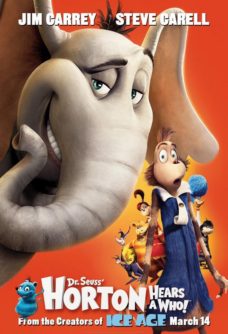
HORTON HEARS A WHO
Colorful, heartfelt, uneven Seuss adaptation best enjoyed at home.
Should You Watch It?
Horton Hears a Who has a good heart. Its dominant message extols faithfulness, compassion, self-sacrifice, mercy, forgiveness, and looking out for others. Horton and the Mayor of Who-ville both put the needs of others above themselves, even when the people around them mock or oppose them.
The film is also uneven. Its colorful CGI animation and first-rate voice work are genuinely entertaining, but the script and plot feel scattered. The movie sometimes becomes dull and annoying, and its moral vision grows confusing when it mixes self-sacrifice with messages suggesting that everyone is right, people are essentially good, and acceptance alone can solve our problems.
You can enjoy the film's positive themes, but this is a better home viewing than a must-see outing. Watch it at home if your family wants a colorful movie with worthwhile ideas and time to discuss its mixed messages.
The Story
NO SPOILERS — WE KEEP THE SURPRISESHorton, a playful elephant in the Jungle of Nool, hears a voice coming from a tiny speck of dust on a clover. The speck contains the whole world of Who-ville, whose Mayor desperately tries to warn his people about the danger facing them.
Horton commits himself to protecting the speck, but Kangaroo, the jungle's authoritative ruler, refuses to believe that a world exists where she cannot see, hear, or feel it. Soon, Horton and the Mayor must stand against powerful opposition from within and outside their worlds.
Is It Any Good?
Three stars means Horton Hears a Who is sometimes entertaining but never fully comes together. The CGI animation is magical, and the worlds maintain the character and integrity of Dr. Seuss's original works. Jim Carrey, Steve Carell, and Carol Burnett also delight the audience with their voice performances.
The weakness is the script. The movie often drags, and its scattered plot makes it seem longer than necessary. Its conflicting messages also make the film's overriding point unclear. There are funny and entertaining moments, but the strong animation and voice work deserved a better script.
The Worldview
Horton Hears a Who strongly values faithfulness, compassion, mercy, forgiveness, self-sacrifice, and meeting the needs of others. Horton stands by the tiny world he discovers, while the Mayor risks his position and reputation to warn Who-ville. Their willingness to put others first reflects Christian and biblical moral values.
The film also presents several competing ideas. One character argues that what cannot be seen, heard, or felt does not exist, a humanistic belief the story rebukes. At the same time, the movie supports Romantic notions that people are essentially good, that individuals are responsible for their own fate, and that accepting everyone would make the world better. Its portrayal of home schooling as harmful and its positive treatment of a young kangaroo defying his mother add politically correct messages that complicate the film's moral clarity.
The movie's central longing is to protect vulnerable people and act faithfully toward others. Scripture calls believers to this kind of care: “Bear one another’s burdens, and so fulfill the law of Christ” (Galatians 6:2).
The Content Guide
The specifics — spoilers included by nature — so you can judge for your own family.
Content Summary
Moral worldview extolling faithfulness, compassion, mercy, and forgiveness with redemptive sacrifice of self to meet the needs of others that reflects a Christian worldview, marred, however, by some Romantic notions, plus light humanism rebuked in presentation of one character who supports the humanist belief that “if it cannot be seen, heard or felt, it does not exist,” but there is a negative, politically correct left-wing reference portraying home schooling as bad and politically correct notions that, in order to get along with others, all we need to do is accept everyone; no foul language but some insults such as idiot spoken twice and mayor referred to as a boob numerous times; light violence with vulture seeking to destroy speck of dust that really is a whole other world, vulture seeks to destroy main character, and angry mob mentality as Horton is grabbed and chained and speck in danger of being thrown into a vat of boiling liquid; no sex; no nudity; no alcohol; no smoking; and, mild miscellaneous references to authority being bad and requiring Horton to reject authority, multiple negative references to governmental systems, and young kangaroo defies mother and it is extolled as good behavior.
Talk About It
Questions for the drive home, the dinner table, or the youth group.
Horton declares that “a person’s a person, no matter how small.” How should we treat people who seem powerless or easy to overlook?
Matthew 25:40 · Philippians 2:3–4Horton remains faithful even when others mock him. What helps you remain faithful when doing what is right makes you unpopular?
Galatians 6:9 · Hebrews 10:23The Mayor risks his reputation to warn Who-ville. When should we speak up for others, even when people do not believe us?
Proverbs 31:8–9 · James 2:14–17The film suggests that accepting everyone can solve conflict. What does biblical love require beyond simply accepting people?
Ephesians 4:15 · 1 Corinthians 13:6The Final Word
Horton Hears a Who offers colorful animation, excellent voice work, and a moving call to faithfulness and self-sacrifice. Its scattered script and conflicting messages make it better for a thoughtful home viewing than a theatrical trip. WAIT FOR HOME.