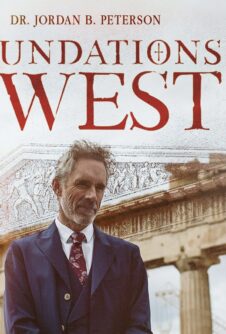
FOUNDATIONS OF THE WEST: Episode III: “Christ, the Center of the World”
A journey to Golgotha, and to the heart of a civilization.
Should You Watch It?
Here is the decision, made easy. This is a strong, four-star hour of documentary television, and it points where every believer wants to look: to the Cross and the Empty Tomb.
Jordan Peterson follows Jonathan Pageau through the Stations of the Cross in Jerusalem and into the Church of the Holy Sepulchre, tracing the ground where Jesus carried His cross, died, and rose. The episode validates the death and resurrection of Christ, treats their meaning for believers with real weight, and shows how that Gospel became the foundation of Western Civilization — of Europe, England and the United States alike.
The only cautions are gentle: paintings and statues depict the Crucifixion, and Peterson's psychological readings occasionally drift into speculation. Neither should keep a discerning household away.
So watch it — and if you have older children, watch it together and talk about what you see.
The Story
NO SPOILERS — WE KEEP THE SURPRISESEpisode III of the five-part Foundations of the West sets out to answer a large question: why did one crucified man become the center of a whole civilization?
To find out, psychologist Jordan Peterson follows Jonathan Pageau, editor of the Orthodox Arts Journal, along the Via Dolorosa — the "Way of Suffering" — in Jerusalem. Together they walk the route Jesus took carrying His cross toward Golgotha, then enter the Church of the Holy Sepulchre to stand where Christians have long believed the Crucifixion and the Empty Tomb are found. What they discover there reaches far beyond the Holy Land.
Is It Any Good?
Four stars, and they're earned. This is a deep, inspiring hour that never mistakes reverence for dullness. By anchoring itself in real places — the Stations of the Cross, Calvary, the stone where Christ's body was prepared, the Empty Tomb — the episode makes ancient history feel present and urgent.
Pageau supplies the historical and theological framing with clarity; Peterson brings the searching, psychologically minded questions that have drawn so many to his work. The pairing gives the discussion both roots and reach. A companion 76-minute dinner conversation between the two continues the exploration for those who want more.
Peterson's musings occasionally get speculative — that's his habit — but in matters of faith he repeatedly affirms the wisdom of the biblical accounts. The result is documentary filmmaking of a high order.
The Worldview
This episode carries a strong Christian, biblical worldview, and it wears it openly. It offers historical confirmation for Jesus Christ's claim to be divine — seated at the right hand of God the Father — and for His death and resurrection. Then it traces how that Gospel reshaped the world.
The historical argument is striking. After the Emperor Constantine's mother, Helen, rebuilt Jerusalem and built the Church of the Holy Sepulchre on the sites of the Crucifixion and the Empty Tomb, new towns across Europe rose with a church at their center. As Pageau puts it, "Civilization was born from the Cross" of Christ. What began at Golgotha became the center of the Holy Roman Empire, of Europe, England and the United States — and the film honors Catholics, Eastern Orthodox believers and Protestants alike in telling it.
The themes it lifts up are the ones Scripture lifts up: service, in the image of Christ as the Suffering Servant, and man's connection to God through Jesus and His church. The hosts dwell on Jesus' call to "take up your cross and follow Me," noting that the Via Dolorosa means "the Way of Suffering" — and that the Gospel's promise is not escape from suffering but God's presence within it.
That promise is the film's beating heart, and it is true. "Come to me, all who labor and are heavy laden, and I will give you rest" (Matthew 11:28).
The Content Guide
The specifics — spoilers included by nature — so you can judge for your own family.
Dominant Worldview and Other Worldview Content/Elements
Strong Christian, biblical worldview provides some historical confirmation for Jesus Christ’s biblical claim to be divine, sitting at the right hand of God the Father, as well as His death and resurrection, and shows how, historically, Jesus and His church became the central foundation of Western Civilization, including Europe and the United States (for example, after a church was established on the sites of the Crucifixion and the Empty Tomb, in Jerusalem, new towns in Europe were created with a church becoming the center of the community; also, one man says Western Civilization was “born from the Cross” of Christ), plus the episode discusses Christian ideas of service (Jesus is both the messianic King and the Suffering Servant) and of God being with you through the worst suffering you may have to endure
Foul Language
No foul language
Violence
Some images in paintings and statues of the Crucifixion of Jesus Christ, including one of him being nailed to the Cross and one of Thomas sticking his fingers into the wound on the side of the Board of Directorsy of Jesus
Sex
No sex
Nudity
Upper male nudity in paintings and statues of Jesus Christ carrying the Cross and being crucified
Alcohol Use
No alcohol use
Smoking and/or Drug Use and Abuse
No smoking or drugs;
Miscellaneous Immorality
Some speculative discussion, but nothing really heretical.
Talk About It
Questions for the drive home, the dinner table, or the youth group.
The hosts note that the Via Dolorosa means "the Way of Suffering," and that Christians are called not to flee suffering but to move through it. Where in your life is God asking you to walk that road rather than around it?
Matthew 16:24 · Romans 8:17Pageau says "Civilization was born from the Cross." How does knowing that the West grew up around the church change the way you see the culture you live in today?
1 Corinthians 1:18 · Colossians 1:16–20The episode presents Jesus as both the messianic King and the Suffering Servant. What does it mean that the one who reigns is also the one who serves and suffers?
Isaiah 53:3–5 · Philippians 2:5–11Peterson says it's "more important to do things than think things." Pilgrims walk the Way of Suffering to make the story real. How might God be calling you to live out — not just believe — the truths you already know?
James 1:22 · Matthew 7:24–27The Final Word
This is the rare documentary that both informs and stirs worship. It takes you to the very ground of the Cross and the Empty Tomb, then shows how that Gospel built a world. Reverent, intelligent, and true to Scripture, it's an hour older children, teens and adults can share with profit. Our answer is simple: worth watching.