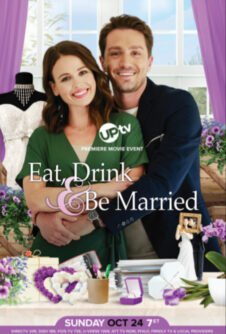
EAT, DRINK AND BE MARRIED
True love is worth fighting for — with discernment for younger viewers.
Should You Watch It?
Eat, Drink and Be Married is a pleasant romantic drama with appealing characters, charming moments, and dialogue that moves the story along nicely. Its strongest qualities are moral rather than spectacular: It celebrates love, marriage, family, kindness, charity, forgiveness, and reconciliation.
The movie also offers at least three redemptive scenes involving forgiveness and reconciliation. A line from Billie’s parents captures the film’s heart: “Marriage is tough, but real love is worth fighting for.”
The main concern is spiritual. Two scenes refer to Zen Buddhism and yoga, including a mantra used during a yoga class. For your family, this is a discernment issue rather than a reason to dismiss the movie outright. The practical answer: older children and adults may find it worth watching, while parents should decide for younger children.
The Story
NO SPOILERS — WE KEEP THE SURPRISESBillie runs Dream Day Donations, a charity that gives leftover flowers, decorations, food, and other wedding items to needy people and places such as nursing homes.
When Billie’s advice contributes to the breakup of Charlie’s brother Max and his bride-to-be, Jess, Charlie asks her to help repair the engagement. In exchange, he offers to help her save the charity’s home after she receives notice that the building must be vacated. Their unusual partnership soon puts love, family, and forgiveness on the line.
Is It Any Good?
Three stars means a good, modestly made romance with plenty to like, though it has noticeable flaws. The characters are appealing, the movie has charming moments, and the dialogue moves things along rather nicely.
The editing is less successful. Some transitions are a little clunky, keeping the film from feeling as polished as its best scenes. Still, the romantic and redemptive elements give the story a warm center.
The Worldview
The film presents a light mixed pagan worldview alongside strong moral themes. It celebrates love, marriage, family, kindness, charity, forgiveness, and reconciliation. Its story repeatedly points toward restoration in relationships, including reconciliation between Max and Jess, Billie and Charlie, and Charlie and his uncle.
The spiritual weakness comes through references to Zen Buddhism and yoga. One scene includes a yoga mantra, and another makes a visual reference to the Buddhist lotus position. These elements sit uneasily beside the film’s otherwise positive celebration of commitment, family, and selfless charity.
At its best, the movie recognizes that love requires perseverance and forgiveness. That longing aligns with Scripture’s description of love: “Love is patient and kind” (1 Corinthians 13:4).
The Content Guide
The specifics — spoilers included by nature — so you can judge for your own family.
Dominant Worldview and Other Worldview Content/Elements
Light mixed pagan worldview with strong moral elements and themes celebrating love, marriage, family, and charity and including older married man makes a comment that , plus a redemptive promotion of forgiveness and reconciliation, marred by two scenes featuring religious yoga references that include the word Zen in one scene as in Zen Buddhism and a mantra about “beauty and peace” during yoga routine in the one scene, and woman makes a visual reference to the Buddhist lotus position
Foul Language
One light exclamatory OMG profanity
Violence
No violence
Sex
No sex scenes or sexual immorality (two romantic kisses, one at a wedding)
Nudity
No nudity
Alcohol Use
Brief alcohol use, and two or so visual references to alcohol use
Smoking and/or Drug Use and Abuse
No smoking or drugs;
Miscellaneous Immorality
Lead male character has trouble carrying out a promise to a woman, and he doesn’t tell her about it, but he finds a solution to fix the problem.
Talk About It
Questions for the drive home, the dinner table, or the youth group.
The film celebrates forgiveness and reconciliation. Why can forgiveness be difficult, and what does God’s forgiveness teach us about forgiving others?
Ephesians 4:32 · Colossians 3:13Billie’s charity gives wedding leftovers to needy people and places. What makes charity more than simply giving away unwanted things?
2 Corinthians 9:7 · James 2:15–16Billie’s parents say, “Marriage is tough, but real love is worth fighting for.” What does patient, faithful love look like in everyday family life?
1 Corinthians 13:4–7The film includes references to Zen Buddhism and yoga. How can you practice discernment when entertainment blends positive moral themes with spiritual ideas you do not share?
Romans 12:2 · 1 Thessalonians 5:21–22The Final Word
Eat, Drink and Be Married is a warm romance with appealing characters and a generous heart. Its clunky transitions keep it from being exceptional, and its Zen Buddhism and yoga references call for discernment. For older children and adults, it is WORTH THE TRIP — MIDDLE SCHOOL AND UP.